
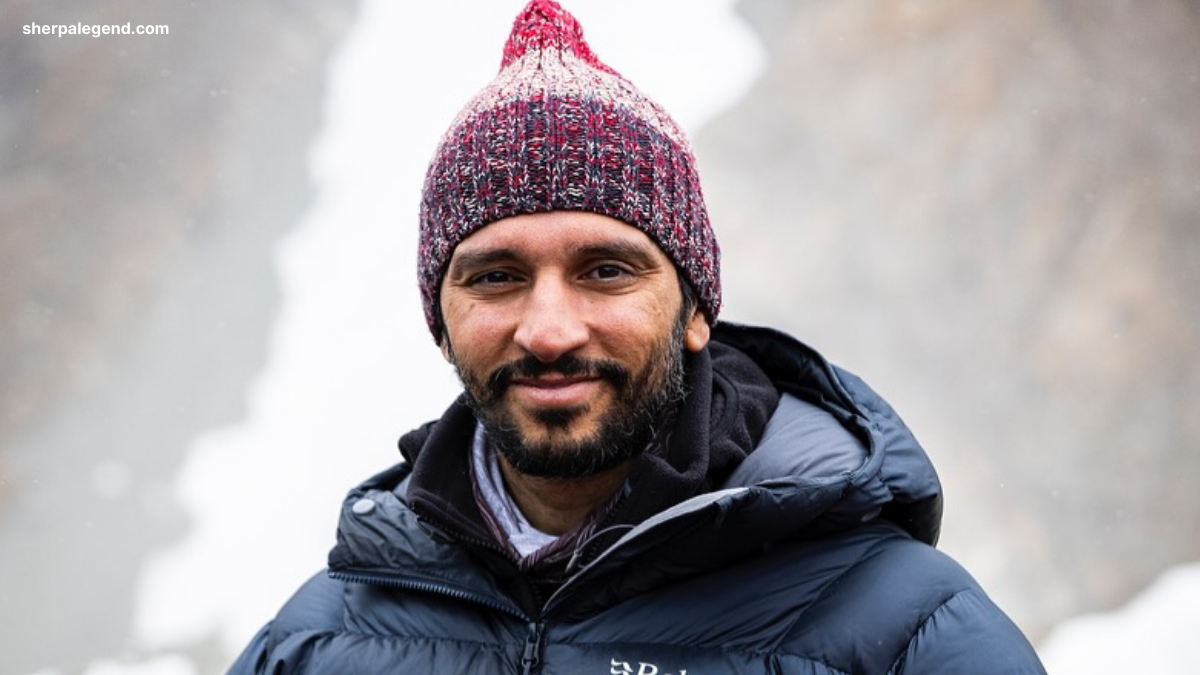

Fahad Abdulrahman Badar : The Qatari Who Raised His Flag on K2 with Five Finger Less
Picture this you’re hanging by a thread literally on one of the world’s most dangerous peaks, your oxygen running out, hallucinating from exhaustion and altitude, when suddenly you hear the voice that matters most.
“Baba don’t die, Baba come back,” rings in your mind your daughter’s voice calling you home. That moment of love piercing through the darkness saved Fahad Abdulrahman Badar’s life, but it was only the beginning of a story that would redefine what the human heart can survive and overcome.
Fahad Abdulrahman Badar’s life is a story that redefines what the human heart can bear and overcome. Born in 1979 in Doha, Qatar, this mountaineer didn’t just climb mountains—he climbed back from the edge of impossibility itself, teaching us that sometimes our deepest wounds become our greatest sources of strength.
Early Life and Foundation
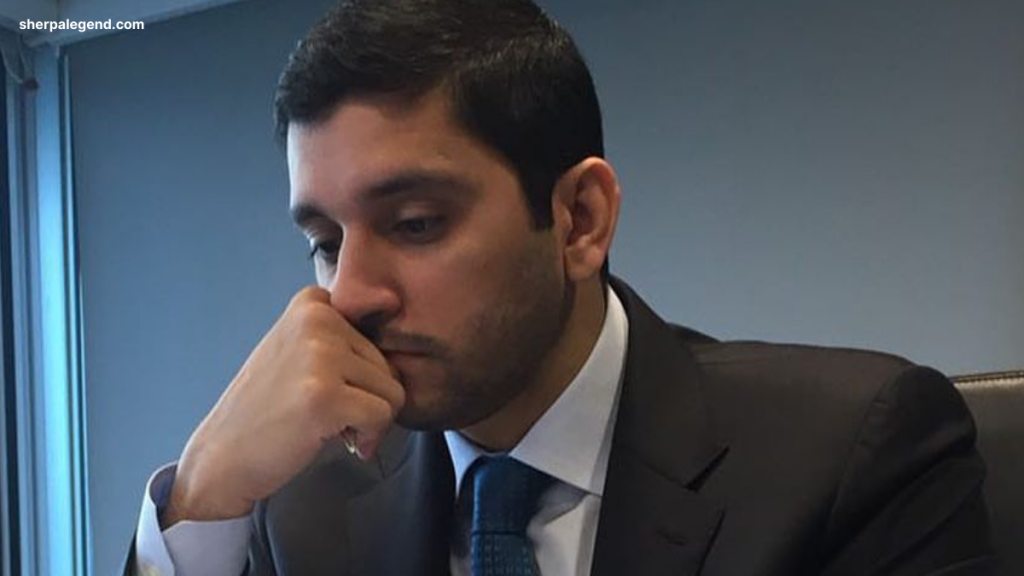
Growing up in a Qatari family that valued commitment and excellence, Fahad’s journey began far from the peaks he would later climb. He pursued his education in the UK, earning a bachelor’s degree in Banking and Finance from Bangor University and an MBA from Durham University. For over two decades, he has worked as a senior banker.
Living in Qatar, a flat country dominated by deserts, Fahad always wondered how he could go higher, how he could do something more. The answer would come in 2003 during a trip to Nepal that would change his life forever.
The Spark That Lit the Fire
“I have been passionate about mountains for very long time,” Fahad recalls. That first trip to Nepal in 2003 was transformative. “I remember doing an Annapurna circuit and hiking there in the mountains and looking at the high mountains. At that time I did not know what shoes to wear, what clothes to wear, and at first I was suffering but then I start enjoying that suffering, enjoying the altitude, enjoying the weather, enjoying the basic life that I lived there.”
For someone who had lived in the city all his life since childhood, this exposure to the mountains was revelatory. He heard about climbing legends and climbing trips, and something deep inside him stirred.
The Mountaineering Journey Begins
Despite this early exposure, Fahad’s serious mountaineering journey didn’t begin until 2018 fifteen years later. At 39, he was starting relatively late in a sport where many begin in their teens or twenties. But Fahad had something more powerful than youth: determination forged by years of professional discipline and an unshakeable belief in pushing human limits.
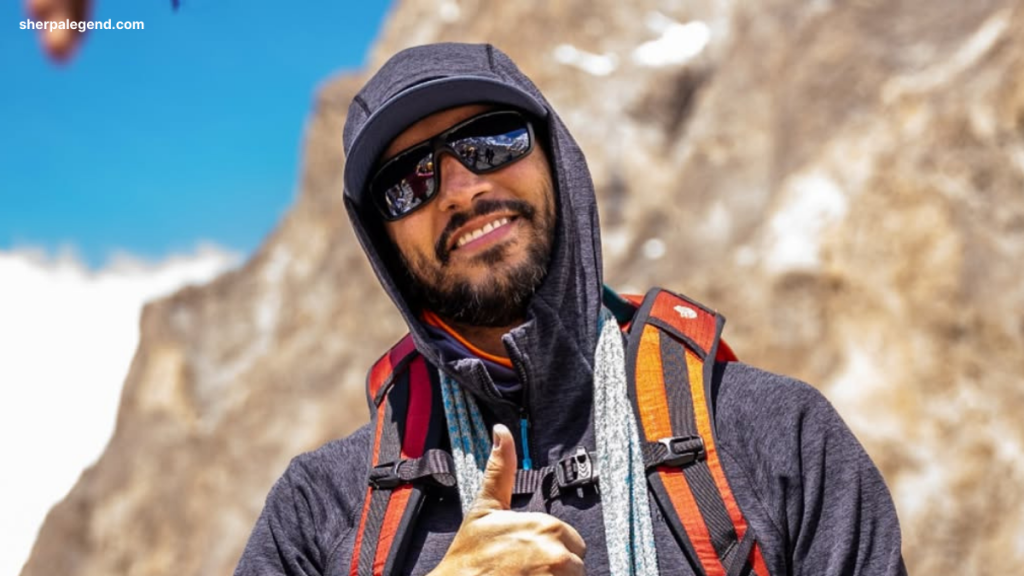
Despite his demanding banking career, he trained rigorously, preparing his body and mind for some of the world’s most challenging peaks. His approach was methodical, professional the same qualities that made him successful in banking would serve him well in the mountains.
Historic Achievements
Fahad’s ascent in the mountaineering world was marked by groundbreaking feats. In May 2019, he became the first Arab to double summit Mount Everest (8,848 meters) and Mount Lhotse (8,516 meters) in a single expedition. This achievement alone would have secured his place in mountaineering history.
His climbing resume expanded to include Kilimanjaro, Mount Elbrus, Mount Ama Dablam, Mont Blanc, Matterhorn, Mount Vinson in Antarctica, and a ski expedition to the South Pole. Each peak represented not just a physical challenge, but a mental and emotional test.
“You need to be as fit as possible,” Fahad explains about preparation. “There is a lot of suffering and a lot of pain. If you find joy in that pain, you will do extremely well.”
The Night That Changed Everything
In 2021, Fahad’s life took a dramatic turn. He had decided to climb K2, known as “The Savage Mountain” the second highest mountain in the world. To prepare, he planned to climb Broad Peak first, which sits nearby in the Karakoram range.
“I had prepared very well. I had all of my risk calculation. I had everything planned,” he remembers. But the mountain had other plans.
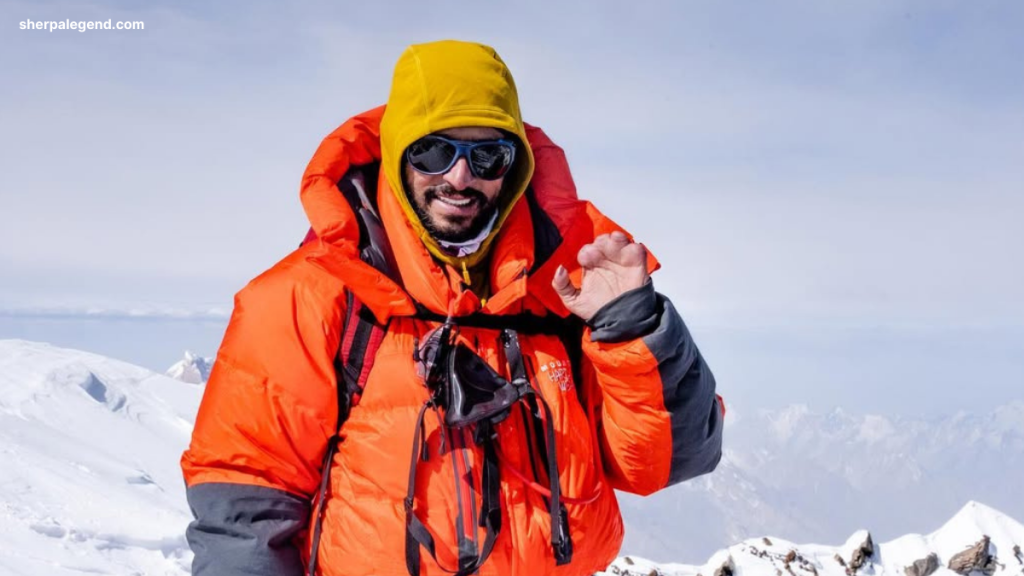
Reaching the summit late, Fahad encountered trouble on his descent. Another climber had become stuck on a rope near the summit, blocking his path. He ran out of oxygen and was forced to spend a night at high altitude, alone and disoriented.
“I was not aware where I was. I was hallucinating. I was alone. I was not sure where to go,” he recalls. In those dark moments, survival came down to the most basic human connection. “I remember hearing my daughter Maram telling me ‘Baba don’t die, Baba come back.’ I think the voice of my daughter in my head and seeing her, visualizing her at that time while I’m hallucinating kept me awake, kept me saying I don’t want to go into a coma.”
When morning came and the sun appeared, Fahad found his way to a Pakistani guide and made it to Camp 3. That’s when he discovered the full extent of his ordeal severe frostbite had claimed four of his fingers.
The Darkness and the Light
The aftermath was devastating. Like any human being, Fahad went through the five stages of grief. “I eventually got into a depression where I was thinking how can I continue my life,” he admits.
But then came the moment of choice that would define the rest of his story. “I had a decision to make to myself: either live in denial or live in sadness and think that this will change my life, or just accept it. This is where I decided this will not stop me from going back to the mountains.”
The physical adaptation was challenging. He had to learn how to hold ropes again, how to wear crampons with one and a half hands. “I had prosthetics, but the problem is prosthetics—you cannot use them at altitude with all the heavy gloves you’re wearing.” Instead, he learned to compensate, using his legs more, relying on his right hand strength, sometimes using his elbows and other areas to climb.
The Ultimate Comeback
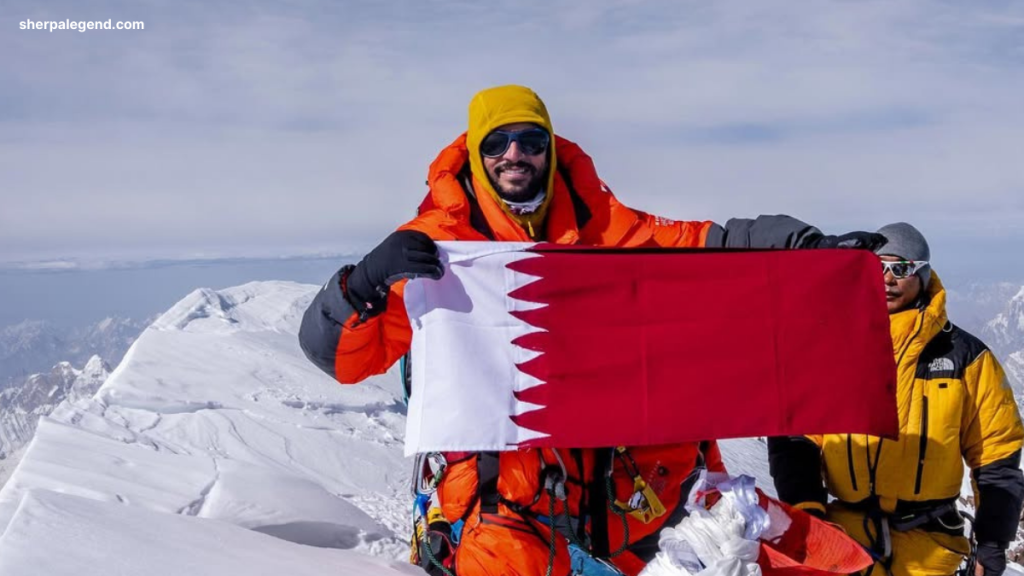
Just 10 months after his amputation surgery, Fahad achieved what many thought impossible. In July 2022, he became the first Qatari man to summit K2—the very mountain he had been preparing for when disaster struck.
“They said I would never climb again and I would never be able to climb any mountain. I challenged them and I said I’d climb K2, and there I am on top of K2.”
This achievement wasn’t just about reaching a summit—it was about proving that “disability is not a barrier to achievements.”
Throughout his adventures, Fahad has emphasized mental toughness, dedicated physical training, and an unyielding spirit in the face of adversity. His philosophy is simple but profound “Never give up, never say never.”
“In mountaineering, you expect the unexpected,” he explains. “You need to be very physically fit and you need to be mentally and emotionally prepared. It is the key differentiator because different from other sports, in mountaineering, you expect the unexpected to be with you.”
His approach to preparation reflects this understanding “You need to replicate what you will be facing in the mountain. If you are hiking to base camp, you need to learn how to hike for long hours before going there. But at the same time, you’re in a place where you’re not having the proper sleep because of oxygen, you’re sleeping in a tent not in perfect situations, you don’t have the same food you have at home, and it’s day after day after day.”
Beyond Personal Achievement
Fahad sees his injury and adaptation from a positive perspective because it has enabled him to inspire others. “Getting my injury and losing my fingers, I see it from a positive side because it helped me to inspire lots of people lots of people not only with physical disabilities but people also having challenges in their life.”
He has become an advocate for disability awareness, conducting public speaking events, group sessions, and one-on-one counseling. His message extends beyond physical disabilities “Not everyone who’s disabled has a physical disability. There’s lots of different disabilities that are not visible to people, and I think it’s very important for inclusion and diversity that we understand that people with disabilities are of all kinds and shapes, and some of them most of them actually are hidden disabilities.”
A Living Example
Today, with 11 major summits to his name, including the icy heights of Mount Vinson and a trek to the South Pole, Fahad Badar represents something more than athletic achievement. He represents the power of the human spirit to adapt, overcome, and inspire.
His story connects far beyond the mountaineering community. As he puts it, promoting mental health and educating youth about overcoming challenges has become central to his mission. “Having role models for them and how to overcome challenges in life as they grow up” is work he considers equally important to his climbing achievements.
The Summit of Purpose
Fahad Abdulrahman Badar’s journey from the flat deserts of Qatar to the world’s highest peaks is more than a mountaineering story it’s a example to what becomes possible when we refuse to accept limitations. His achievements serve as a beacon of hope to anyone battling mental or physical obstacles.
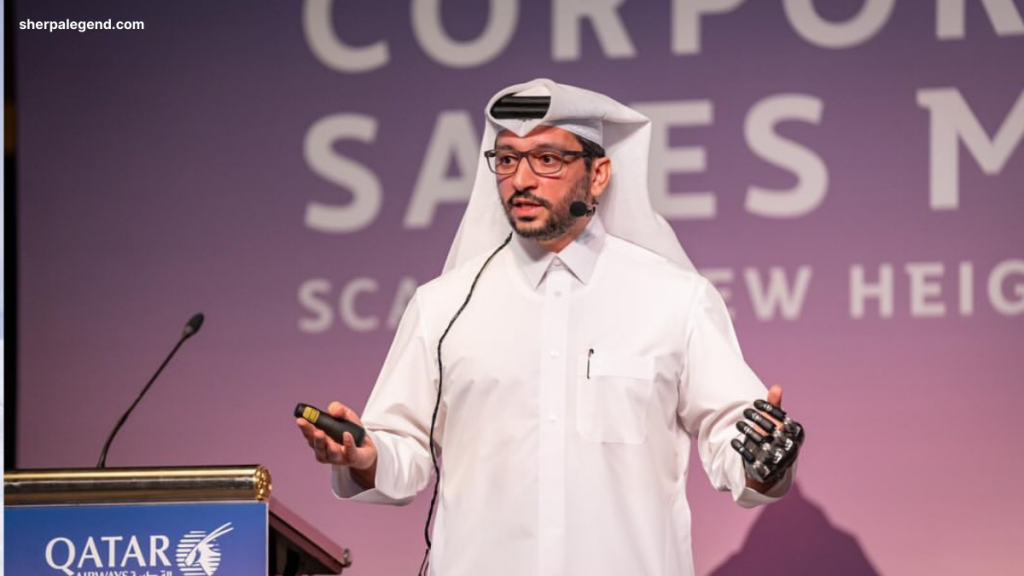
“They said I couldn’t climb again,” Fahad reflects, “but I scaled the world’s second-highest peak, K2, with five fingers less.” His story proves that sometimes our greatest challenges become our greatest sources of strength, and that the human spirit, like the mountains he climbs, knows no limits.
In a world that often focuses on what we cannot do, Fahad Badar stands as a shining example of what we can achieve when we dare to look up, reach higher, and never, ever give up.
