
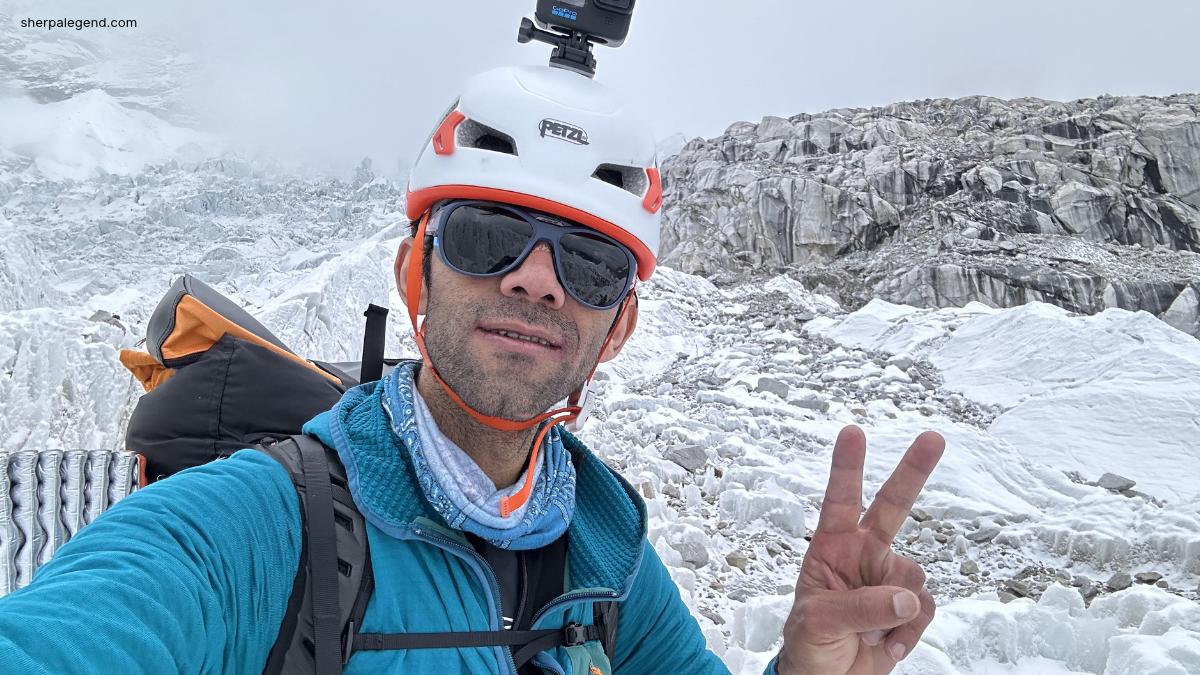

From the mountains of Iran to a new life in Canada and the towering peaks of the Himalayas, Afshin Asgharzadeh’s journey is not simply about conquering mountains. It is a story of resilience, belonging, responsibility and a deeper appreciation for human life.
Born in Savadkuh, in the mountainous Iranian province of Mazandaran, Afshin Asgharzadeh grew up in a place where mountains were not distant dreams but quiet companions.
As a child, he wandered through forests, mist-covered landscapes and rugged mountain trails, unaware that nature was gradually shaping the person he would become. The mountains taught him patience before he understood the meaning of the word. They taught him silence, endurance and respect.
Years later, he would realize that his journey to the Himalayas had begun long before he became a mountaineer. It had begun in his childhood.
From Ordinary Boots to the World’s Highest Mountains
Afshin’s first serious climb was Sorkhani Peak in Savadkuh. He had no sophisticated mountaineering equipment, no specialized clothing and no professional climbing boots. What he carried was curiosity, determination and a natural connection with the mountains.
That experience gave him something more valuable than a summit: the realization that mountaineering was a path he wanted to pursue.
Over the years, Afshin developed himself not only as a climber but also as a mountain rescuer and instructor. He taught rock climbing, mountaineering and ice climbing, emphasizing the importance of preparation, sound judgment and survival.
For him, mountaineering was never simply about knowing how to reach the summit. It was equally about knowing how to return safely.
Between Two Nations and Above the Clouds
Life eventually took Afshin to Canada, where he began building a new home in Montreal. Migration brought unfamiliar challenges and responsibilities, but it also strengthened his resilience.
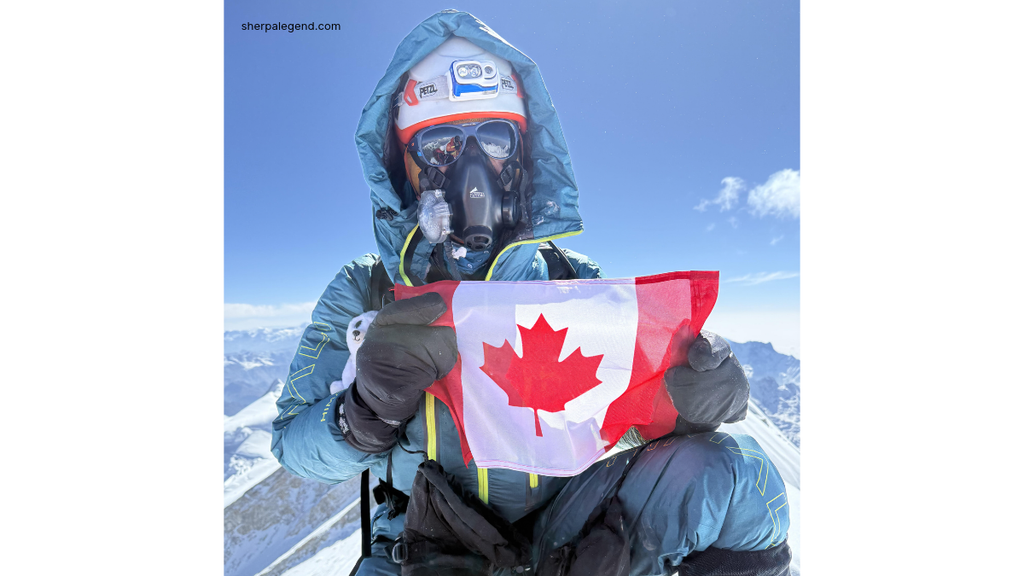
Despite being geographically distant from the mountains of his childhood, mountaineering remained central to his identity.
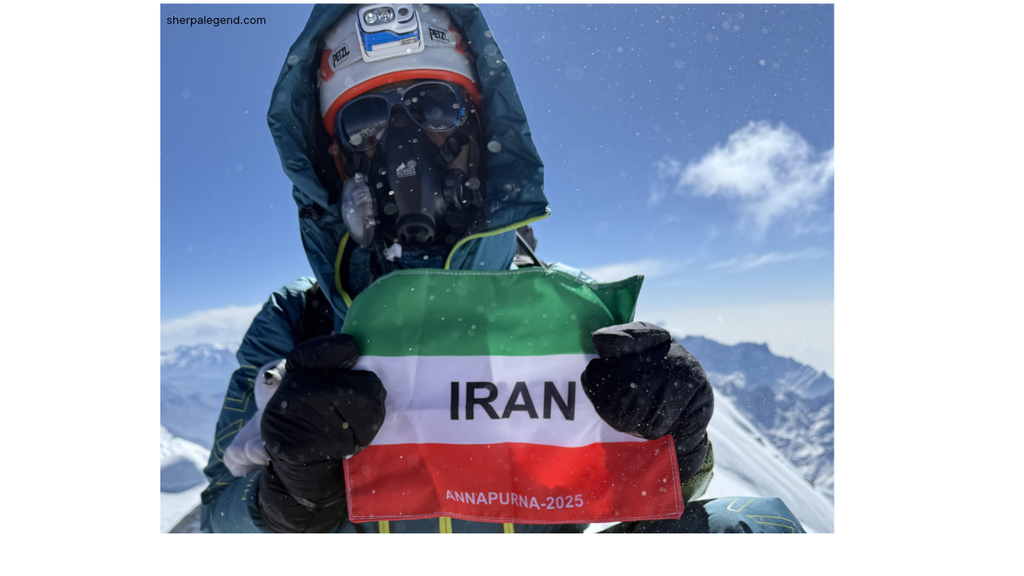
From Canada, he continued preparing for increasingly ambitious expeditions. His journey took him to some of the world’s most formidable mountains, including Manaslu, Everest, Lhotse and Annapurna. He also attempted Makalu, progressing toward his long-term ambition of climbing all 14 of the world’s peaks above 8,000 meters.
Today, Afshin carries two nations in his heart. Iran represents his roots, childhood and cultural identity, while Canada represents the home and life he has built.
Every expedition carries a part of both.
The Sherpas: Partners, Not Supporting Characters
Through his Himalayan expeditions, Afshin developed a profound appreciation for the Sherpa community and the extraordinary individuals who make high-altitude mountaineering possible.
In his eyes, Sherpas are not background figures in Himalayan climbing. They are central to its very existence.
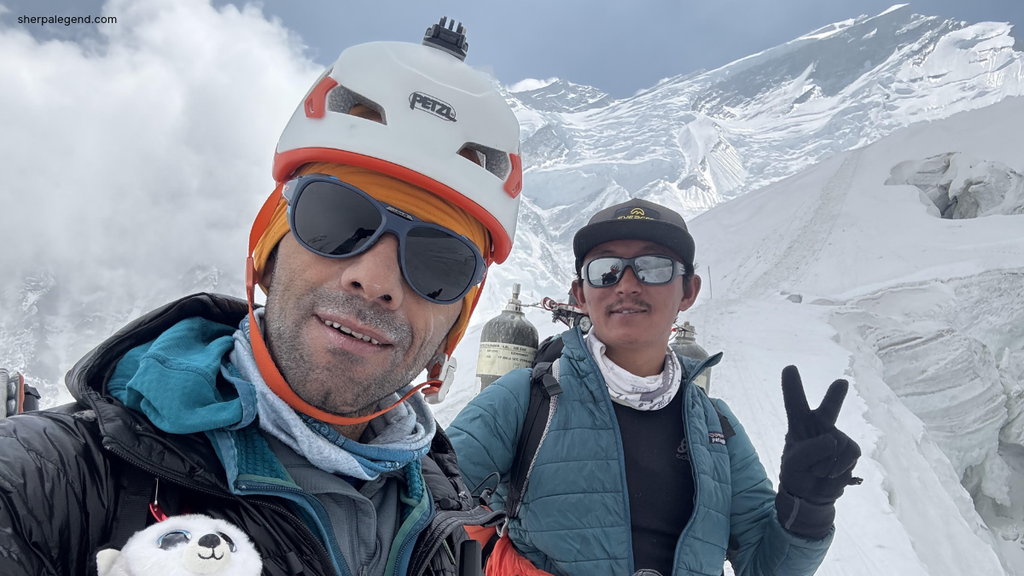
Their courage, technical expertise, judgment and deeply rooted relationship with the mountains deserve far greater recognition than they often receive. They are not merely guides or expedition workers, but climbing partners who share the risks, responsibilities and uncertainties of every ascent.
Behind every celebrated summit photograph are people whose contributions may never receive the same international attention.
For Afshin, their stories deserve to be told with equal dignity, respect and recognition.
When the Summit Lost Its Meaning
Among all his Himalayan experiences, one particularly painful chapter on Annapurna changed his understanding of mountaineering.
During his descent, two young Sherpas lost their lives in an avalanche. They were men he had met, spoken with and shared the mountain with.
In that moment, the significance of reaching the summit faded.
The achievement, the altitude and the personal ambition suddenly seemed insignificant against the irreversible loss of human life.
What remained was a powerful realization: no summit, record or mountaineering achievement is greater than a human life.
Afshin carries that experience with him today, not as fear, but as responsibility. It has deepened his respect for the mountains, strengthened his commitment to safety and reinforced his appreciation for those who climb alongside him.
It also serves as a reminder that behind every mountaineering tragedy are human beings with families, dreams and lives beyond the mountains.
The Courage to Turn Back
Years of mountain rescue and high-altitude expeditions have shaped a principle that Afshin continues to live by:
“The mountain doesn’t joke. You must know when to climb and when to turn back.”
In a world where mountaineering achievements are often measured through records, summit counts and speed, Afshin offers a different perspective.
Turning back is not failure. It is an essential part of responsible mountaineering.
The ability to recognize danger, abandon an ambition and prioritize life is a form of courage that deserves as much respect as reaching the summit itself.
For Afshin, the true measure of a mountaineer lies not only in physical endurance but also in judgment, humility and respect for the unpredictable power of nature.
A Message of Peace and Freedom
Beyond his mountaineering ambitions, Afshin carries another deeply personal dream: a future of peace and freedom for the people of Iran.
He hopes for a society where talented individuals can pursue their ambitions, express themselves, grow and earn recognition without being forced to leave their homeland.
His connection to Iran remains strong despite the new life he has established in Canada. Through his expeditions, he carries his heritage, identity and hopes for his homeland to some of the highest places on Earth.
For him, climbing is not merely a personal pursuit. It is also a means of carrying a message of hope beyond geographical borders.
Climbing to Live, Not to Die
Afshin’s ambition to climb all 14 eight-thousanders remains an important part of his journey. Yet his philosophy extends far beyond completing a list of mountains.
His purpose is best captured in his own words:
“I don’t go to the mountains to die in them. I go to live more deeply.”
From the forests of Mazandaran to the glaciers of the Himalayas, his journey is a reminder that mountaineering is as much about humanity as it is about altitude.
It is about the friendships formed in extreme environments, the lives entrusted to one another, the humility to accept nature’s authority and the wisdom to know when enough is enough.
For Afshin Asgharzadeh, success is not simply standing on top of the world. It is climbing with respect, making the right decisions and returning home safely.
Because the greatest achievement in mountaineering is not how high we climb, but how deeply we learn to value life along the way.
