
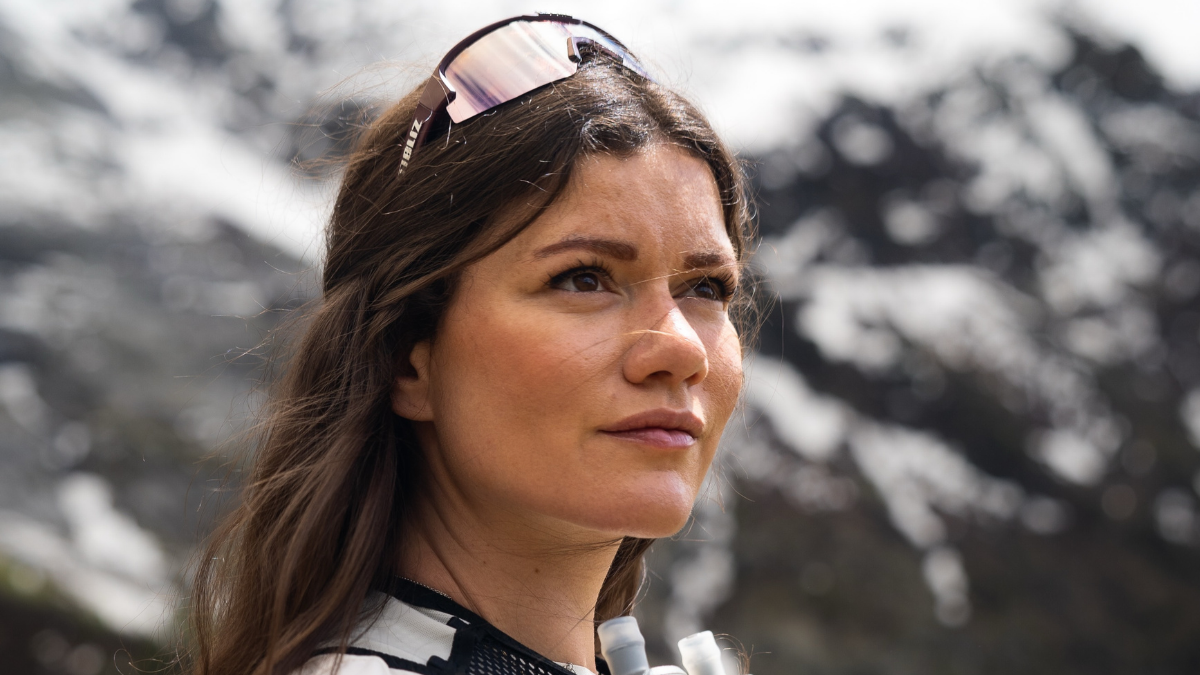

On the day of the final summit push, it was minus 40°C on Everest. The wind blew at 50 kilometres per hour. Constance Schaerer says that even a slightly stronger wind would have ended the attempt that day. Her team had also just heard that a climber from another expedition had died on Lhotse, the mountain next door.
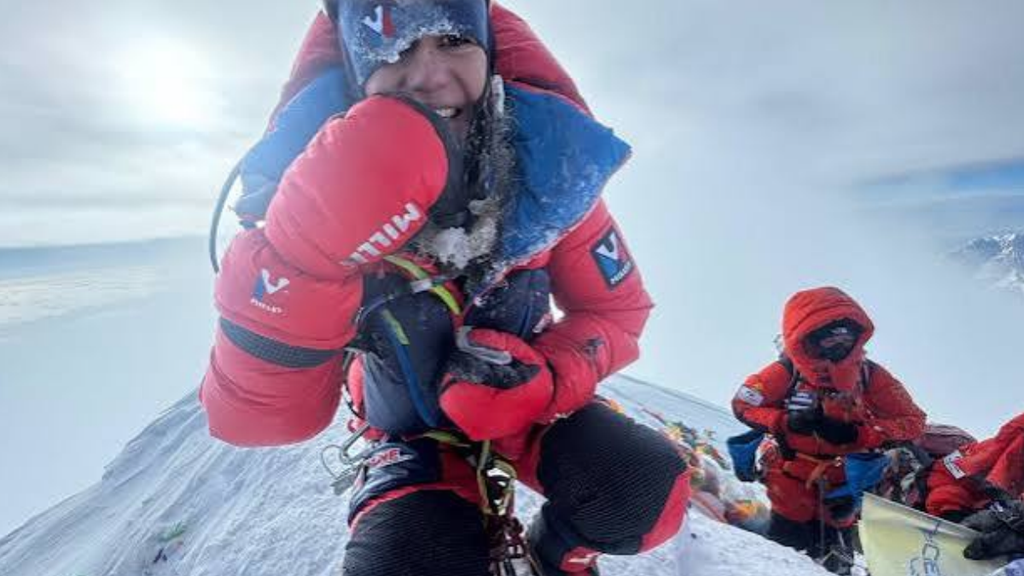
“Honestly, I genuinely thought we were going to die,” she says.
She kept climbing. At 6:10 a.m. on May 19, 2025, she reached the summit.
Schaerer was 26. She grew up near Strasbourg, in Alsace, far from the French climbing towns. She was on Everest because of a letter her father left.
Schaerer became the youngest French woman to climb Everest. France gave the world modern mountaineering, yet few French women reach the highest peaks in the world. Her climb is a way to look at both facts what it took for a young woman from Alsace to get there, and why so few others do. This story follows her path first, then looks at the sport and the numbers behind it.
Her father, Marc, loved the mountains and skiing, and he passed both on to her. In 2007, when Constance was nine, he died of pancreatic cancer.
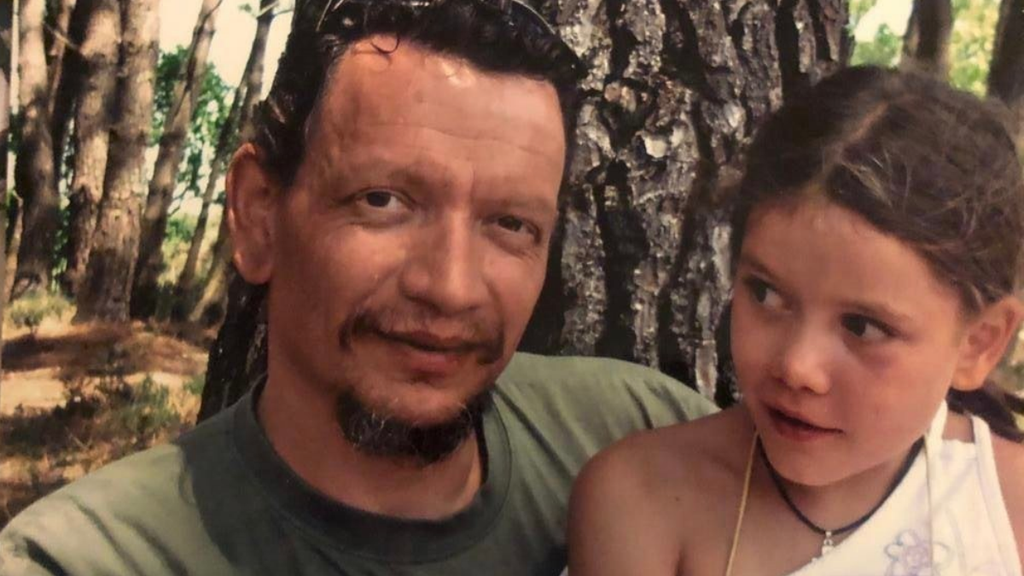
After his death she threw herself into ski racing. She wanted to make him proud. For ten years she trained 30 to 35 hours a week and competed at a high level, reaching the European circuit of the International Ski Federation (FIS). She then stepped away from racing to study, and in 2018 she enrolled at Kedge Business School in Bordeaux. She planned to work in the luxury industry.
In May 2021, as she finished her master’s degree, she read a letter her father had written before he died. He wanted his ashes scattered on the Seven Summits, the highest peak on each continent.
The choice was not easy. She had done an internship at Guerlain and a work-study placement at Moët Hennessy Diageo. After graduating she took a job in Strasbourg as business developer for the Internationaux de Strasbourg tennis tournament. “When your friends are signing their first permanent employment contracts, it is difficult to tell yourself, ‘Go ahead, leave everything behind and do something completely different,’” she says. After three years she left her permanent contract to work on her projects full time.
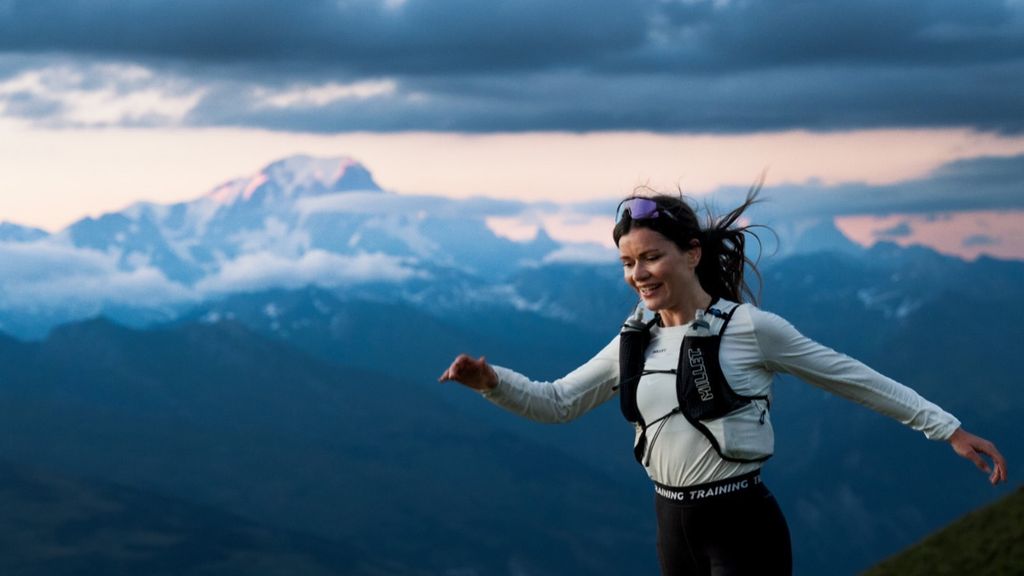
She says she thinks about her father often. “I wish he could see all this.” But then she tells herself that “if he were still alive, he wouldn’t be seeing this because none of it would exist.”
Her first climb was Kilimanjaro, in July 2021, during a humanitarian trip to Tanzania. She says it still holds a special place for her. Mont Blanc followed in July 2022, with her cousin William and her videographer, Hugo Lorentz. Aconcagua in Argentina came that December.
Not every attempt worked. In July 2023, she and Lorentz turned back on Denali in Alaska, at Camp 4, after two weeks on the mountain. The weather was dangerous. She returned and reached the summit on June 16, 2024.
In April 2025 she arrived in Nepal for the first time. It was her first trip to the Himalaya. She trekked to Everest Base Camp, then climbed Lobuche Peak, a mountain of about 6,100 metres, to acclimatize, which means to let the body adjust to thin air. On the summit push she climbed to Camp 3, at 7,050 metres, without bottled oxygen. Above that she used supplemental oxygen, including on summit day.
Many climbers try another 8,000-metre peak, such as Manaslu, before Everest. Schaerer did not. She came to Nepal for Everest.
France is where the sport began. Jacques Balmat and Michel-Gabriel Paccard first climbed Mont Blanc in 1786. The Compagnie des Guides de Chamonix, founded in 1821, is described as the oldest guide association in the world. In 2019, UNESCO added alpinism to its list of intangible cultural heritage.
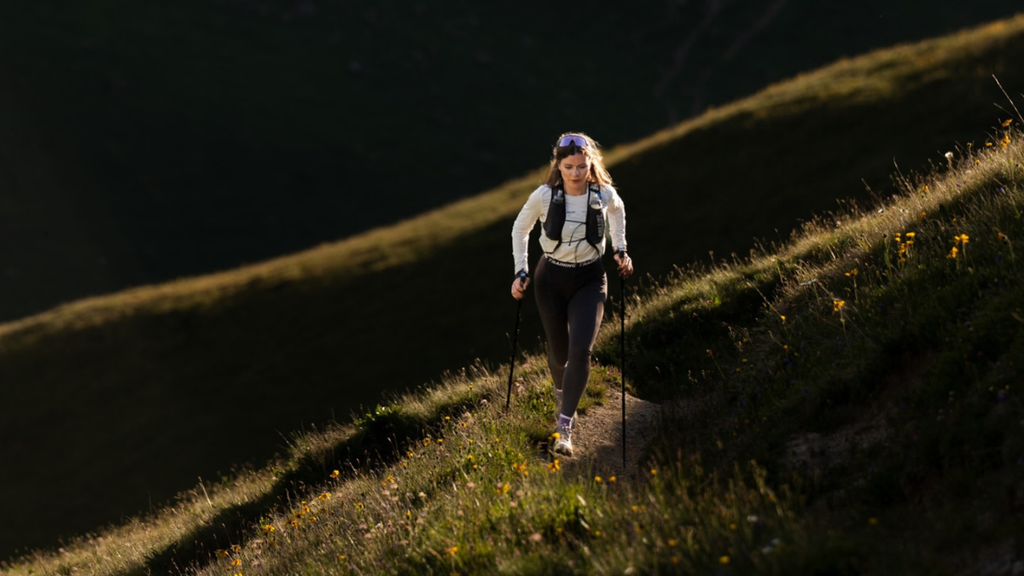
The system is well organised. Two large federations lead it: the FFCAM, with more than 100,000 members, and the FFME. Elite guides train at ENSA, the national school of skiing and alpinism in Chamonix.
The culture also has a ranking. The French elite prize “alpine style”, which means light, fast ascents of hard rock and ice faces, without bottled oxygen or fixed ropes. The Piolets d’Or, awarded in Chamonix, honour that kind of climbing. A guided trip up Everest by the normal route sits lower in that order.
Schaerer’s Everest was not that kind of climb. She says Everest is not a “tourist” adventure. In her telling, it takes heavy physical preparation, a strong mind and the help of her Sherpa team.
She is also an outsider to this world. She comes from Alsace, not Chamonix or Savoie. Her road to Everest ran through ski racing, business school and a charity.
The numbers narrow as the mountains get higher. Women are roughly 35 to 40 percent of the members of French alpine clubs. But of France’s roughly 1,700 high-mountain guides, fewer than 3 percent are women, about 40 to 45 people. The first, Martine Rolland, qualified in 1983.
On Everest, women are about 12 to 13 percent of all summiters worldwide, according to the Himalayan Database. Only about 15 to 20 French women have stood on top. Christine Janin was the first, on October 5, 1990. Climbers have a saying for it: the higher you go, the fewer women you see.
The French women who did go high are serious climbers. Chantal Mauduit climbed six 8,000-metre peaks, including K2 and Lhotse, without bottled oxygen. She died in an avalanche on Dhaulagiri in 1998. Catherine Destivelle soloed the north faces of the Eiger, the Matterhorn and the Grandes Jorasses in winter. Élisabeth Revol climbed Nanga Parbat in winter in 2018. In June 2023, Sophie Lavaud became the first French person, man or woman, to climb all 14 of the 8,000-metre peaks. Schaerer climbs at a different level of difficulty, but these are the women whose record she follows.
One name matters to her more than the others. Schaerer calls Janin her “modèle absolu.” Janin is a doctor who also completed the Seven Summits. In 1994 she founded À Chacun son Everest !, a Chamonix charity that helps children recovering from cancer. When Schaerer looked at cancer charities in France before starting her own, she found none for healthy children whose parents had cancer or had died of it. In March 2022 she founded 7 Sommets contre la maladie to fill that gap.
Her mother hesitated at first. “I don’t think she really believed in it,” Schaerer says. Now, she says, her mother “supports me 1,000 per cent.” She gives everything she has to the project and the association.
Others were harder to convince. When Schaerer announced her plan, she met what she calls considerable discouragement. People did not question her fitness. They said the challenge was dangerous, expensive and difficult, and they worried for her safety. Family and friends were not always supportive. Finding sponsors was also hard. About being a woman, she says: “I would not necessarily say that being a woman has been an obstacle, but it has certainly been a factor.”
On Everest she climbed with Lorentz and a Sherpa team led by Da Dendi Sherpa.
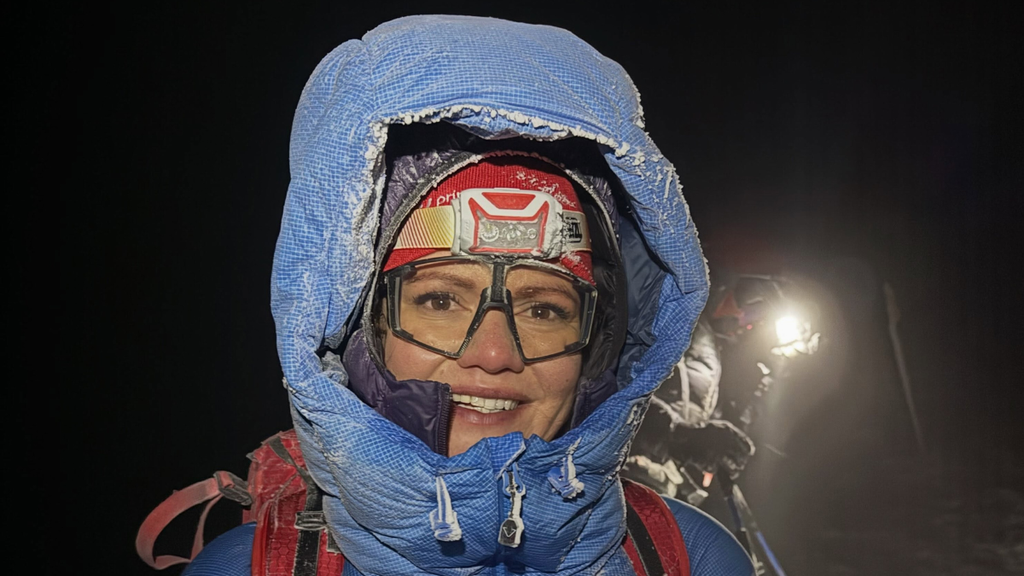
Most women who reach the 8,000-metre peaks are in their late 30s, 40s or 50s. Schaerer was 26.
She also builds her expeditions herself. She finds the sponsors, makes documentaries with Lorentz, gives talks in schools and companies, and wrote a book, Tu reposeras sur les plus hauts sommets du monde papa, published by Fayard in October 2025.
Her climbs are tied to a purpose. Her association supports more than 250 children across France whose parents have cancer or have died of it. She says Everest allowed it to double the number of children it helps.
Three summits remain Elbrus in Europe, Vinson Massif in Antarctica and Puncak Jaya in Oceania. After that, she says, her life will centre on the association. She also wants “a bit of a French adventurer identity”, with mountain sports and sailing.
The ashes are still part of the plan. She has said she took a bag of her father’s ashes with her. She says the message he wanted to leave her was: “Live life to the fullest. Live intensely. Do great things.”
