
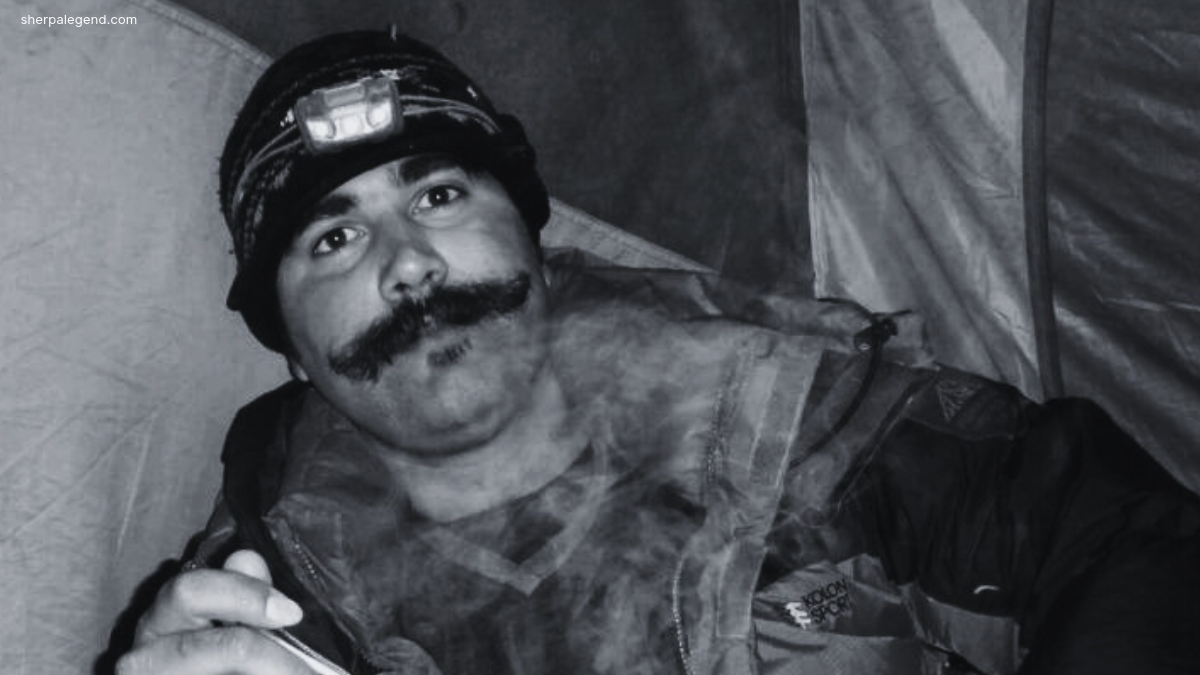

Iran hanged mountaineer and musician Ali-Sina Mostafavi on October 14 in Kerman. He was 38. The Supreme Court had upheld his death sentence on September 28.
Iran’s judiciary says he was an armed attacker who worked for Israel and the exiled crown prince Reza Pahlavi. Rights groups say he was a protester who was beaten, forced to confess and tried unfairly in a Revolutionary Court. No one has independently verified either account. One fact is not in dispute: the state put a climber to death.
A climber from Bam
Mostafavi was from Bam, in Kerman province. He played the tar, a Persian string instrument. The Jerusalem Post reports that records of a Kerman mountaineering club show he joined a 2016 expedition to Alam-Kuh, one of Iran’s highest mountains. That year he also climbed Mount Kazbek in the Georgian Caucasus, according to the German mountaineering site Abenteuer Berg.
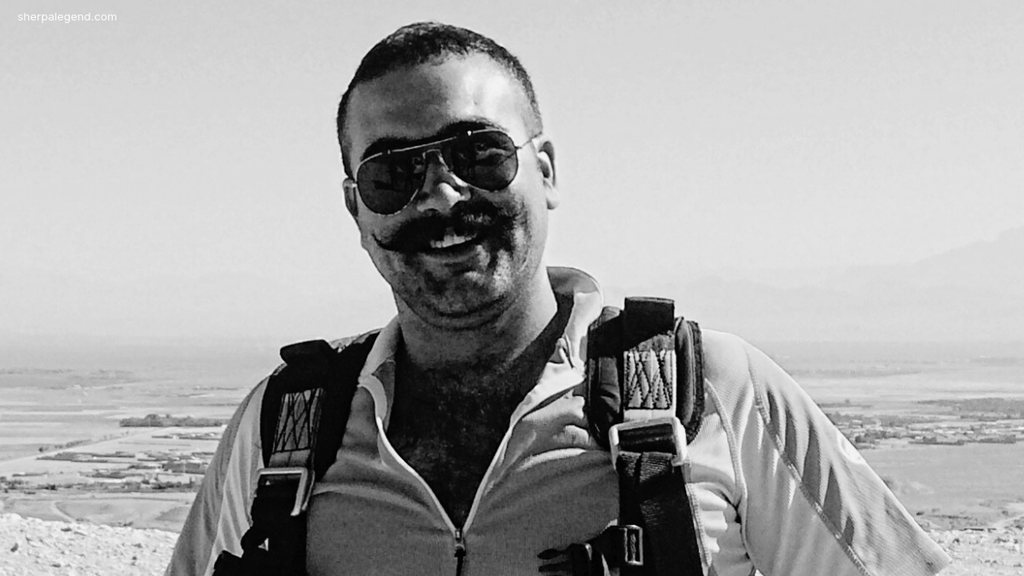
He wrote about the mountains on social media, where his account was named Everest_Coldhell. Abenteuer Berg reports that he also voiced sympathy for Reza Pahlavi in some posts, but wrote more often about climbing.
In one post, as translated, he said “If I could live again, I would choose to endure hardship and do something meaningful for my homeland rather than be remembered for absence, separation, or loss.”
Nepal, and a promise to Everest
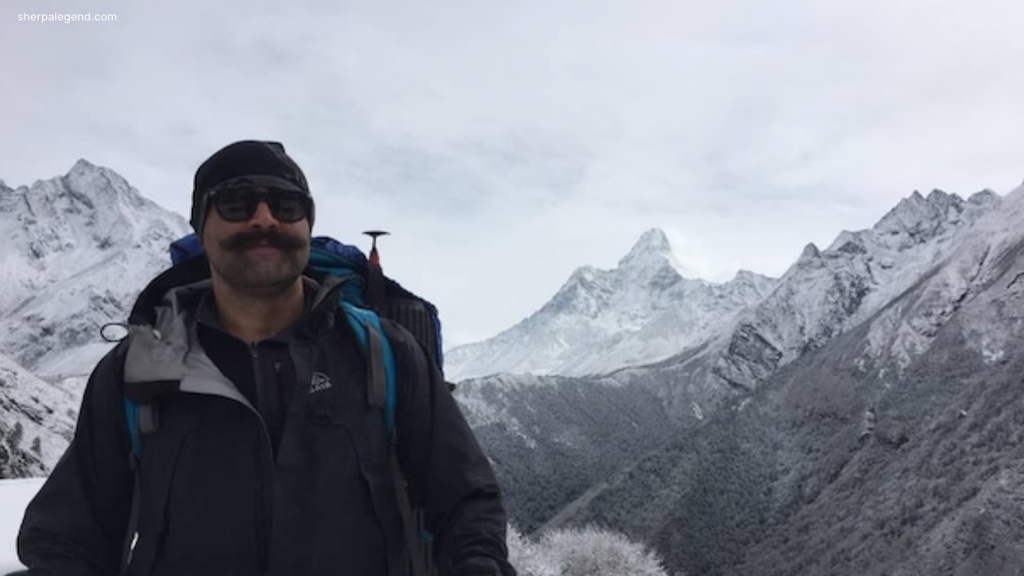
In 2019, Mostafavi travelled to Nepal with eight climbing friends from Iran, Abenteuer Berg reports. They climbed Island Peak, a 6,189-metre mountain in the Khumbu with a clear view of Everest. It was the first time he saw the world’s highest mountain. He also hiked to Everest Base Camp that year. Human rights groups say he climbed Kala Patthar as well.
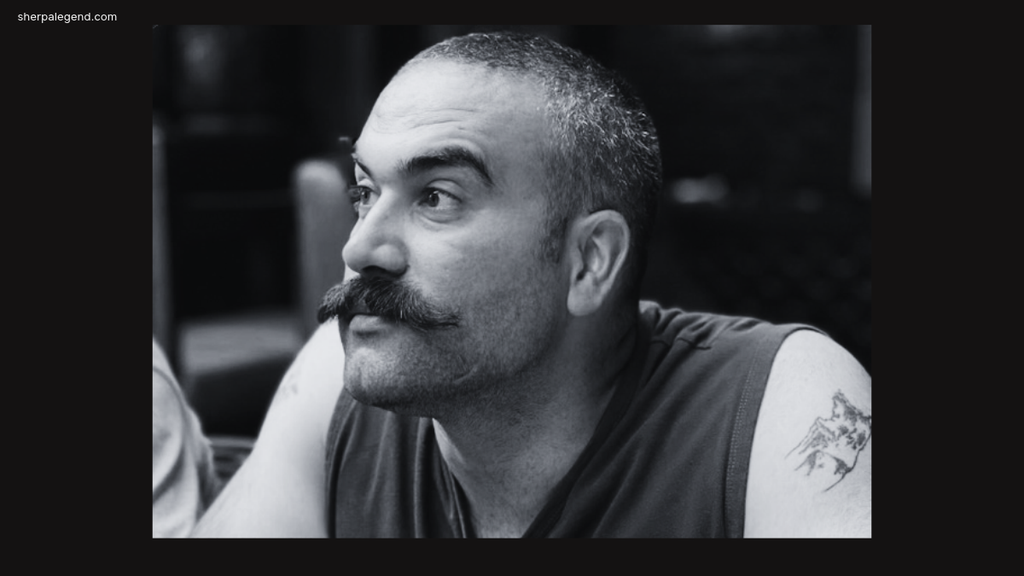
In spring 2022 he tried Ama Dablam, a steep, technical peak. Human rights groups say he reached about 6,600 metres. Abenteuer Berg reports that bad weather forced his team to turn back. He loved the mountain enough to have it tattooed on his left upper arm.
Everest was the dream. Two years after that first trip, he wrote an Instagram post to the mountain, Abenteuer Berg reports: “I (will) come back to you and touch your top.” The Guardian says he documented ascents including Everest. Abenteuer Berg describes Everest as a dream he had not fulfilled, and no report we found confirms a summit.
He was arrested in April and hanged in October, at 38. He did not go back.
What the judiciary says
Security forces arrested him at his home on April 25, according to the League for the Defense of Human Rights in Iran. Branch 1 of the Kerman Revolutionary Court sentenced him to death. On October 13 he was moved to solitary confinement, and his family is believed to have been called to the prison hours before the hanging, the Guardian reports.
The judiciary says he fired shots in Azadi Square in Kerman on March 24 and wounded a civilian and a young girl. It says he fired at soldiers and cars on April 21 and twice tried to shoot at police. It says officers found a rifle, two shotguns, 246 rounds and 30 Molotov cocktails in his hideout.
It links the shootings to the war with the United States and Israel earlier this year. It also says he took part in the protests of December 2025 and January 2026 and sent footage to opposition media abroad. The main charge was moharebeh, often translated as “enmity against God.” Kerman’s chief judge, Ebrahim Hamidi, told the state-aligned Tasnim agency that Mostafavi sought to spread terror and panic. The judiciary says he confessed and had a lawyer.
What rights groups say
Rights groups say he was beaten during his arrest and forced to confess. Reza Pahlavi’s team said he was tortured and tried in a sham trial. Pahlavi is the person the judiciary says Mostafavi worked for.
Amnesty International said defendants in recent protest cases were denied lawyers during questioning and that torture claims were not investigated. Human Rights Watch and the Boroumand Center said at least 59 men were executed between March 18 and the end of August after grossly unfair trials. UN experts called for an immediate halt to executions on October 9. Mostafavi was hanged five days later.
These findings cover many cases. They do not prove what happened in his. But the public account of his trial included no defence arguments and no independently verifiable evidence.
Why he matters to the Himalayan community
The Himalayas bring together climbers who share nothing else. Mostafavi was one of them. He was not a famous summiteer. He came to the Khumbu with friends, climbed Island Peak, stood in view of Everest and left wanting to return. Climbers from every country follow that path, and Nepal’s guides, porters and lodge owners walk it with them. That is why his story reaches the Himalayan community: he was an ordinary climber with a dream, and the mountains are full of people like him.
Climbers choose the mountains. Nobody sends them. They accept the risk of dying on a mountain because they want to live freely and with dignity, on their own terms. That is our view at Sherpa Legend. A hanging after a trial that rights groups call unfair is the opposite of that choice. It takes away the freedom a climber goes to the mountains to find. When one of us is executed, it concerns all of us.
Athletes in the dock
Two other athletes were put to death recently. Siavash Jamshidi Kheirabadi, a taekwondo athlete, was executed on October 3. Gholamreza Khani Shakarab, a mixed martial arts fighter, was hanged in May.
Human Rights for Sport, a group of former Iranian athletes based in Oslo, says six athletes have been executed in cases linked to the January protests or earlier political charges. It says at least six more face execution, including swimmer Ali Pishevarzadeh, footballer Ehsan Hosseinpour and boxer Mohammad Javad Vafaei Sani. The Guardian reports that mixed martial arts fighter Benyamin Naghdi, equestrian Taraneh Rahimi and climber Maryam Siri have also been condemned to death this year. The group also says 217 athletes were shot dead in January and more than 100 detained. That figure has not been independently verified.
The group argues that prominent athletes are targeted to send a message to the public. That is its interpretation, not proof of intent. Its spokesperson says some families are under surveillance, which makes contact almost impossible.
Sports bodies have said little that stops it. FIFA says it is aware of the concerns. The International Olympic Committee says it is deeply concerned but, as a non-governmental body, cannot change a country’s laws. The executions have continued.
