
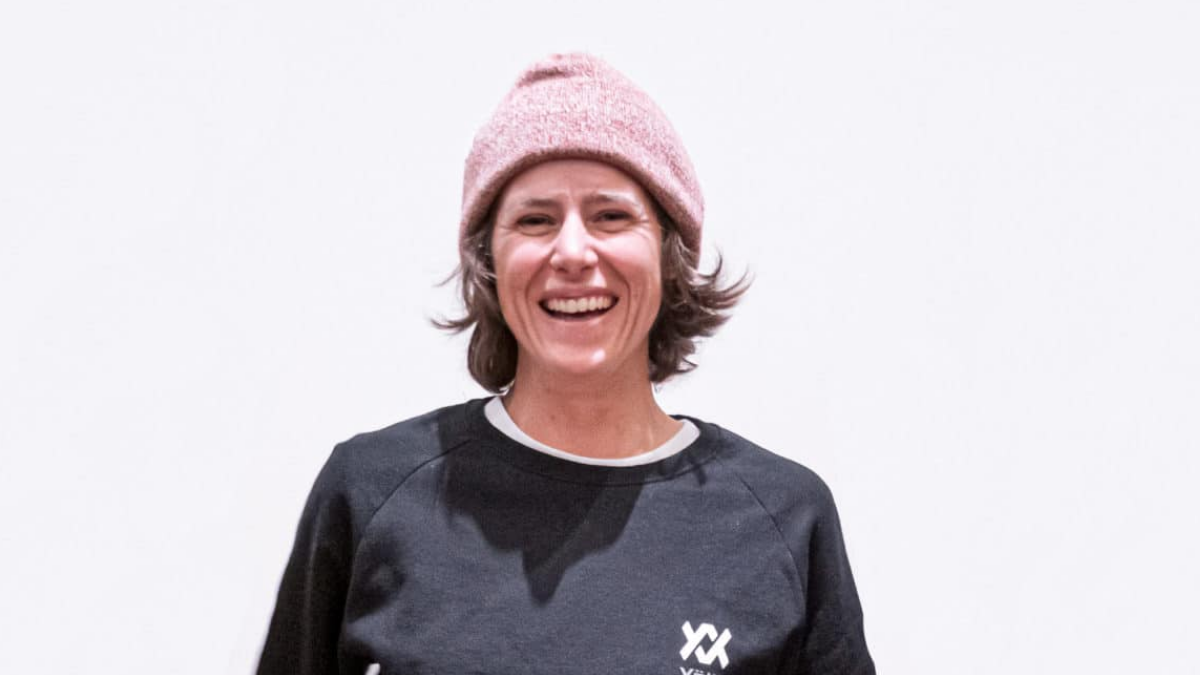

Tiphaine Dupérier made the first ski descent from the summit of Nanga Parbat. She still works as a guide and ski patroller, and she keeps out of the spotlight.
It is 3:30 p.m. on 24 June 2025. Three climbers stand on the summit of Nanga Parbat, 8,125 metres high. The sky is clear. The air is calm.
Tiphaine Dupérier and her climbing partner, Boris Langenstein, click into their skis. The third climber, David Göttler, has a paraglider, a light wing for flying off a mountain. He wants to launch from the top. The wind is too strong. He will have to walk down first.
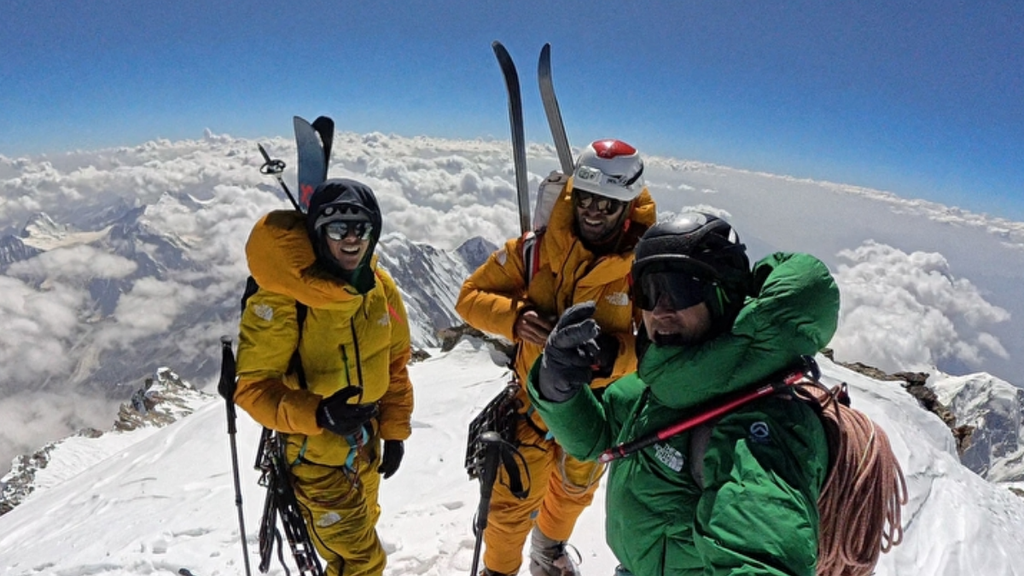
No one has ever started a ski descent from this exact point. It took the three of them four days to reach it. They carried everything themselves, and below them lies the whole Rupal Face they have just climbed.
Now two of them are about to ski off an 8,000-metre mountain. Who is she? And why have you never heard of her?
Over those four days, the three climbed the Schell Route on Nanga Parbat’s Rupal Face. The route rises about 3,500 metres. They climbed it in what is called alpine style: no extra oxygen, no fixed ropes, no porters. Then Dupérier and Langenstein skied from the top.
Dupérier is only the second woman to climb the Schell Route, after the Slovenian Marija Frantar in 1990. In September 2026, the Piolets d’Or awards gave her a Special Mention for Female Mountaineering for the climb and descent.
The descent is the proof. The point is how she chooses.
Where she comes from
Dupérier was born in 1988 in the Massif des Bauges, in Savoie, France. Skiing was her first language. She learned it ski touring with her father. She also spent afternoons climbing with a guide.
Her first mountaineering expeditions came in 2005. Later she joined the elite national training group of the French alpine clubs. Her early trips were technical climbs, not ski descents. Exploring, and sharing what she found, became a driving force in her life. She moved to the Haute Tarentaise in the Alps and worked as a ski patroller in Val d’Isère. A ski patroller looks after the slopes and rescues people who are hurt. In summer she worked in forestry. She trained as a mountain guide, and she is now a qualified high-mountain guide.
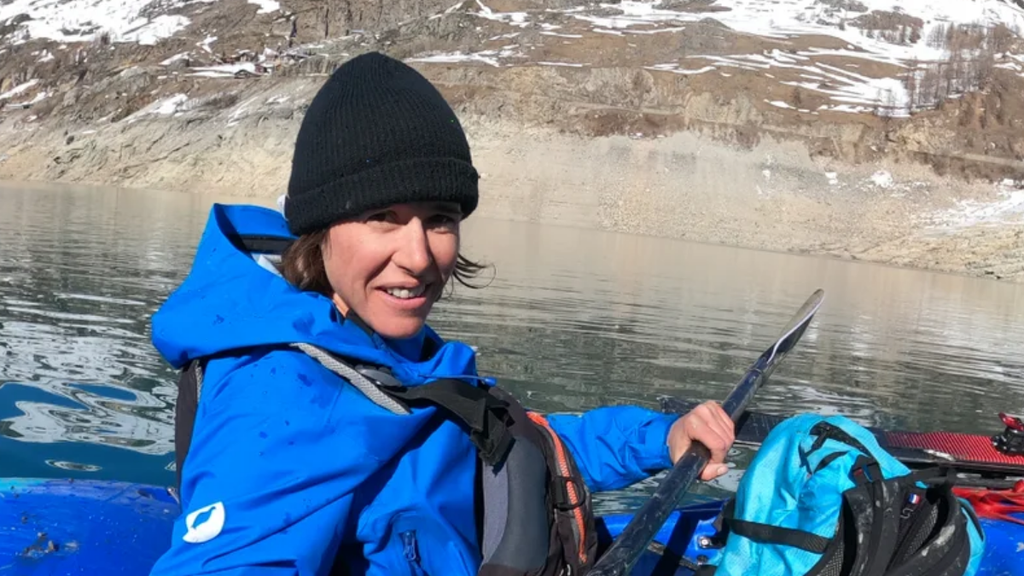
She never treated mountaineering as a separate elite career. She earns her living in the mountains and lives in them all year.
She has said there was no single dramatic turning point. She was drawn early to steep slopes that few people travel. High altitude came later, almost organically, out of a taste for adventure and the unknown.
Why she stays quiet
Most top alpinists build a public brand. They look for sponsors, grow social media followings and share live tracking of their climbs.
Dupérier and Langenstein do not. They rarely give interviews and avoid self-promotion. Their style is almost ascetic. Their feats often become known only afterward, through quiet reports.
Her reasons come from her interviews. Heavy media or sponsor pressure creates obligations. Those obligations clash with the humility and clear thinking that extreme altitude demands.
This is not shyness. It is freedom. She values freedom and authenticity. She believes the real value lies in discovery, in sharing the climb with partners, and in emotions and memories. Outside recognition is not on that list.
Her working life shows the same choice. That is the contrast. She is one of the leading names in high-altitude steep skiing. She still lives and works in the Haute Tarentaise as a guide and ski patroller. When the Special Mention came this September, that was still her job.
She chose a different line in a second sense, too.
A different kind of mountaineering
Two things set her climbing apart.
The first is alpine style. Think of carrying your whole house on your back. There are no porters to carry loads. There are no ropes fixed in place beforehand. There is no extra oxygen from bottles. You carry the tent, the stove, the food and the rope, and you climb on your own strength.
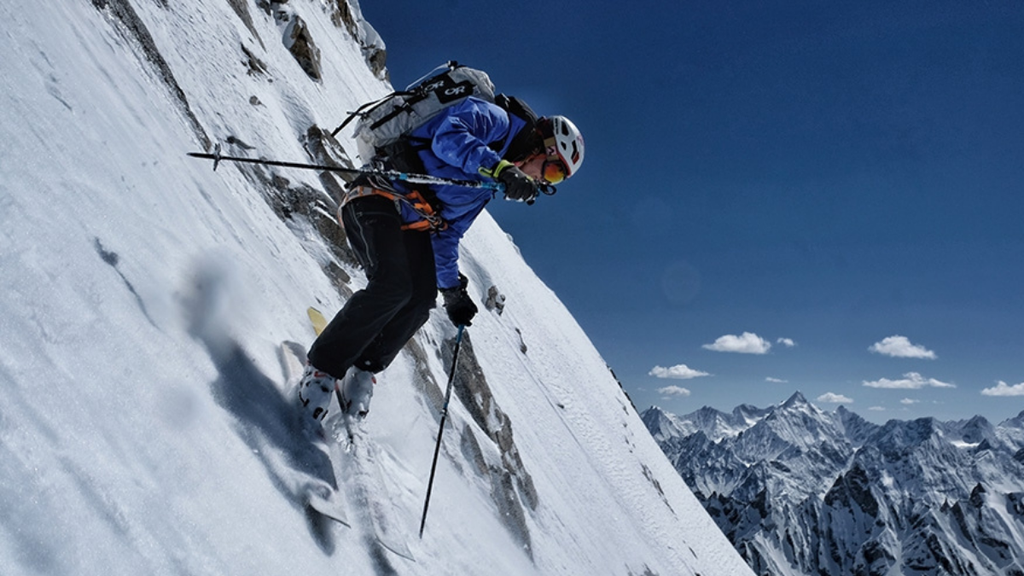
The second is steep skiing at altitude. It means skiing a slope so steep and remote that one mistake is final, at heights where every breath is hard.
Few people do both together. Few women do, and relatively few men.
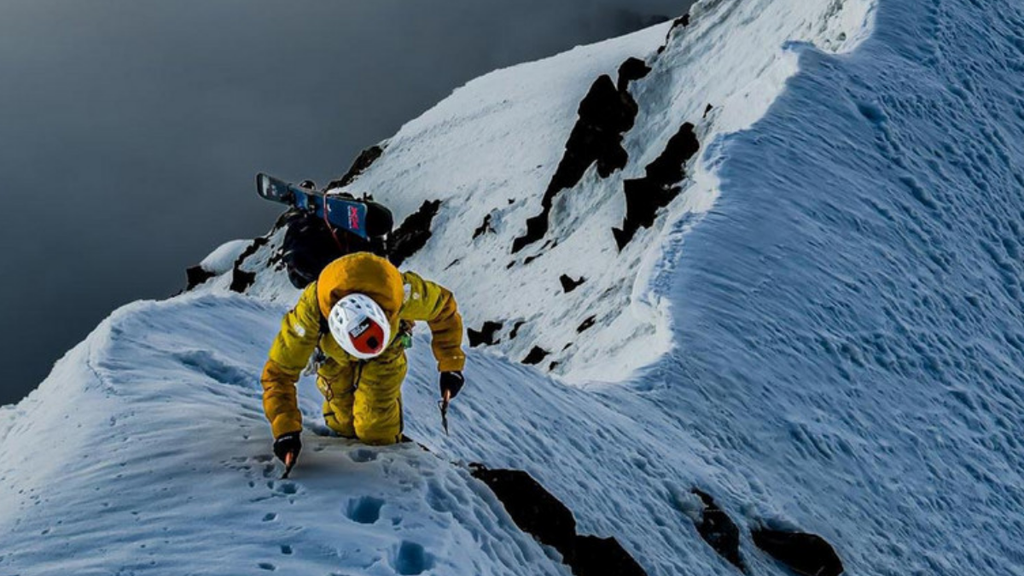
She says she is not interested in collecting summits. She looks for what she calls aesthetic lines. The beauty of the slope, the quality of the commitment and the shared adventure matter more to her than height or being first.
Laila Peak, in Pakistan’s Karakoram, shows what that means. At 6,096 metres, it is one of the most coveted ski lines in the world, admired for its looks. Its northwest face runs about 1,500 metres at up to 50 degrees. Earlier teams had tried for years to ski it from the summit and failed. On 11 May 2018, Dupérier, Langenstein and Carole Chambaret did it. It was her breakthrough. At the time, she was a ski patroller and an aspirant guide.
Three more steps came before Nanga Parbat. Spantik brought another first full ski descent from the summit. Gasherbrum II was climbed in alpine style and then skied. Denali gave them about 3,800 metres of descent in a single day.
Seven years, one mountain
Langenstein has been her climbing partner on almost every big trip since 2017. They try to plan a new expedition together every year, to ski a peak or climb a route that draws them. The record shows quiet ambition and long loyalty.
Nanga Parbat tested their patience. The project began in 2019, on the normal route. Bad weather and an ear infection forced Dupérier to turn back just below 8,000 metres. Langenstein went higher and skied down from near 8,080 metres, just short of the top. The dream was unfinished.
In 2024 they chose the much steeper Rupal Face, with Göttler. The Schell Route was first climbed in 1976 by an Austrian team led by Hanns Schell. It had fewer than ten ascents. Bad weather and poor snow stopped the three at 7,524 metres. They turned back. For Göttler, it was one more try on a mountain he had been attempting since 2014. They got along well, and they agreed to come back as a team.
In 2025 they changed the plan. They went first to Nepal to acclimatize, which means getting the body used to thin air. They climbed Island Peak and Baruntse, and skied part of Baruntse. The Rupal valley is remote, and acclimatizing there had been hard. Nepal let them stay high and save their energy.
Dupérier later called the result “the fulfillment of a seven-year dream.”
The story is also about turning back. She accepts being slower and more fragile at altitude, and she values the ability to say no to a summit. “High altitude imposes radical humility,” she has said. Many modern expeditions are fast, well funded and built for one shot. Hers took seven years, and it was built to allow for turning back.
The climb and the descent
They left base camp at 1:30 a.m. on 21 June. A rare calm window was forecast. The season was dry and warm, and the snow was melting fast, so they knew they had to move quickly if they wanted to ski. They took one rope, one tent and one stove, plus the skis, which they carried to the summit.
The first day was the steepest: about 2,500 metres of climbing through couloirs, which are steep gullies, and one 60-metre gully up to 80 degrees. They slept at about 6,000 metres, then 6,800, then 7,400. On the fourth day they left around midnight, crossed the Mazeno Gap onto the Diamir side, and climbed mixed ground of rock and snow to the top.
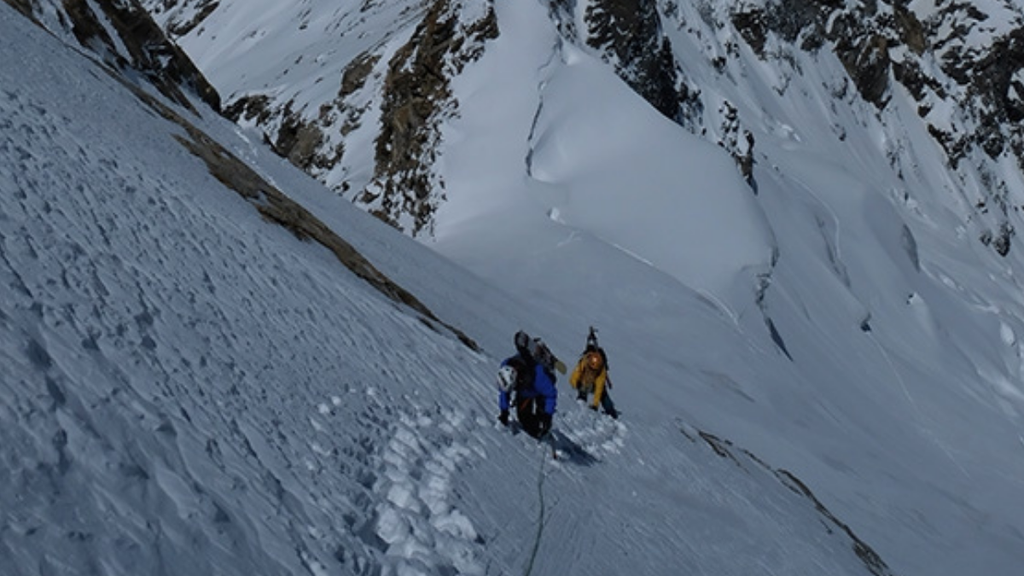
Göttler walked down with them to 7,700 metres. There he opened his paraglider and flew to base camp in about half an hour.
Dupérier and Langenstein took three days. Early on, one stretch had too little snow. They took off their skis and made a 30-metre rappel, which is sliding down a rope. They spent the first night in a bivouac, a night out on the mountain, at about 7,600 metres. The next day they were back at 7,400. On 26 June they skied down to 6,000 on stable snow.
Below that, the heat had done its work. There was rockfall, bare ground and poor snow. They walked, downclimbed and rappelled, and finished on foot.
Dupérier is honest about it. A full ski from top to bottom was not possible. The upper part, she said, gave them conditions they could enjoy. The lower part she called “a real escape.” Saying so makes the rest easier to believe.
Now
It is October 2026. Dupérier is back in the Alps. She is guiding and training aspirant guides. No major expedition to the Himalaya or Karakoram has been announced. Her recent work looks focused on the Alps: guiding, training and local climbing.
The Piolets d’Or ceremony is scheduled for 21 to 25 October at La Bérarde, in the French Alps.
There is no sign of a rush. She keeps her style almost ascetic. She has no big campaign, no live tracking and no public countdown to the next trip.
Her own reason for all of it is simple. “I want to do all these things I have in my head so I’m not sad.”
For now, she is where she has been all along: in the mountains, at work as a guide.
