

On September 20, an avalanche tore through Camp 3 on Manaslu and buried a tent with two people inside it: Indian-German climber Dhrubajyoti Guha and his guide, Phursemba Sherpa. Both died. It was the third and fourth deaths of an autumn season that had, until that point, produced exactly one confirmed summit all year the rope-fixing team, who reached the top before the mountain closed behind them.
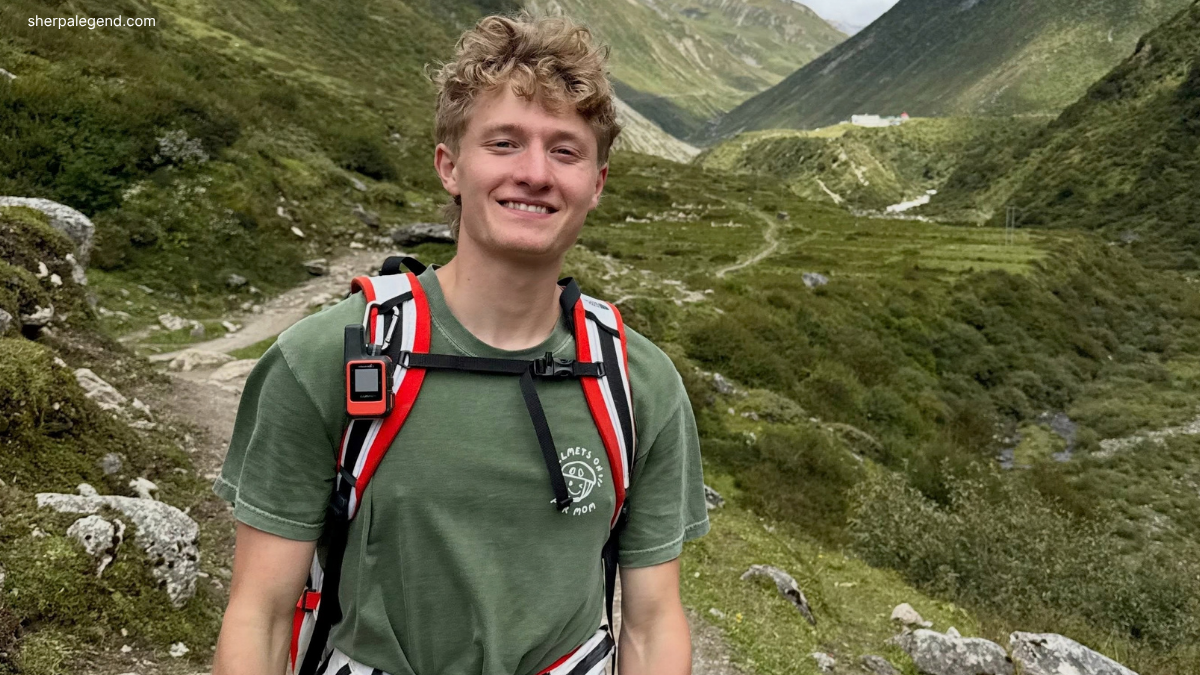
Ryan Mitchell and Justin Sackett were on the mountain when the news came down. They retreated to Base Camp in shock. Then, a day later, they went back up to Camp 1.
Their plan was not to charge for the summit. It was narrower than that if conditions were perfect, push to Camp 3 the next day, and maybe higher. If they weren’t, turn around. “We will turn around if we find unstable conditions,” Sackett said at the time. “Not worth dying for.”
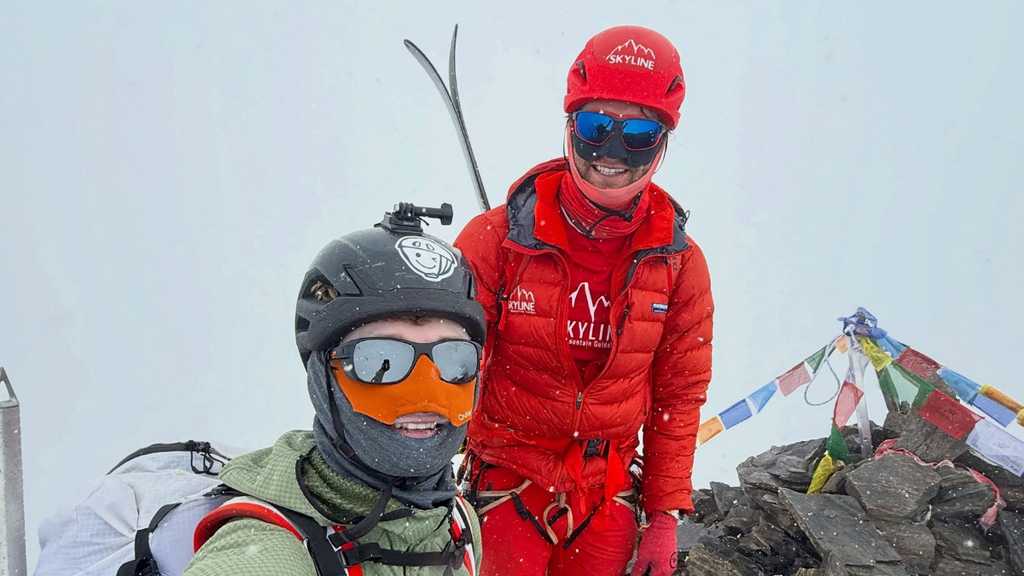
Conditions were not perfect. Persistent snowfall, an overloaded upper mountain, and a cyclone bearing in from the Bay of Bengal were already pushing most of the season’s operators toward the exits. Mitchell and Sackett evacuated with everyone else, no summit, no oxygen, no Sherpa support on the terrain they did manage to cover.
A few days later, Sackett posted the explanation on Instagram “For those who are interested in why we’re bailing on Manaslu … We got to ski/ride from 6,500 meters twice without supplemental oxygen or Sherpa support. Though we didn’t summit, Manaslu is a pretty amazing mountain to climb and ski. We’ll be back.” Mitchell’s own post struck the same note in fewer words it had still been “a great time,” and he’d “met some amazing people.”
A non-summit, framed not as a failure but as the next chapter of a story still being written in public. That framing is the reason people watch Ryan Mitchell in the first place. It isn’t really about summits. It’s about a kid who decided to become a mountaineer on camera, mistakes included, and built one of climbing’s biggest audiences by refusing to edit the mistakes out.
THE ORIGIN STORY
Ryan Mitchell’s mountaineering career started as a punchline waiting to be earned. In late 2022 or early 2023, the idea landed on him the way ideas land on YouTubers as a video title. “I Climbed Mount Everest.” That was it. That was the whole pitch.
At the time, Mitchell was known for Minecraft content, weighed around 217 pounds, and could barely run a mile. He had little outdoor experience beyond local hikes around Rutland, Massachusetts. There was no reason to think the title would ever be true.
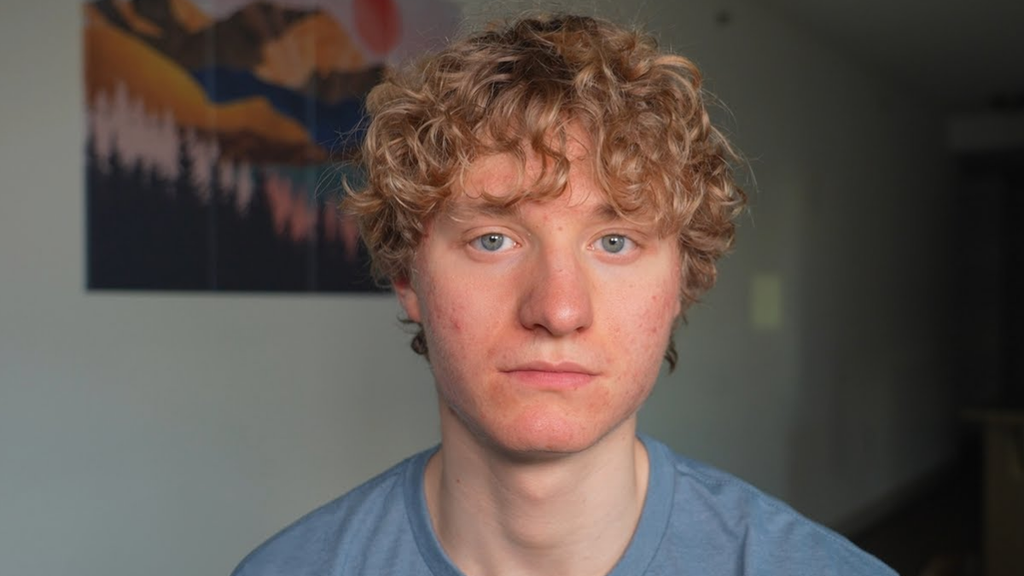
So he did the thing that separates a stunt from a career he asked someone who would tell him no. Mitchell contacted mountaineering coach and Everest chronicler Alan Arnette for guidance, and Arnette’s advice amounted to a delay build the skills first, or don’t bother. Mitchell took it.
He started training with weighted hikes up and down Wachusett Mountain, packs loaded to 35 to 50 pounds, for hours at a stretch, over and over, until the weight came off down eventually to somewhere around 160 to 170 pounds and the mountain stopped being a video concept and started being a plan.
THE LADDER
What happened next was not reckless. It was the opposite a deliberate, guided, unglamorous progression up the mountaineering ladder, the kind that any serious 8,000-meter climber would recognize and any influencer stereotype would find boring.
Mitchell worked through Rainier and Baker in Washington, Mount Hood in Oregon, and the volcanoes of Ecuador, Cotopaxi and Chimborazo. He picked up technical ice at Bridalveil Falls in Colorado, rated WI5+, along with other Cascades objectives like Shuksan and The Tooth. He climbed Aconcagua, with solo and unsupported elements on one attempt. He climbed Denali. Each peak added a layer of skill and suffering that a video title alone could never buy: rope work, altitude tolerance, cold management, the ability to keep making good decisions when his body wanted to stop.
None of it happened over years. It happened in months, stacked on top of the weight loss and the weighted hikes, funded increasingly by the channel that had started the whole thing as a joke.
EVEREST, 2024
On May 23, 2024, at 19 years old, Ryan Mitchell summited Everest via the South Col route, climbing with Madison Mountaineering under guide Garrett Madison and with his personal Sherpa, Aang Phurba Sherpa. The expedition ran roughly 40 to 42 days and cost around $120,000 about $75,000 for the expedition itself, another $15,000 in tips, and the rest in gear and travel. Every stage of it went up on YouTube.
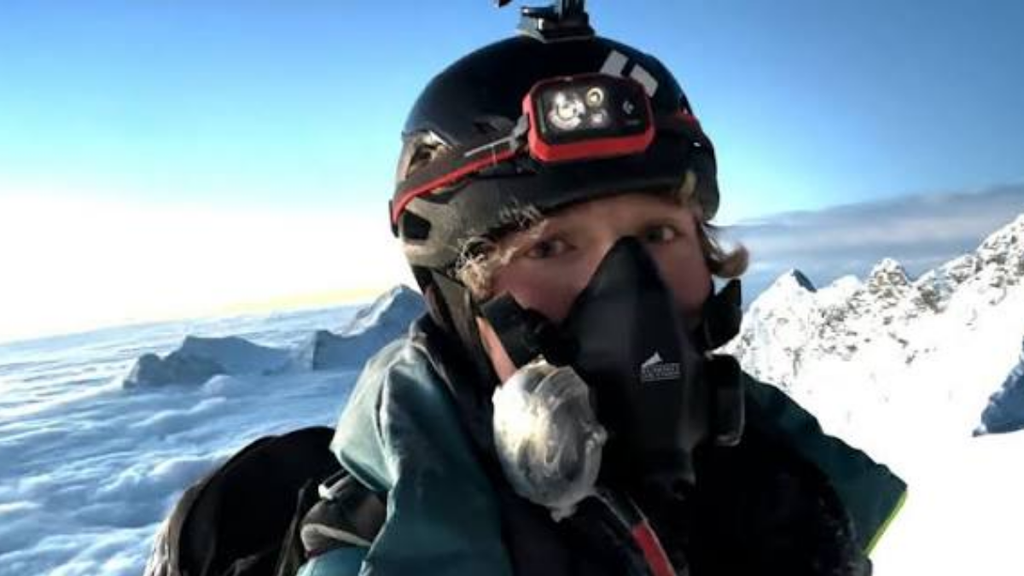
The summit produced the footage people expected tears of joy on the way up, the video-title premise made real. It also produced the footage commercial 8,000-meter climbing rarely shows so plainly passing the bodies of climbers who hadn’t made it, deep in the death zone, on the same push that was the best day of his life.
Mitchell has described the trip as life-changing, and the whiplash between those two things, joy and death within the same few hours at altitude, is a large part of why the Everest videos landed the way they did.
LEARNING TO SAY NO
If Everest built the channel’s second life, K2 in 2025 is where Mitchell’s story stopped being a straight line to the top of things.
He returned to Madison Mountaineering, this time under lead guide Terray Sylvester, with a Sherpa team supporting the climb. They reached Camp 1. Then conditions turned dangerous including rockfall that killed climbers on other teams on the mountain and Mitchell’s team abandoned the push. Instead of forcing it, they climbed a nearby unclimbed peak for acclimatization and spent part of the expedition hauling roughly 600 pounds of trash out of the base camps.
Mitchell documented the retreat and the decision-making behind it as thoroughly as he’d documented the Everest summit. It is the first time in his climbing career that the content is built entirely around not reaching the top, and it marks the pivot from summit-chaser to something more interesting a climber whose story is now about judgment as much as ambition.
PARTNERSHIP AND CRAFT
In November 2025, Mitchell climbed Ama Dablam successfully alongside Justin Sackett, founder of Skyline Mountain Guides and a climber with deep experience on Rainier. The technical climb included one notable stretch a base-camp-to-summit-and-back push completed in roughly 23 hours as conditions worsened around them.
Ama Dablam is where the Mitchell-Sackett partnership hardened into something built for bigger objectives, and where the two started aiming explicitly at climbing without supplemental oxygen. That ambition no bottled O2 on an 8,000-meter peak is a different sport than guided commercial mountaineering with oxygen on demand. It asks more of the body and punishes mistakes faster. It set up everything that came next.
THE NEAR MISS
The partnership’s first real test at that level came in 2026, on Everest, and it nearly ended in a medical evacuation instead of a summit attempt.
Mitchell and Sackett went in aiming for a no-supplemental-oxygen climb, with emergency oxygen carried by a Sherpa in case it was needed. They front-loaded the trip with extended acclimatization a Lobuche East summit, nights at high camps near Pumori, weeks spent living above roughly 18,000 feet, the unglamorous groundwork that no-O2 climbing demands. Then they descended to Kathmandu to wait for the Khumbu Icefall to open, and when they made the rapid return trip back up to Gorak Shep and Base Camp, Mitchell’s body broke down.
He developed severe High Altitude Pulmonary Edema his lungs filling with fluid. His blood oxygen saturation dropped as low as 35 percent. Coughing, gastrointestinal distress, the kind of numbers that turn a climb into a medical emergency. He was put on oxygen and airlifted out, and the expedition was canceled on medical advice, to avoid the risk of dying. Mitchell shared detailed video of the near-miss, the same way he’d shared the summit and the retreat before it.
It’s the darkest material in his catalog, and probably the most important. It’s the moment the premise a YouTuber climbing mountains stops being able to hide behind the word YouTuber. HAPE at 35 percent saturation is not influencer cosplay. It’s the kind of number that kills people, and Mitchell put a camera on it anyway.
MANASLU, FULL PICTURE
By the time Mitchell and Sackett arrived at Manaslu in early September 2026 for acclimatization above Samagaon, the goal was familiar climb the 8,163-meter peak, the eighth-highest in the world, without supplemental oxygen, then ski the descent. They went as clients of 14 Peaks Expeditions, with a plan built around acclimatization rotations, one push toward Camp 4 at roughly 7,400 meters, and a targeted summit window around September 24 with contingency time built in.
The season around them was the most crowded Manaslu had ever seen a record roughly 493 foreign permits, plus support staff, more than 1,000 people on the mountain in total and one of the most dangerous.
Persistent rain and snowfall loaded the upper slopes with unstable snow. A cyclone was building in the Bay of Bengal. The rope-fixing team’s summit turned out to be the only confirmed summit of the entire season. Four people died before it was over, including the two killed in the Camp 3 avalanche.
Against that backdrop, Mitchell and Sackett’s actual achievement reads differently than “didn’t summit.” They skied down from 6,500 meters twice, without bottled oxygen and without Sherpa support on that terrain the technical heart of what they’d come to do, even without the summit attached to it. Most of the season’s major operators canceled outright, citing the deep snow, the avalanche risk, and the incoming storm. Teams evacuated. The mountain closed early. No further client summits happened at all.
Framed against a season that killed four people and stopped nearly everyone who tried, a turnaround that preserved two lives and still delivered the skiing they’d trained for isn’t really a non-event. It’s the discipline the whole story has been building toward since Wachusett Mountain.
WHY PEOPLE WATCH
Strip away the mountains and Ryan Mitchell’s appeal comes down to one unusual choice, repeated every time he shows the parts a mythologized sport usually cuts out.
Most mountaineering media reaches audiences after the fact, curated into triumph or tragedy. Mitchell’s audience gets K2’s retreat, Everest’s HAPE evacuation, and Manaslu’s bailout in close to real time, filmed with the same care as the summits.
That transparency is the credibility. A climber who only posts summits is selling a highlight reel; a climber who posts the retreats, the 600 pounds of hauled-out trash, and a blood oxygen reading of 35 percent is showing his actual margin for error and letting the audience watch him manage it instead of hide it.
It also answers the fear that follows every fast-rising influencer into the mountains that the speed is reckless, that the content is the point and safety is an afterthought. Mitchell’s record argues the opposite. The turnarounds on K2, on Everest, and now on Manaslu are the same decision made three times stop before the mountain makes the decision for you.
That message, delivered by someone who used to be a Minecraft YouTuber and is now sponsored by The North Face, is a genuinely unusual thing to have built an audience around an amateur-to-expert arc that never stops admitting it’s still in progress.
UNFINISHED BUSINESS
Manaslu is not a defeat in Ryan Mitchell’s telling of it, and as of this writing, that framing hasn’t been contradicted by anything except time. He and Sackett got the skiing. They didn’t get the summit. They said, plainly, that they’re coming back for it.
“We’ll be back,” Sackett wrote. It reads less like a consolation line than a placeholder the kind of sentence a story leaves at the bottom of the page when it isn’t finished yet, because it genuinely isn’t.
