
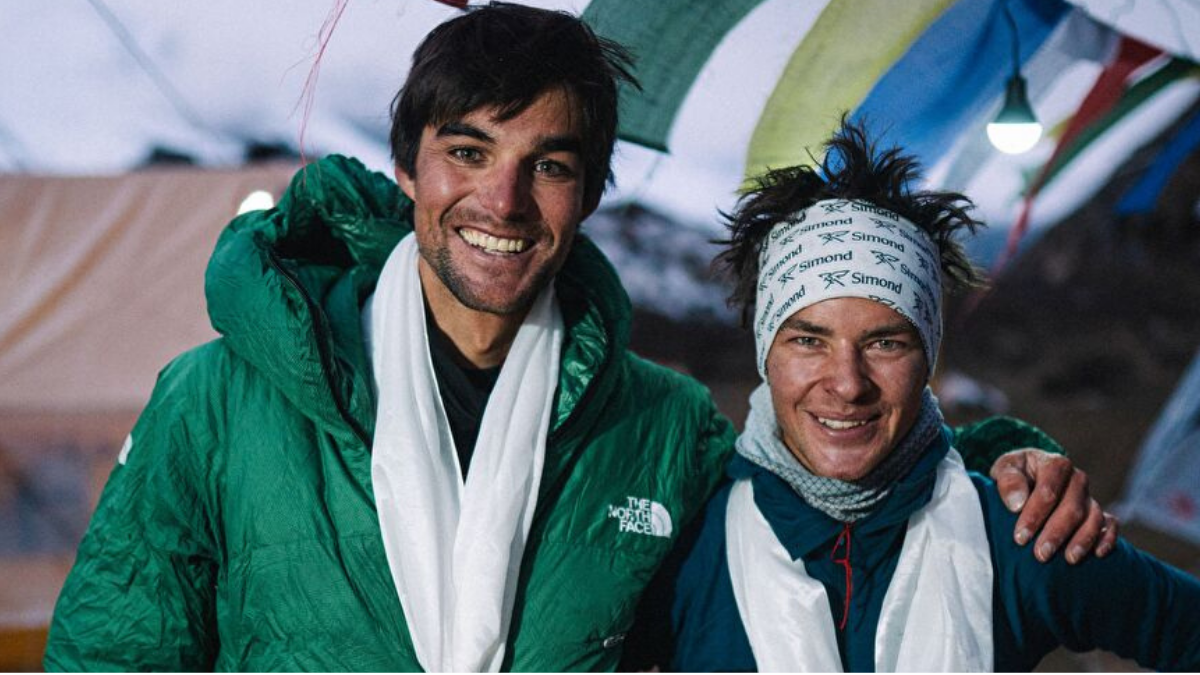

At 6,900 meters on the east ridge of Jannu, there is no flat ground. There are no fixed ropes above, and there is no rescue team waiting below.
Two men are digging out a ledge barely wide enough to sit on, on a ridge so narrow and corniced that one wrong step in the dark could end everything.
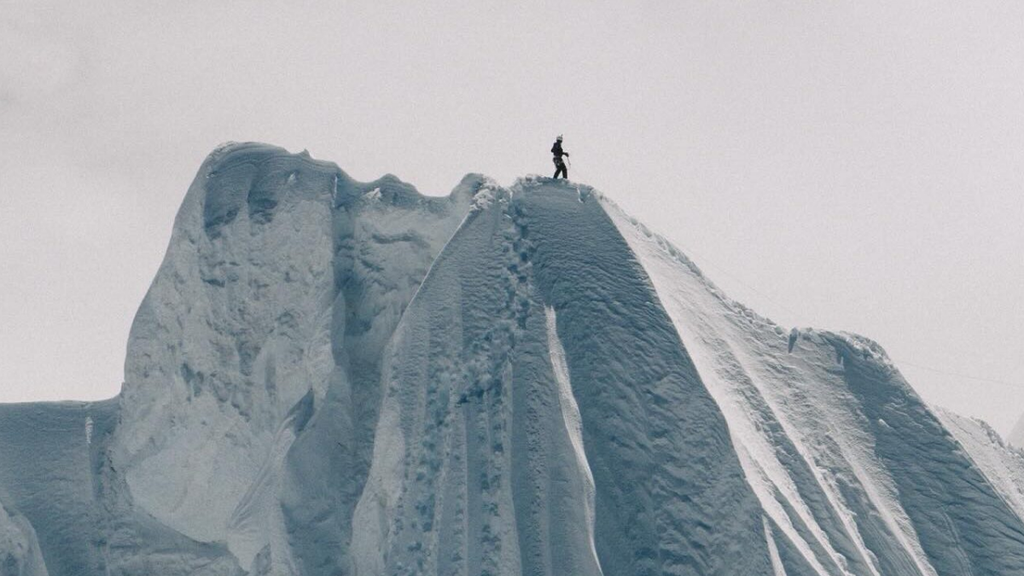
Below them: nearly two vertical kilometers of the mountain they have just spent days climbing, with no support, no bottled oxygen, and no one else in this remote corner of Nepal who could reach them if something went wrong. It is just the two of them, a stove melting snow for water, and a long night to get through before they can try for the summit.
A few months later, that same climb would be named the best in the world. Benjamin Védrines and Nicolas Jean had just won the Piolets d’Or mountaineering’s most prestigious award – for their first ascent of Jannu East.
But the prize came later, and it is almost the least interesting part of the story. What happened on that ridge, and everything that led two friends to be standing on it together, is the real story two ordinary men from small towns in the French Alps, betting everything on their own skill, with nothing to fall back on.
THE ENGINE AND THE CRAFTSMAN
Ask people who know Benjamin Védrines to describe him, and speed comes up first. At 34, from the town of Die in the French Alps, he has built a reputation as one of the fastest alpinists alive esoloing routes in hours that take other climbers days, and, in one of his more famous exploits, paragliding down from 8,000-meter peaks after climbing them.
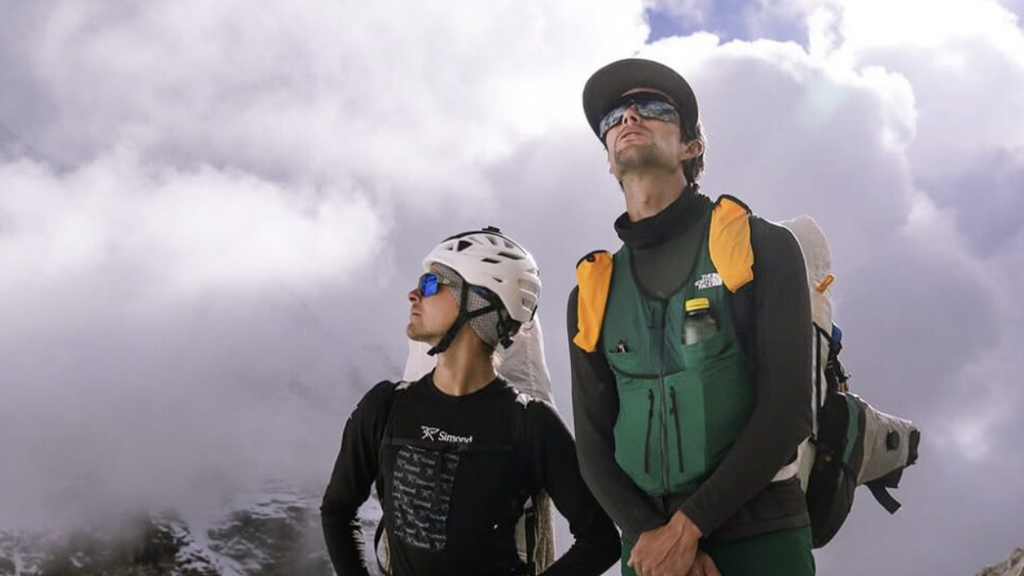
It would be easy to reduce him to a list of records, the way most profiles of fast, prolific athletes tend to. But those who climb with him describe something quieter underneath the speed: a man who treats the mountains less like conquests to be ticked off a list and more like a second home he keeps returning to, again and again, because it is where he feels most himself.
Nicolas Jean is the other half of the pair, and by most accounts the opposite kind of climber. In his late twenties, from the Ubaye valley, he works as a carpenter and guides in the mountains by calling rather than career path.
He is, by reputation, famously uncomfortable in the spotlight the kind of climber who would rather let the route speak for him than sit for an interview about it. One detail says more about his character than any climbing résumé could: as a teenager, he quietly climbed all 63 peaks over 3,000 meters in his home valley, alone in his ambition, long before anyone outside the Ubaye had heard his name.
That patience the willingness to do the complete, unglamorous version of something rather than the impressive-looking version — is who showed up on Jannu, years later, when it mattered most.
Put the two side by side and the pairing makes intuitive sense: the sprinter and the craftsman. One known for how fast he can move, the other for how thoroughly he prepares before he moves at all. It is not an obvious partnership on paper, and it did not begin as one.
On the mountain, it turned out to be exactly the combination that worked — speed when speed was needed, and the patience to build toward it slowly, over years, before either of them ever set foot on Jannu.
HOW THEY MET
The origin story here is almost aggressively unglamorous, which is part of what makes it real. There was no shared expedition, no formal introduction between two rising stars of French alpinism.
Eight to ten years ago, a mutual friend named Julien Savy simply brought together four climbers for a casual day out in an ice gully. Nothing about it was planned as significant, and nobody involved seems to have thought of it as anything other than a day out with friends.
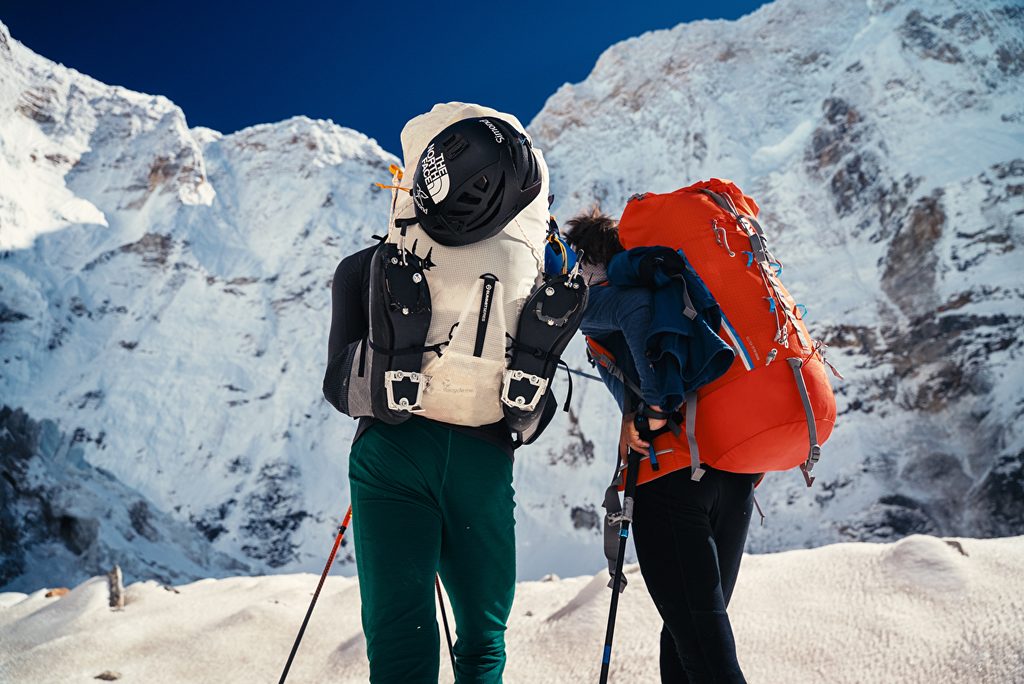
© Quentin Degrenne
A few days later, Védrines and Jean found themselves roped together, just the two of them, on a route called Passy–Bonne Pierre. There was no grand plan, no sense in the moment that they were founding what would become one of the sport’s defining partnerships. They were simply two young climbers who happened to click — who moved well together, trusted each other on the rope, and wanted to keep climbing together after that first shared route.
Nicolas has since described Benjamin as someone who took him under his wing, the way an older brother would. Benjamin, for his part, calls Nicolas his longtime partner-in-crime. It is a small, tender detail in a sport so often described in the language of conquest and risk — two friends who found each other by accident on an ordinary day, and simply stayed close for the better part of a decade.
A PARTNERSHIP BUILT SLOWLY
It would be tempting to tell this next part as a masterplan — two men methodically building, year over year, toward a single Himalayan objective. That is not what happened, and the honest version is more moving anyway. For years, the two simply climbed and ski-toured together near home, in the Écrins and Ubaye mountains, without any Himalayan ambition attached to it. It was just what they did with their time — the ordinary rhythm of two friends who liked being in the mountains together.
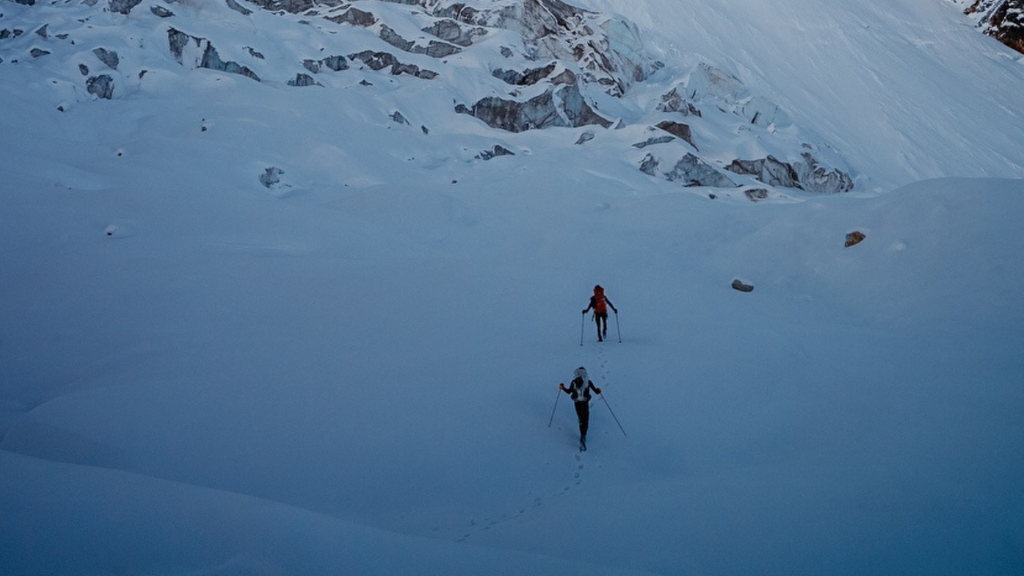
Their first big joint trip abroad came in 2019, with a new route up Chamlang. It was a real step up in scale and difficulty, but it still was not the main event, and neither man seems to have treated it as a turning point at the time.
That came later, and it came with a failure attached rather than a triumph. In 2024, the pair attempted Jannu East and turned back at 6,700 meters — short of the summit, and short of everything they had hoped for after years of building toward it. That retreat matters more than it might seem. It is the setup for everything that follows: the moment that makes the eventual success mean something, rather than a story of two men who simply showed up and got lucky on the first try.
THE CLIMB
October 2025. Base camp sits at 4,700 meters. Before the real attempt, they acclimatize the way careful climbers do — by making a first ascent of a nearby peak, testing their bodies and their systems before committing to the main objective. It is the kind of unglamorous groundwork that rarely makes it into the headlines, but without it, nothing that follows is possible.
Then the real push begins. A day of steep ice leads to a first bivouac at 6,200 meters, after a mixed pitch so poorly protected that a fall would have meant serious consequences. There is little room for error on terrain like that, and none for hesitation.
The next stretch takes them higher still, to a second bivouac at 6,900 meters, on the narrow, corniced east ridge described at the start of this story — the kind of terrain where a single misstep is not a setback but potentially fatal. A cornice, for anyone unfamiliar with the term, is an overhanging shelf of packed snow that can collapse without warning; climbing beside one means trusting ground that might not actually be there.
They reach the summit. Then comes the descent, which in many ways demands as much as the climb itself: a day and a half of roughly fifty rope-lowers down their own route, alone in one of the most remote corners of Nepal, with no radio call away from help if a rope jammed or an anchor failed. No bottled oxygen. No fixed ropes left behind by other teams to follow. No support crew standing by lower down the mountain. Just two men, their own gear, and a mountain that had turned back stronger, better-resourced teams for decades before them.
WHY THEY WON
The Piolets d’Or does not simply reward whoever reaches the highest point on a mountain. It rewards how a team gets there. Judges praised the Jannu East ascent as an example of what the sport calls perfect alpine style — light, fast, self-sufficient, and respectful of the mountain rather than dependent on stacking resources, fixed ropes, and support teams against it.
In plain terms, for readers who don’t speak the sport’s shorthand: Védrines and Jean climbed one of the world’s last great unclimbed lines in the hardest and most honest way available to them, wagering the entire attempt on their own skill and judgment, with nothing held in reserve if things went wrong. That, more than the summit itself, is what the award recognizes.
BEYOND THE AWARD
Jannu East had stood as one of the last great unclimbed lines in the Himalaya, and its fall carries weight for Nepali mountaineering and for the broader sport, not just for the two men who happened to climb it. For Védrines, the award adds to a rare Special Mention he already received in 2025 for redefining modern alpinism — and together, the two honors cement this partnership as one of the defining pairings of the sport’s current era.
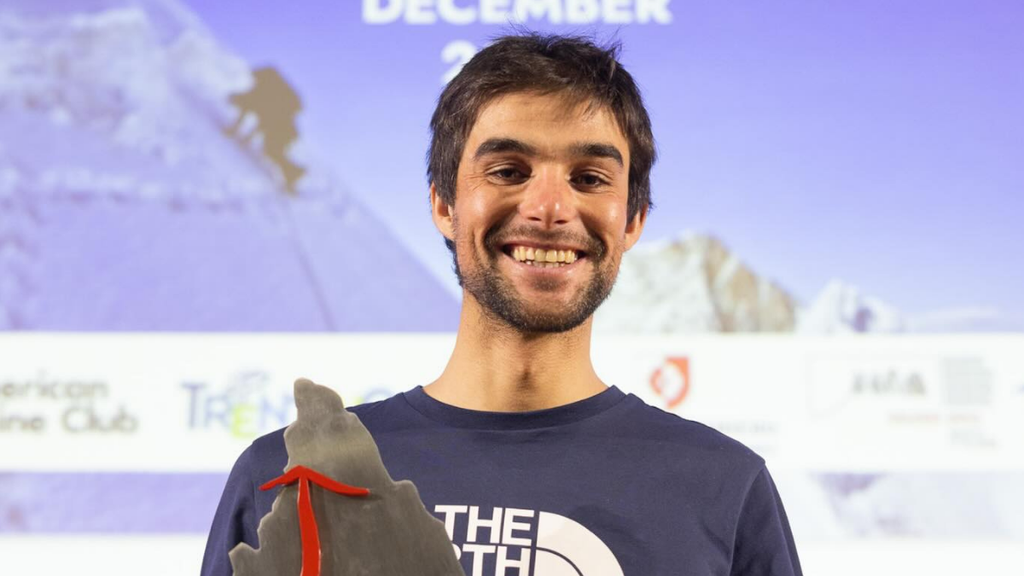
But strip away the award, the judges’ language, and the records, and what remains is the simplest part of the story: two friends from small mountain towns in France, who met by accident on an ordinary day out, who failed together at 6,700 meters before they ever succeeded, and who — after quietly becoming two of the best alpinists alive — went back to being a carpenter and a man who still calls the mountains a second home rather than a trophy case.
They didn’t change who they were to win mountaineering’s biggest prize. They won it by staying exactly who they already were.
