

Manaslu turns 70 this year. In the seven decades since the world’s eighth-highest peak was first climbed, 3,643 people have stood on its summit.
This autumn climbing season alone is expected to add more than 300 new summiteers to the mountain’s historical total. That number is almost 10% of everyone who has ever reached the summit of the mountain since its first ascent.
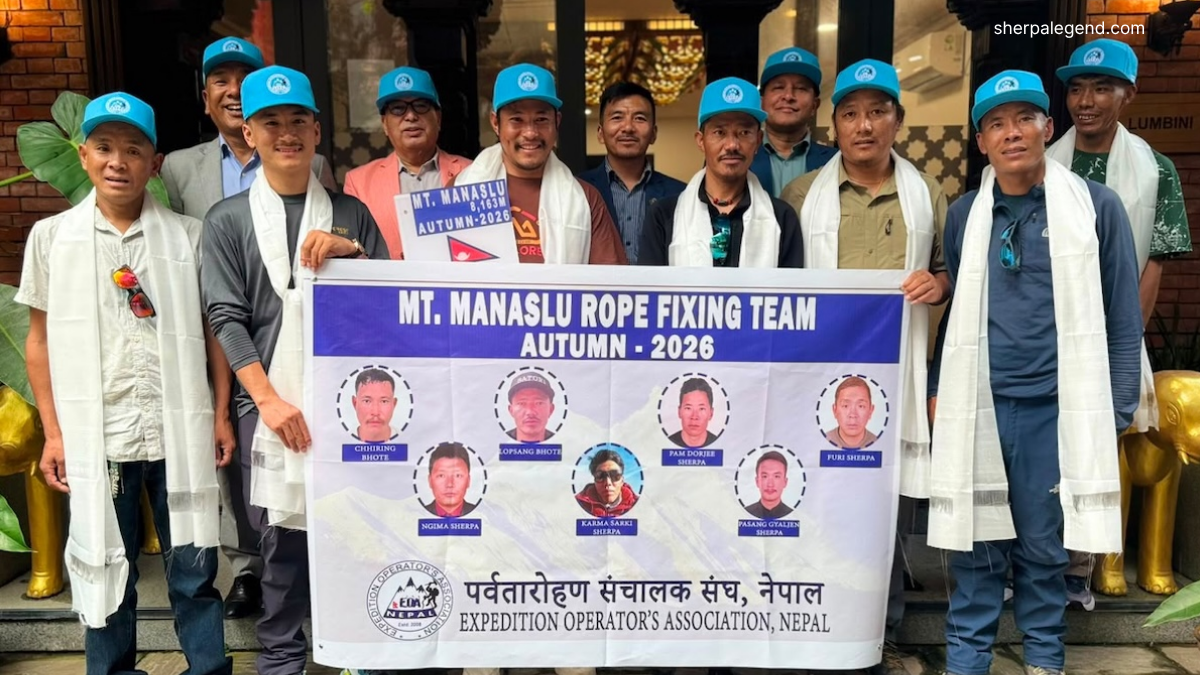
But before any of those 300 climbers touch the top, seven Nepali climbers have to touch it first. Chhiring Bhote, Lopsang Bhote, Pam Dorjee Sherpa, Furi Sherpa, Ngima Sherpa, Karma Sarki Sherpa and Pasang Gyaljen Sherpa left Kathmandu on Monday to begin the season’s most thankless job: fixing ropes up thousands of vertical meters of snow and ice so paying clients can follow safely behind them, weeks from now, in far better conditions than the ones this team will face.
It is dangerous, unglamorous work, and outside the mountaineering world almost nobody will ever learn their names. On Sunday, the Expedition Operators’ Association of Nepal (EOAN) and the Nepal Mountaineering Association (NMA) gave them a farewell ceremony at Hotel Manaslu in Kathmandu. Then the real work started.
Seventy years, 3,643 summits and counting
Manaslu’s first ascent came on May 9, 1956, when Japanese climber Toshio Imanishi and Sherpa climber Gyalzen Norbu Sherpa reached the top. The first Nepali to summit was Urken Chiring Sherpa, in 1973. In the 70 years since, 3,643 people have stood on Manaslu’s summit — a number this single season could stretch close to 4,000.
The “easy” 8,000er that still kills people
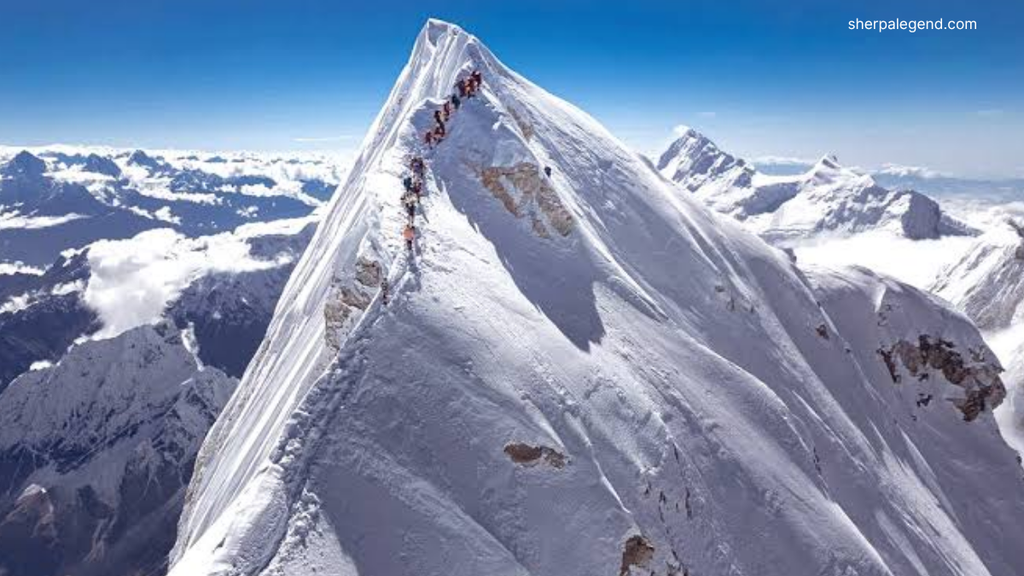
Manaslu gets called a beginner’s 8,000er — the mountain climbers use to break into serious high-altitude mountaineering before attempting harder giants. That reputation is misleading. The standard Northeast Face route runs through four camps, steep sections of exposed serac, and a summit ridge that has confused climbers for decades: a false summit sits just before the true one, close enough that entire expeditions have disputed, after the fact, whether they actually finished the climb.
Avalanches are the mountain’s real danger. Manaslu’s fatality history has been driven by snow slides more than any other single hazard. Even well-supported commercial teams succeed only around a third of the time, and a full-service guided trip runs anywhere from $12,000 to more than $30,000, depending on the level of support and oxygen use.
A big machine, and a handful going it alone
This season, the commercial machine is enormous. Seven Summit Treks is fielding multiple teams. 8K Expeditions is bringing more than 60 foreign clients, with Lakpa Sherpa splitting his attention between Manaslu and a parallel effort on Dhaulagiri. 14 Peaks Expeditions has Tashi Lakpa Sherpa leading roughly 45 climbers. Imagine Nepal, Asian Trekking, Himalayan Guides and Satori are all running teams of their own, many doubling up on Dhaulagiri, Himlung or Ama Dablam in the same window.
Most of these climbers will use supplemental oxygen from Camp 3 or Camp 4 upward. A smaller number won’t. Italian winter-climbing veteran Simone Moro, who once survived a cardiac scare mid-expedition on this same mountain, is planning an autumn Manaslu attempt of his own — partly a test of conditions and himself, with an eye on another winter attempt if it goes well.
One name missing from every team list
One absence will hang over the season quietly. Nirmal Purja, the Nepali climber who redefined how fast the world’s highest peaks could be climbed, was among those killed in the Broad Peak avalanche this past July. His circle is not expected to be active on Manaslu this autumn.
What happens next is still unwritten. Will the prime October window hold, or will jet-stream winds close in early? Will 300 climbers converge on the fixed ropes at once if the weather narrows their chances, turning the summit ridge into a queue? And will anyone push a bold, unsupported no-O2 line on a mountain that’s about to be busier than it has ever been?
Base Camp is filling up. The ropes are going in. The next dispatch will tell us more.
