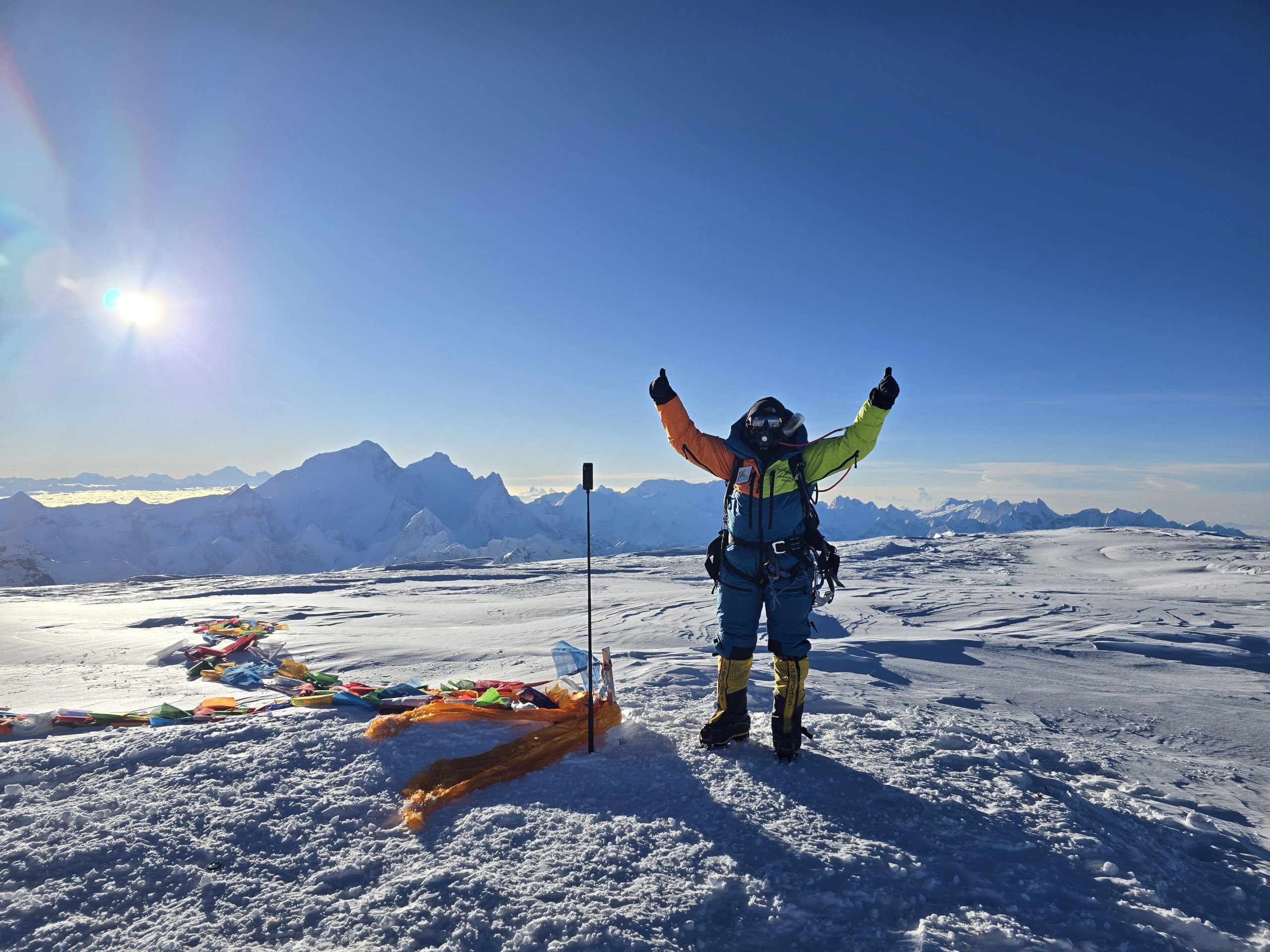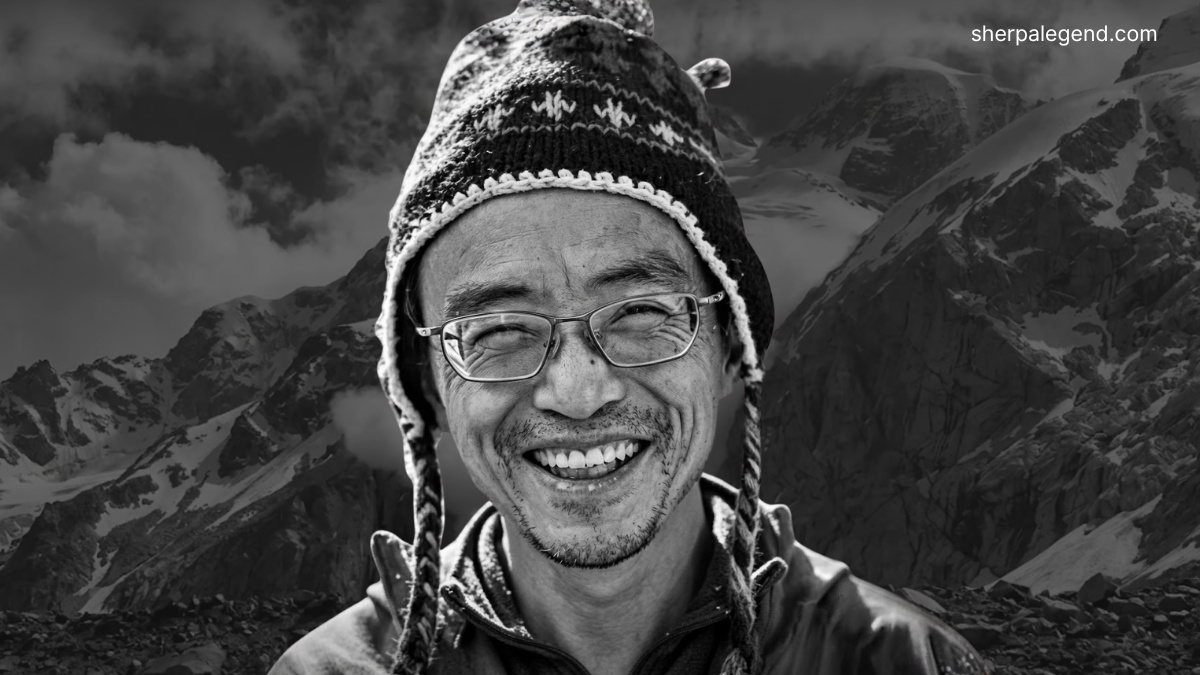

Ten years ago, on the way down from the summit of Cho Oyu, Yang Xianfeng passed a climber he barely recognized. The man’s clothes were grey with a week of dust. His face was unshaven, his eyes fixed somewhere past exhaustion. It was Wang Zhong, 42 years old, on his first 8,000-meter peak. Back home, by day, he ran a cybersecurity company he had co-founded. Almost none of the climbers around him knew that. Almost none of his colleagues knew he climbed at all.
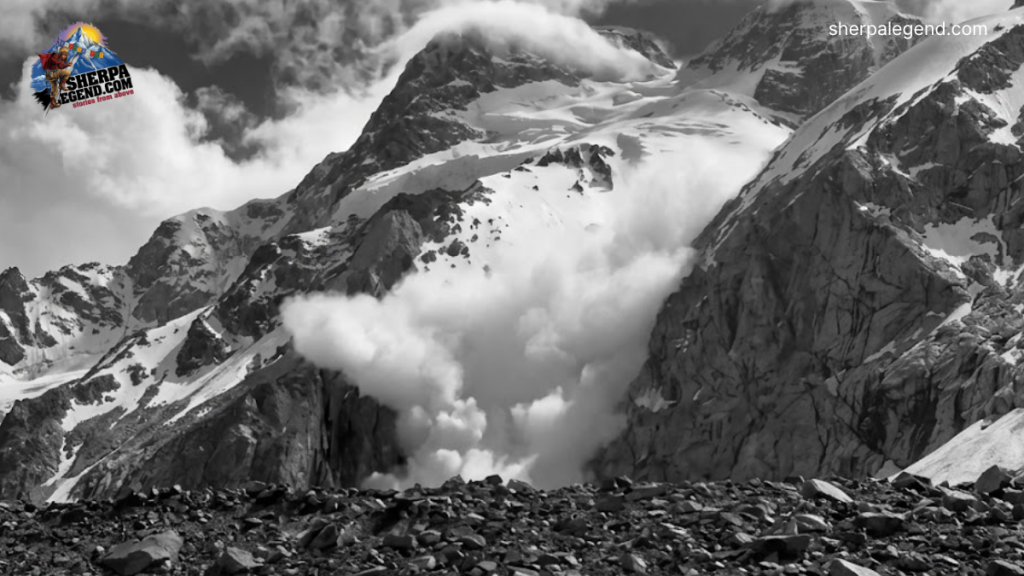
Ten years later, on July 30, 2026, an avalanche swept a stretch of Broad Peak in Pakistan’s Karakoram range, killing all ten members of an international climbing team. Among them was Wang Zhong, 52, from Sichuan, China.
He had been twelve summits into a difficult goal: to climb all fourteen of the world’s 8,000-meter peaks. Broad Peak was meant to be his thirteenth. Only Shishapangma, in Tibet, would have remained.
A quiet exit from the tech world
Wang Zhong was born in Sichuan in 1974. He earned dual bachelor’s degrees in electronic engineering and applied mathematics from Shanghai Jiao Tong University in 1997, then a master’s in electronic engineering from Sichuan University in 2000.
His early career took him into distributed systems work at DSET Corporation’s Chengdu R&D center, then to NetScreen Technologies as a senior software design engineer. When NetScreen merged with Juniper Networks, Wang Zhong helped build Juniper’s Beijing R&D center and led the development of its ScreenOS team, rising to senior software engineer and software architect.
In 2006, he returned to China as a co-founder and chief software architect of Hillstone Networks, becoming one of the first entrepreneurs in China’s domestic cybersecurity industry.
The company listed on Shanghai’s STAR Market in September 2019. But Wang Zhong had already begun stepping back. He transferred his shares in 2017 and left the company around 2019, ahead of its public listing, and settled primarily in the United States.
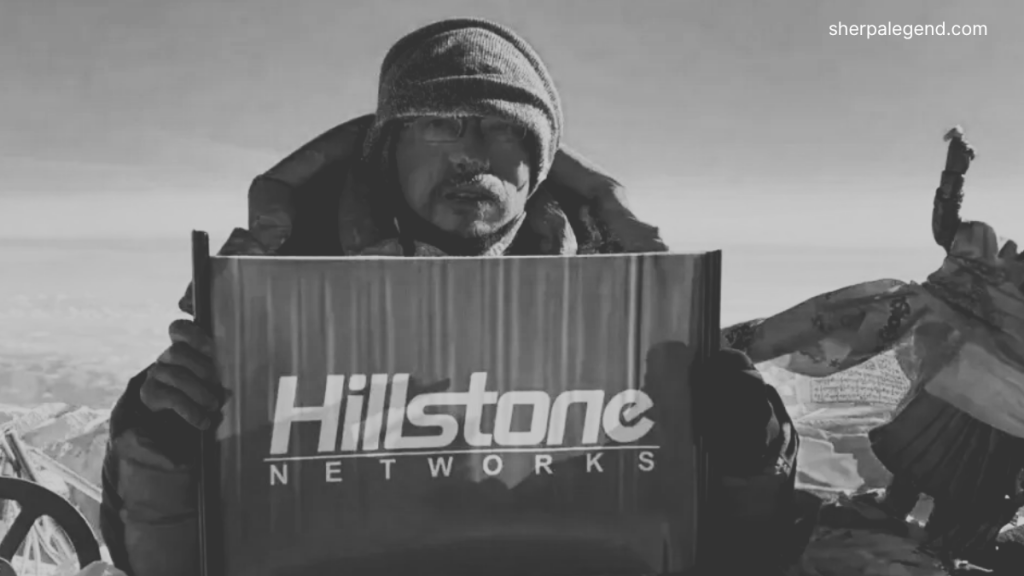
Former colleagues believe the timing was deliberate — partly to make room for his climbing, and partly, as one put it, to “turn the page” on his entrepreneurial career. He did not disappear from the company entirely, though. On later expeditions, he still carried the Hillstone flag to the summit.
Why he climbed?
Mountaineering in China is still a young pursuit. It does not have the depth of climbing culture found in Europe or Nepal, and the number of Chinese climbers attempting the 8,000-meter peaks remains small. Wang Zhong built his climbing life almost entirely outside of that spotlight, and outside any spotlight at all.
For eleven years, by his friends’ account, he never once posted about mountaineering on social media. In a sport where summit photos are currency and expeditions are livestreamed, tracked, and sponsored, that kind of silence is rare. “He never flaunts the mountains he’s climbed,” said Yang Xianfeng, a close friend. “In the past ten years, he has never posted a single post about mountaineering on social media. He truly is a pure climber.”
The reticence went both ways. Yang said Wang Zhong rarely mentioned his professional achievements to his climbing friends, either. Most of them knew little about his work history — only that he was, in Yang’s words, “a very capable technical expert.”
The fourteen peaks, quietly
After Cho Oyu in 2016, Wang Zhong’s climbing built slowly, then quickly. In 2017 he had to sit out an Everest attempt because of work. He finally summited Everest in 2021, at 47.
On New Year’s Day 2022, he met Yang Xianfeng in San Francisco and told him he intended to climb all fourteen 8,000-meter peaks “with absolute certainty,” Yang recalled him saying.
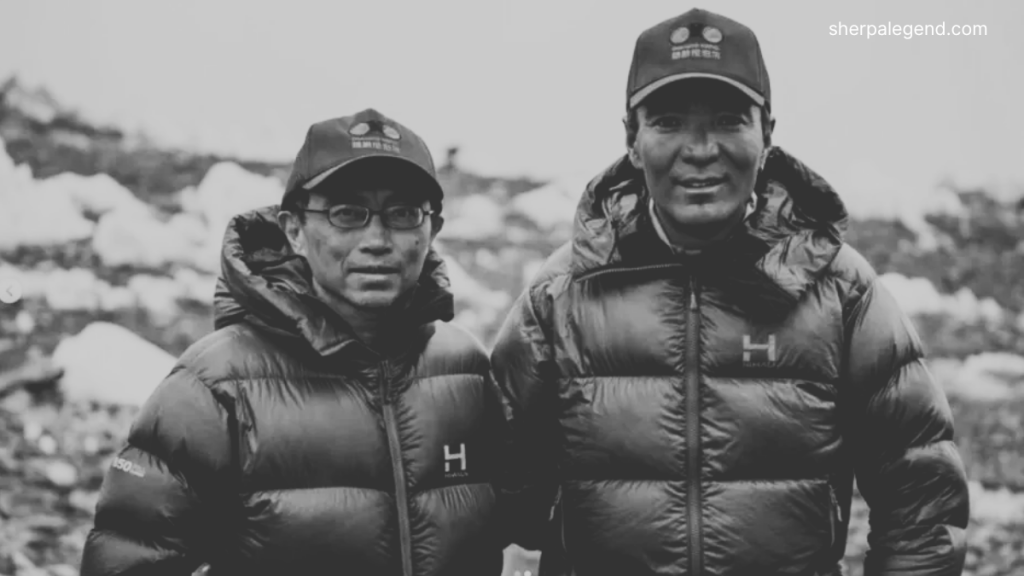
From there, the pace accelerated. He summited Gasherbrum I in July 2025. Then, in 2026, he climbed two more peaks in barely three weeks: Nanga Parbat (8,125m) around July 3–4, guided by Kili Pemba “Kilu” Sherpa — a climb that also completed Kilu’s own fourteen 8,000ers — and Gasherbrum II (8,035m) on July 21–22. That put Wang Zhong at twelve of the fourteen. Broad Peak, at 8,047 meters, was next. Kilu was guiding him there too.
“If it weren’t for the accident, Wang Zhong would have been able to complete this ten-year climbing feat in 2026,” Yang Xianfeng said. Shishapangma, suitable for an autumn climb, was to have been the last mountain.
How his friends remember him
Mountaineering enthusiast Li Ying met him at Everest Base Camp in 2023 and remembers a man who wasn’t much for talking, who never boasted about what he’d done or weighed in on his own merits. “He had work to handle, yet he still felt there wasn’t enough time,” she said. “He spent almost all his time outside of work climbing.”
Early in 2026, after Li Ying fractured her leg while climbing, Wang Zhong made a special trip to check on her. She told him to stop climbing. “He said he would follow his heart,” she said. “I think he will definitely follow his own heart.”
A former colleague who had known him for more than twenty years described him simply as warm-hearted, helpful, and drawn to challenge someone hard to picture as anything but present tense. “I still can’t believe he’s gone,” the colleague said.
Friends also remembered his lean build and unusual physical toughness built over years of trail running and time outdoors. On that first big peak in 2016, Yang said, he already looked like a seasoned hiker rather than a newcomer.
Broad Peak
The avalanche struck around 6,600 meters, between Camp 2 and Camp 3, catching the ten-member international team climbing with the operator Imagine Nepal. On August 2, the Pakistan Alpine Club confirmed that rescue teams had recovered four bodies and carried them down to Camp 1, at 5,600 meters. Wang Zhong was among them.
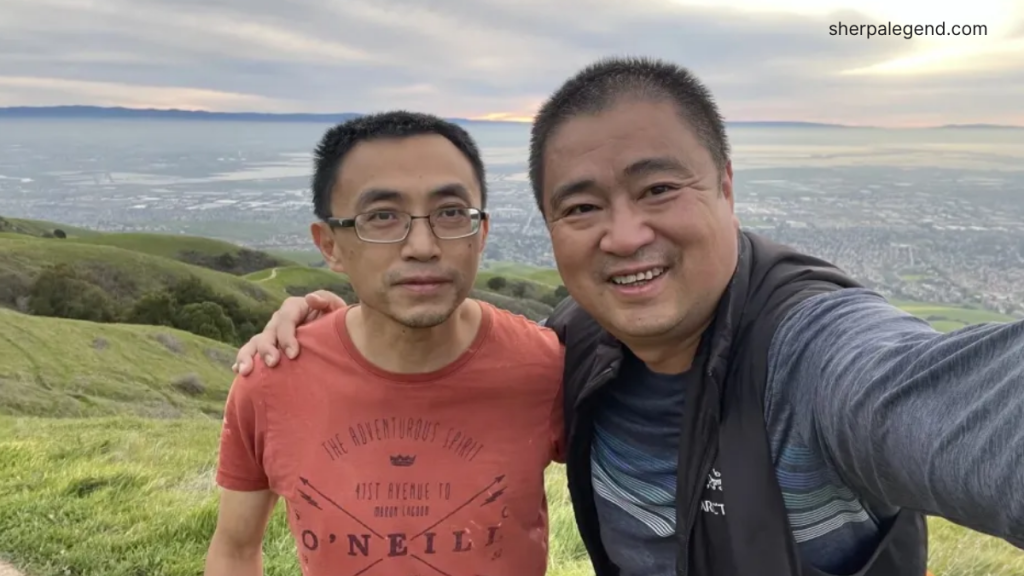
Yang Xianfeng, reflecting on what drew his friend to the mountains, offered something closer to a philosophy than a eulogy.
“What truly fascinates mountaineers is the interaction between humanity and nature, challenging their own limits, rather than trying to conquer the mountain itself,” he said. “Every time we return home, we should be grateful to the mountain gods for releasing us and learn to respect nature. I believe Wang Zhong is such a climber.”
Yang Xianfeng
He did not finish the fourteen. He came within one mountain of it, on a route he had chosen with the same quiet resolve that took him out of a company he built and into a life mostly lived above 8,000 meters, unannounced. Those who knew him say that was the point — not the summits themselves, but the way he went after them: without an audience, and without ever once saying so.