
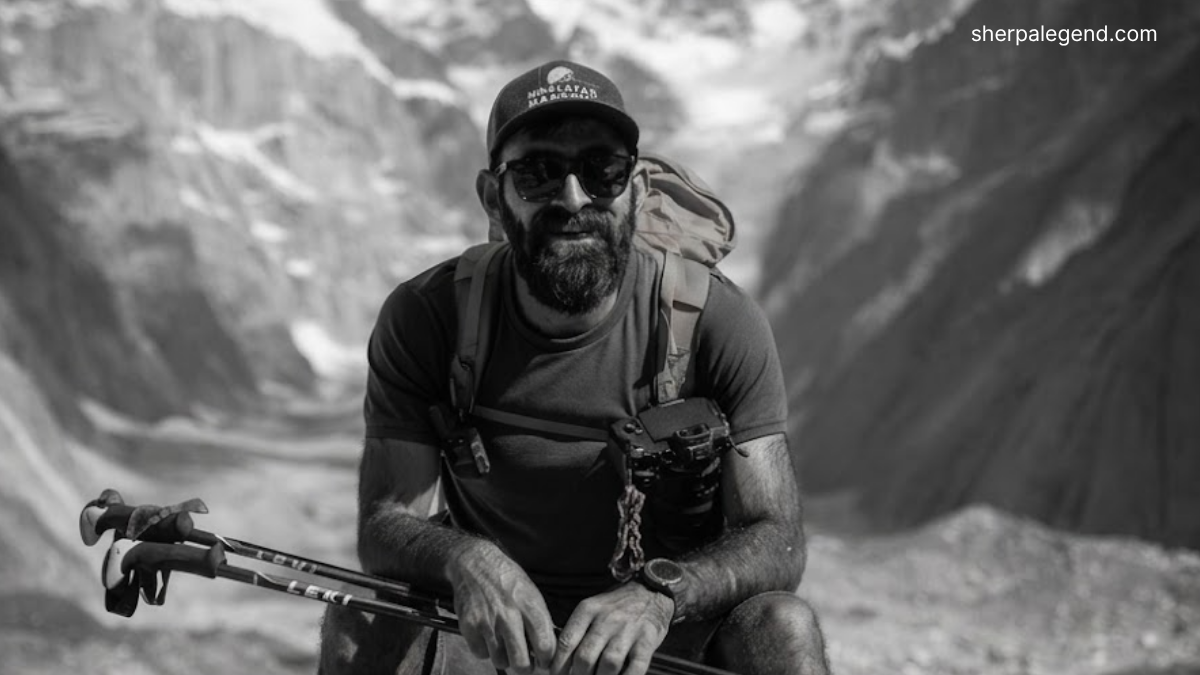

On the summit push of Island Peak in 2023, Sohail Sakhi was the strongest climber on the mountain, and everyone around him knew it. But that day he wasn’t out front. He was in the back, moving at the pace of the slowest member of his group, a client who had almost nothing left in her legs. He stayed beside her the whole way up, talking her through the steep, thin final stretch until she stood on the summit. Without him there, she would not have made it.
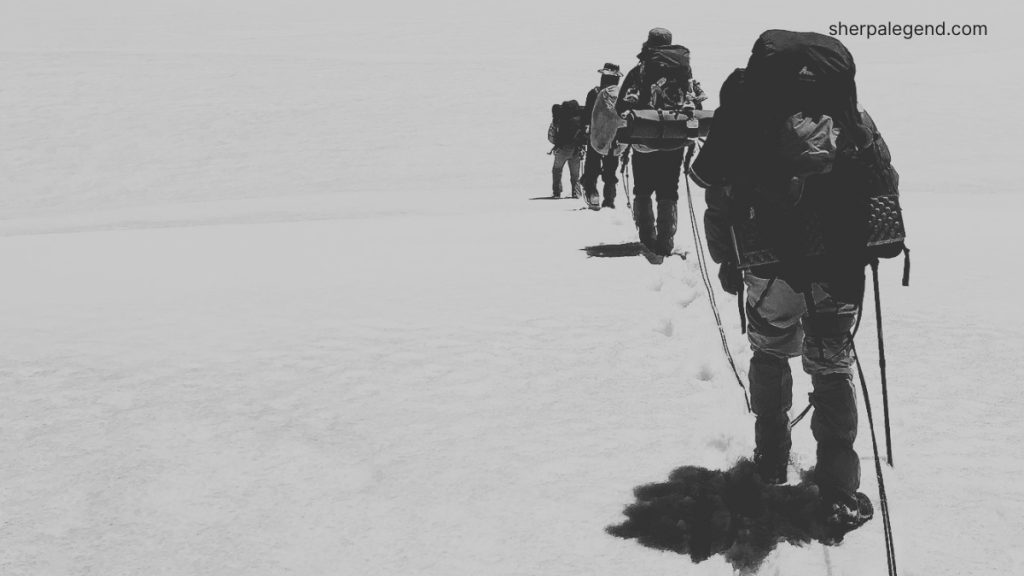
That was Sohail. Strength was never the point for him. What he did with it was.
Sohail Sakhi died on July 30, 2026, in an avalanche on Broad Peak in Pakistan’s Karakoram range, part of a ten-member international team caught between Camp 2 and Camp 3. He was 33. But the story of his life is not really about that day. It is about a boy from Aliabad, Hunza, who lost his father young, found an unlikely calling in pure mathematics, and then walked away from a desk to spend his years lifting other people up mountains often quite literally.
Sohail grew up in Aliabad, in Hunza Valley, in the far north of Pakistan’s Gilgit-Baltistan region a place woven into the country’s mountaineering history. His father, Sakhi Karim, was a well-known local guide, one of the people who helped build Hunza’s adventure tourism industry from the ground up. When Sohail was about seventeen or eighteen, still in school, his father died suddenly. His mother, Rubina Shaheen, took a job at Hunza Public School to support the family and ran a girls’ hostel out of their home. Sohail had one younger brother.

After finishing school, Sohail went to COMSATS University in Islamabad and earned a master’s degree in physics, with a strong grounding in pure mathematics. He was, by every account, brilliant with numbers the kind of person who could hold long columns of figures in his head.
Chris Lininger, founder of Epic Expeditions, remembers sitting with him counting out thick stacks of tip money to divide fairly among porters, watching Sohail do the arithmetic instantly, without paper. But somewhere in his studies, Sohail noticed something that stayed with him the same abstraction that drew him to pure math the search for structure in something that looks formless was what drew him to the mountains. In his early twenties, he chose the mountains.
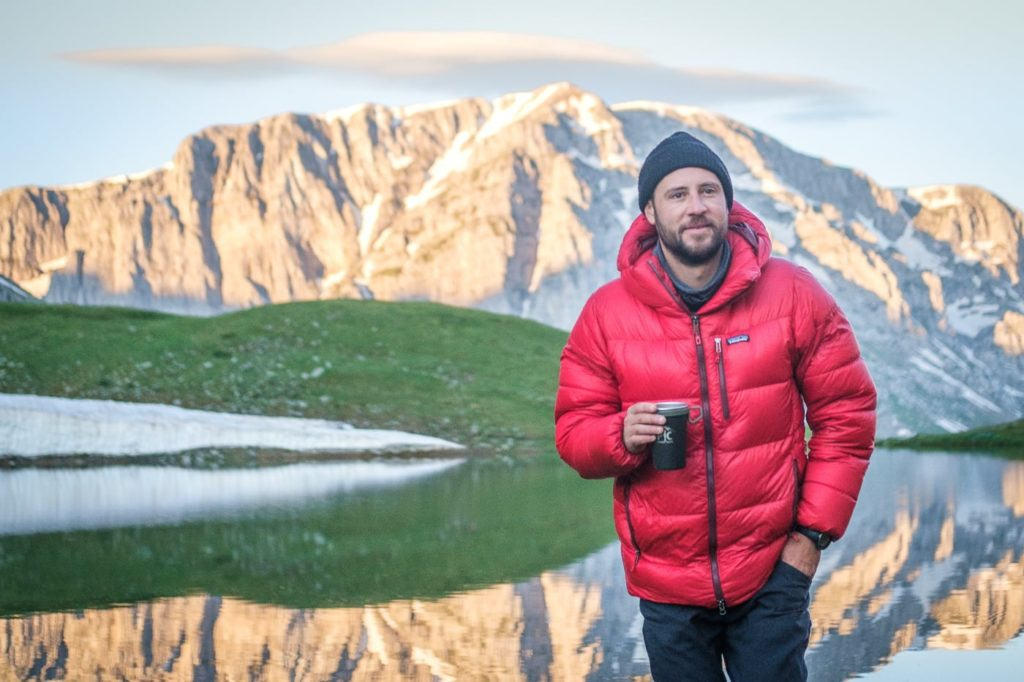
He started as a trekking and tour guide in Hunza, and quickly became one of the most sought-after trip leaders on the Baltoro glacier. Guests and porters alike gravitated to him he moved easily between cultures and languages, and he seemed, in Lininger’s words, to genuinely love the work rather than simply do it well. His first 8,000-meter summit was Gasherbrum II. It was the moment, those close to him say, when he understood something about himself that he belonged above 8,000 meters, and that he wanted a great deal more of it.
In 2023, Epic Expeditions took him to Nepal for the first time, to climb Island Peak his first trip outside Pakistan. Those who traveled with him say it was love at first sight. The temples, the Sherpa culture, the noise of Thamel he wanted to see and understand all of it.
Two days into the trek toward Everest, in Namche, the group adopted a stray puppy they named Momo, and Sohail was instantly attached. It is a small detail, but people who knew him keep bringing it up, because it says something true he loved animals without reservation, and they loved him back. Back home in Hunza, he had a husky who was rarely far from his side.
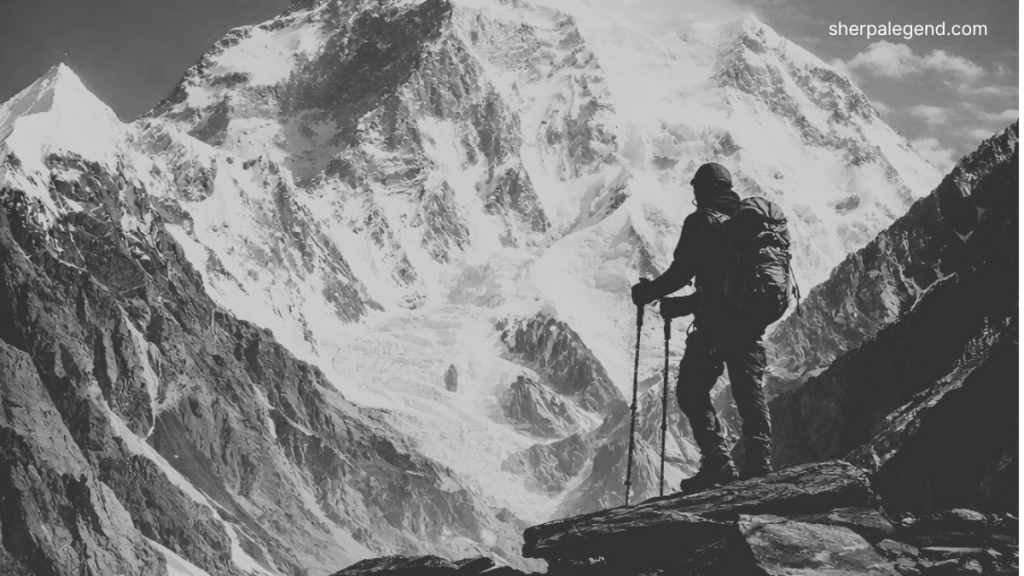
Nepal pulled him back again and again in the years that followed. He attempted Manaslu without supplemental oxygen the climb was called off after an avalanche, the same season Hilaree Nelson died on the mountain and in May 2026 he summited Kangchenjunga, the world’s third-highest peak, without oxygen, as part of the team fixing rope for the whole expedition.
By the time of his death, Sohail had built one of the strongest high-altitude records of any Pakistani climber of his generation, much of it without bottled oxygen and with minimal outside support K2, first with oxygen as a young rope-fixer around 2022, then without it in 2025; Nanga Parbat without oxygen and without porter assistance in July 2025, part of a small Hunza-led team; both Gasherbrum I and Gasherbrum II, also oxygen-free; an alpine-style ascent of Spantik; and a winter attempt on Batura I.
He was also a serious high-altitude photographer and geographer, using cameras and drones to document the Karakoram’s glaciers and peaks as they changed year to year.
Sohail’s closest climbing friendships were with two of Pakistan’s other leading mountaineers, Naila Kiani and Sirbaz Khan. Kiani says the three of them shared their plans with each other constantly, and that she and Sohail completed their first three 8,000-meter expeditions together. It was Sirbaz, she notes, who reached the accident site first when word came from Broad Peak.
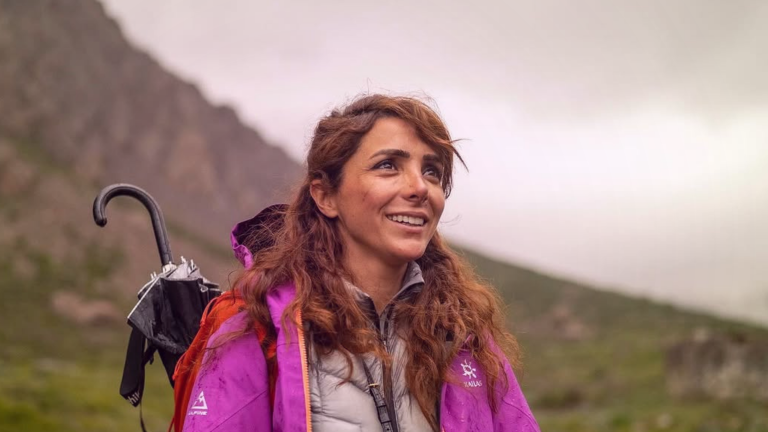
“Sohail was one of those people who would put himself at risk to help others even during expeditions,” Naila Kiani says. “Climbers don’t slow down during expeditions, because it can be dangerous. I even told Sohail not to slow down for me, and he said it didn’t matter – we’d go up together.”
She points to one expedition on Gasherbrum I in particular. Exhausted and struggling badly on the route, close to giving up, she told Sohail to go ahead without her. He refused, matched her pace instead of his own, and stayed at her side until they reached the summit together and she had recovered.
“If Sohail hadn’t supported me like that, if he hadn’t encouraged me, I might have given up,” she says. “Mountaineers, friends and sincere people like Sohail are very rare.”
Naila Kiani leading Pakistani female mountaineer
Kiani also makes a point that outsiders often miss Pakistan’s mountaineering world does not produce many climbers who are both highly educated and technically elite. Sohail was one of the few who was both -a physics graduate with a genuine vision for where Pakistani mountaineering needed to go, and the credibility to push for it.

That vision was also what brought him back together with Sarah “Mallory” Geis. She had climbed with Epic Expeditions twice before, and when Sohail struck out to build his own outfit, she signed on to join him on Broad Peak a reunion of guide and client who had already shared two mountains and trusted each other on a third.
Neither of them came home. They were lost in the same avalanche, on the expedition that was meant to be the proof of concept for the company Sohail had just built.
“There are just those rare souls who have an ability to inspire, to connect, to listen, to push beyond, to make something out of nothing, to somehow make the mountains seem less intimidating, to summon an energy from another realm, and to define what it means to be human in a way unmatched by others,”
Chris Lininger, who worked alongside Sohail for five years.
What set Sohail apart from many of his peers was that he never treated guiding as a ceiling. He founded Moving Mountains, a company built around fair pay, proper gear, and English-fluent, certified guiding for local Hunza climbers a direct answer to an inequity he talked about openly: Pakistani high-altitude porters were routinely paid a fraction of what Sherpa and Western guides earned for the same work, on the same mountains, at the same risk.
He pushed for shared rope-fixing costs, clearer safety regulations, and functioning rescue systems on Karakoram peaks. He also co-founded Hostel Nomads, helped build a climbing wall in Hunza, and personally trained local boys and girls in climbing technique building the next generation of the community his father had helped found.
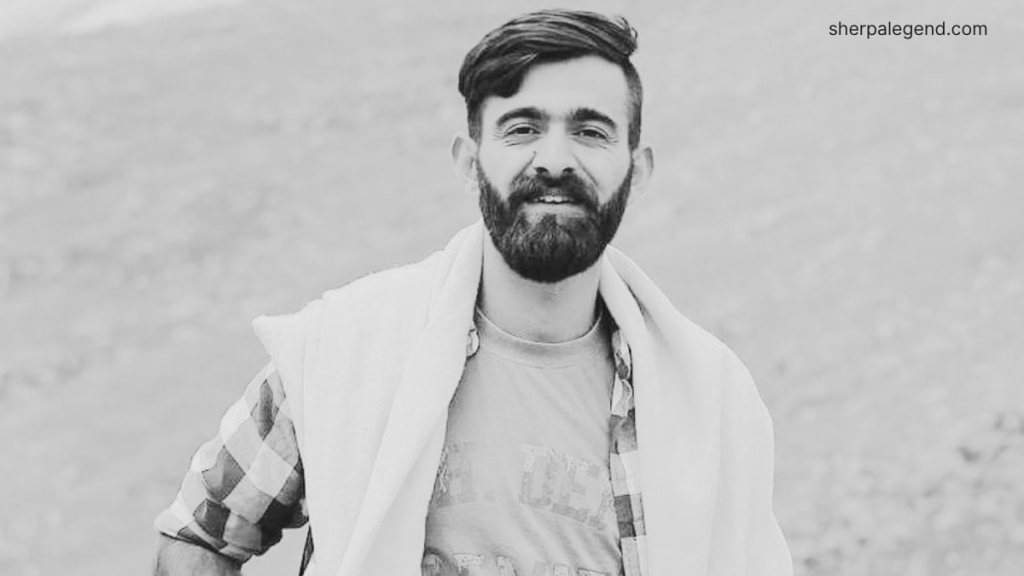
In that sense, Sohail didn’t just carry his father’s legacy forward; he expanded it. Sakhi Karim helped lay the foundations of adventure tourism in Gilgit-Baltistan. His son took that foundation into the highest mountains on earth and used it to argue, summit by summit, that Pakistani climbers deserved to be treated as equals to any Sherpa or Western guide in the world.
On July 30, 2026, the avalanche that struck Broad Peak killed ten climbers from the United States, Nepal, Oman, and Pakistan. Sohail was the only Pakistani among them. Search teams recovered most of the others in the days that followed, but his body was never found. His family eventually held funeral rites without it.
“It was with profound sorrow that we announced that our beloved brother Sohail, one of the victims of the Broad Peak incident, could not be found,” his family said in a statement. “This was an incredibly difficult time, and with heavy hearts we made the painful decision to hold the funeral rites.”
Sohail wrote as well as he climbed. From the high camps, he had posted a short piece to his own Instagram words that now read like the creed he carried up every mountain he ever touched.
What do we say to the God of Death?
Not today.
You are in lands of nowhere,
You know you are not coming back,
You are cold, you are tired,
You see no clouds in the sky,
Out in the wild, you keep saying, to yourself,
Not today.
Not today, he said — and for thirty-three years, the mountains listened. Broad Peak didn’t. Pakistan has lost a mountaineer who was still becoming who he was meant to be — a man with a physics degree and a summit record, who spent as much energy lifting others up as he spent climbing himself, and who had so much more still to give his country’s climbers, his community, and the mountains he loved.
He is no longer with us, but the routes he fixed, the guides he trained, and the fight he started for a fairer Karakoram will carry his name long after this July.
Our reporting and research, supplemented by Dawn.com, The Third Pole, ExplorersWeb, Moving Mountains, UrduPoint/APP, Dunya News, India Today and Chris Lininger’s “Finding Light in Tragedy: Remembering Sohail Sakhi” for Epic Expeditions.
