
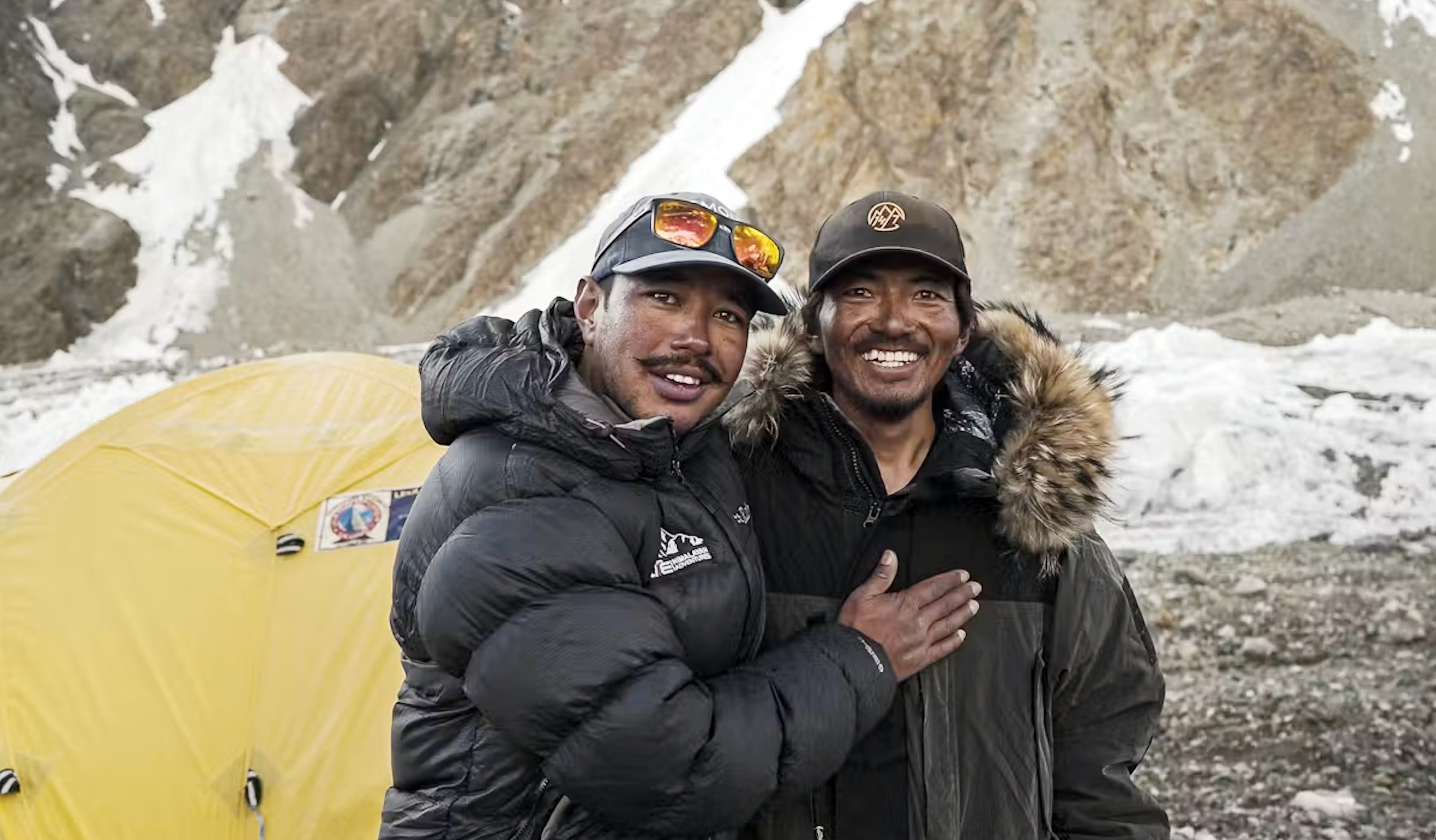

Mingma David Sherpa is coming home to Nepal carrying a weight he has never carried before. He has flown to Pakistan many times after a climb, but this time he returns without his closest climbing partner, Nirmal “Nims” Purja, and with the body of a fellow Nepali climber, Pur Bahadur “Yukta” Gurung, being brought home for a dignified farewell.
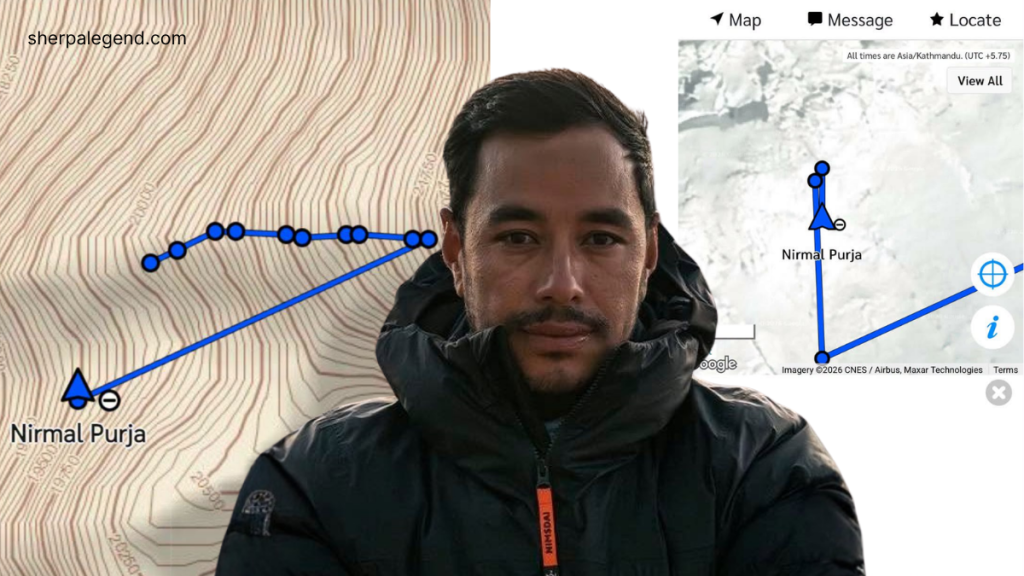
Nims died on 30 July 2026, when a massive avalanche struck Broad Peak in Pakistan’s Karakoram range, the world’s 12th-highest mountain at roughly 8,051 metres. Ten climbers were on a summit push that morning when the mountain broke loose. All ten were killed. Among them was Nims, the Nepali-British climber who had become one of the most famous names in modern mountaineering.
It is against this loss that Mingma David, Nims’s long-time climbing partner and business partner, shared an emotional message before returning to Nepal.
What Mingma David said
In his message, Mingma David wrote that the tragedy on Broad Peak had left everyone speechless. He said that every possible effort was made to save Nims until the very end, but that in the end, they could not. “For that, we are truly sorry,” he wrote.
He said Nims was not merely a body, but his dreams, his courage, his struggles, and his legacy, and that the history Nims left behind in the mountains would live on forever, continuing to inspire generations to come.
Mingma David recalled the climbs the two of them shared and the many happy moments they built together, from hard days on the mountain to the joy of successful summits. He said he has returned from Pakistan many times before with happiness in his heart, but this time he is returning with an extremely heavy and broken heart, carrying Nims’s memories with him, and carrying the responsibility of bringing Yukta Gurung’s body home with dignity.
He wrote that the climbs they shared and the moments they spent together will always stay alive in his heart. He asked that Nims, whom he called a courageous climber, rest in eternal peace, and told him, “Brother, I will always remember you. You will never be forgotten.”
Mingma David added that arrangements to bring the climbers home were being made in close coordination with the Government of Nepal, the Department of Tourism, and the Nepal Mountaineering Association. He said the mountain may have taken Nims away, but it could not take away the memories, the courage, the dreams, and the legacy that will continue to speak for generations to come.
What happened on Broad Peak
The climbers who died were part of a multinational group made up of members from different expedition operators, including Elite Exped, Seven Summit Treks, and Imagine Nepal, along with some independent climbers. They had left Camp II before dawn on 30 July, moving up toward Camp III and the summit through the upper west-facing slopes of the mountain.
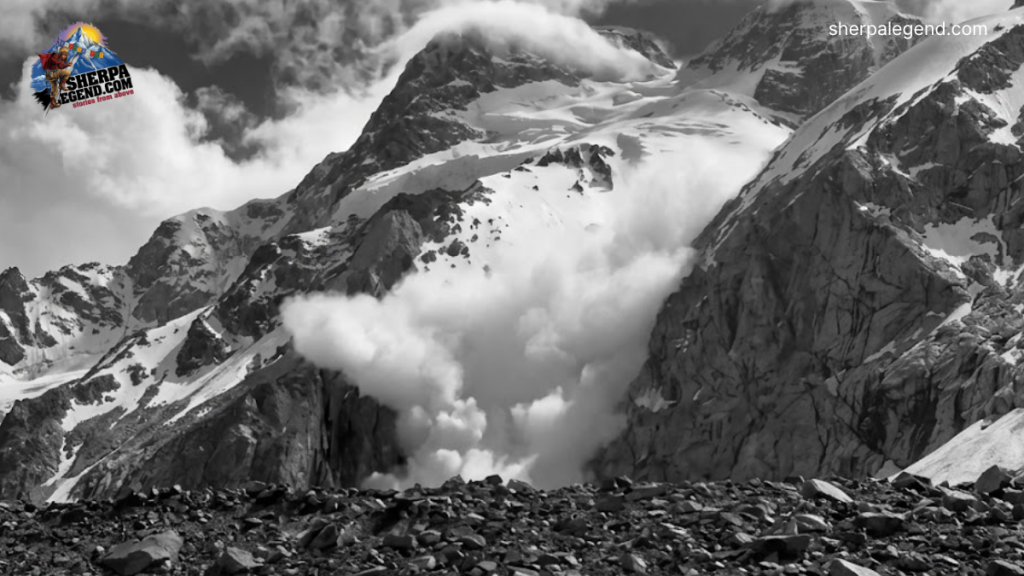
Around 9 a.m. local time, at roughly 6,500 to 6,660 metres, the avalanche hit. GPS trackers on the climbers showed sudden, large drops in altitude within minutes, a sign that they had been swept far down the mountain, in some cases close to a vertical mile. Hopes for survivors faded quickly. Some devices appeared to still be moving afterward, but this later turned out to be GPS inaccuracy from trackers buried under snow, not signs of life. Contact with the climbers was lost, and search and recovery efforts began the following day.
The ten climbers who died were Nirmal “Nims” Purja; Nepali climbers and guides Pur Bahadur “Yukta” Gurung, Nima Sherpa, Kili Pemba “Kilu” Sherpa, Nawang Thindu Sherpa, and Gyaljen “Gyalu” Sherpa; Pakistani guide Sohail Sakhi; Nadhira Al-Harthy of Oman; Mallory Geis of the United States; and Wang Zhong of China.
Nims had not originally planned to climb Broad Peak this season. His main target had been Gasherbrum II, part of his ongoing project to climb all fourteen of the world’s 8,000-metre peaks a second time, without supplemental oxygen. He added Broad Peak later, after reviewing his own climbing record, writing in his final social media post that “this was never the plan,” but that once he left base camp, he was fully committed.
On 1 August, Elite Exped, the company Nims founded, confirmed that there were no survivors, including Nims, Yukta, and Nima. The Alpine Club of Pakistan led much of the recovery response, with support from other teams, including climbers from the nearby K2 expeditions. Bad weather, the danger of secondary avalanches, steep and unstable terrain, and the extreme altitude repeatedly slowed and delayed the recovery work.
What happened to Nims, and the road home
Nims’s body was located by ground teams around 5,700 metres, in an operation led in key stages by fellow Nepali climber Mingma Gyalje “Mingma G” Sherpa, a longtime peer and Nims’s teammate on the historic winter ascent of K2. His body was among four recovered from that area and lowered down the mountain in stages. On or around 5 August 2026, after difficult and dangerous ground work made necessary because bad weather had grounded helicopters, the bodies of Nims, Wang Zhong, Nima Sherpa, and Kili Pemba “Kilu” Sherpa reached Broad Peak Base Camp.
Yukta Gurung, Nadhira Al-Harthy, and part of the remains of Mallory Geis had been recovered earlier and flown out toward Skardu. Reports also placed Gyalu among the earlier recoveries. As of the most recent updates around 5 and 6 August, a few climbers, including Nawang Thindu Sherpa, who was in an especially dangerous, higher location above roughly 6,000 metres, and Pakistani guide Sohail Sakhi, had still not been recovered, with teams continuing efforts whenever weather allowed.
From Base Camp, the plan has been to fly the bodies by helicopter to Skardu, and from there begin the journey home to Nepal. Poor weather had already blocked flights for days. As of the latest reports, Nims’s body had reached Base Camp but had not yet arrived in Nepal. Yukta Gurung’s body was expected to reach Kathmandu around 6 August, travelling via Qatar Airways, with Mingma David personally involved in accompanying and coordinating the journey home.
Nims and Mingma David: a partnership built over years
Mingma David Sherpa, full name Mingma Gyabu Sherpa, was far more than a colleague to Nims. He was his long-time, trusted climbing partner, a close friend the two called “brother” in public, and a co-founder and director of Elite Exped, the expedition company Nims built. Their bond traces back to shared connections in the climbing world, including through the late mountain guide Dorje Khatri.
Mingma David was a core member of Nims’s landmark Project Possible in 2019, the record-setting effort to climb all fourteen of the world’s 8,000-metre peaks in under seven months. He summited several of those peaks alongside Nims and, through that project, became at the time the youngest climber to complete all fourteen. Two years later, in January 2021, the two were part of the all-Nepali team that made the first winter ascent of K2, a feat long considered one of the last great problems in high-altitude mountaineering.
That climbing partnership grew into a business one. Nims started Elite Exped around 2017, and Mingma David joined as a director around a year later, and together they built the company on high safety standards and shared values, guiding climbers on the world’s highest peaks. Beyond the mountains, Mingma David has also become a public figure in Nepal, serving in mountaineering advocacy roles, including with the Nepal Mountaineering Association, and later being elected as a lawmaker in the House of Representatives, the lower house of Nepal’s federal parliament.
When the Broad Peak avalanche struck, Mingma David travelled to Pakistan himself to help coordinate the recovery, working alongside Pakistani authorities, the Nepali embassy, and the climbing teams on the ground. It was a role shaped by years of partnership: an elite climbing bond, shared business ownership, and a trust built through some of the most extreme objectives in mountaineering.
A loss felt across the mountaineering world
The mountaineering community has described the deaths of Nims and the other experienced Nepali guides on Broad Peak as a severe blow to a generation of high-altitude climbing talent. For Mingma David, the loss is more personal than most. He and Nims built their careers, their company, and their biggest dreams together, on mountain after mountain, for years. Now, as he returns to Nepal, he carries that shared history with him, along with the responsibility of helping to bring his brothers home.
