
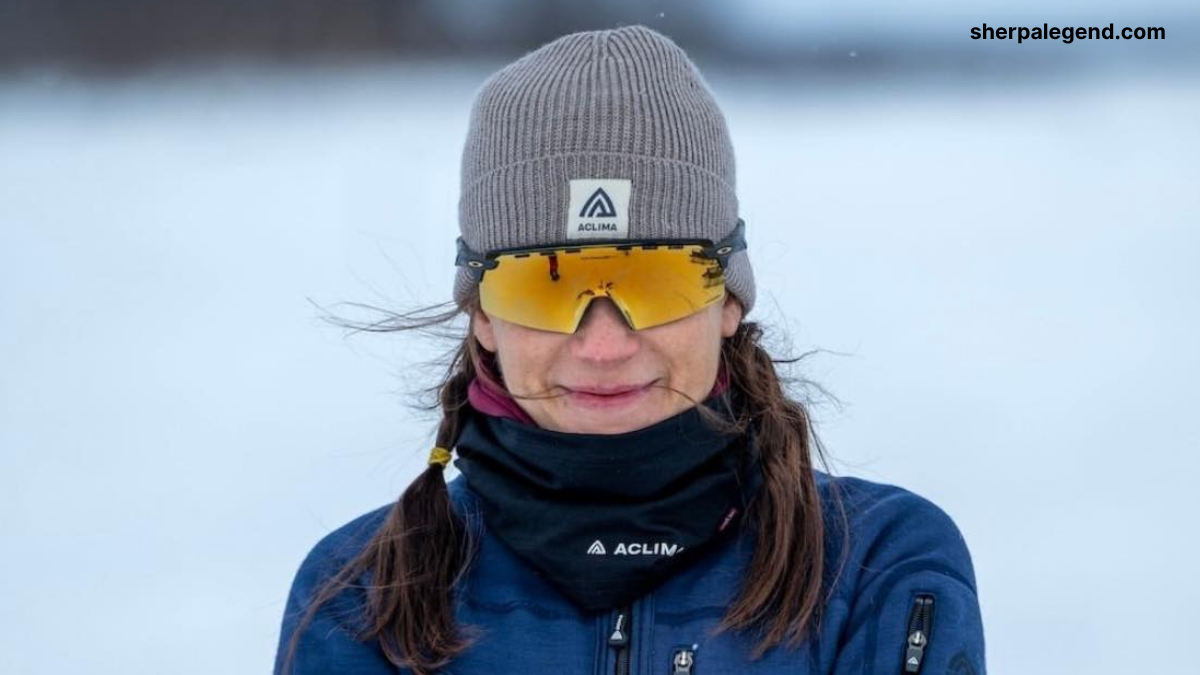

Kristin Harila came back to Everest in 2026 to say farewell. She left having done something very few climbers have ever done.
In this spring of 2026, Norwegian mountaineer Kristin Harila returned to the Khumbu region of Nepal with a plan that was as ambitious as it was personal. She wanted to climb three of the world’s great peaks Nuptse, Lhotse, and Everest in a single season. Together, they form what is known in climbing circles as the Khumbu Triple Crown. She also wanted to do it, as much as possible, without supplemental oxygen.
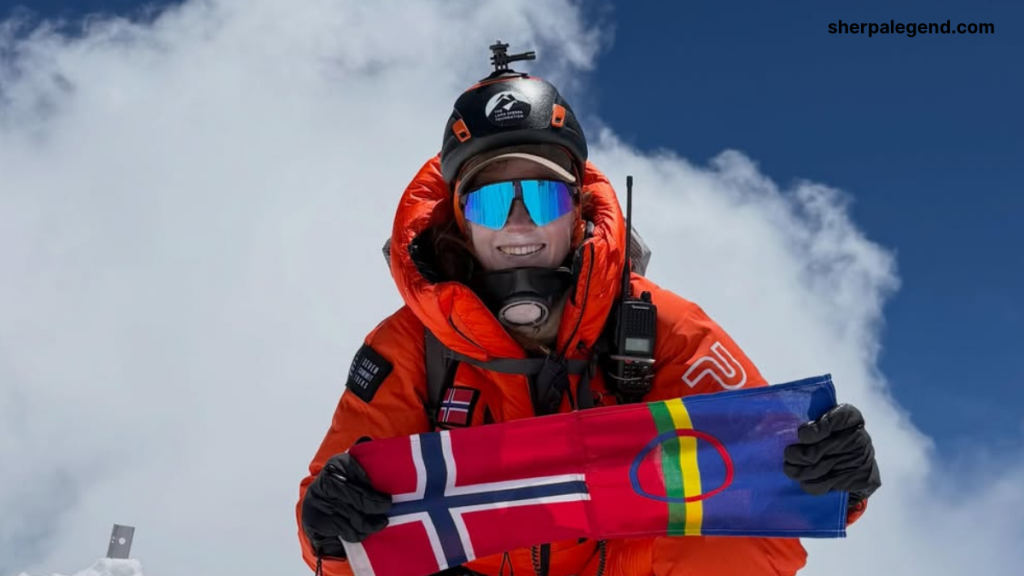
And she wanted it to be her last time on Everest.
Harila is no stranger to this kind of ambition. In 2022 and 2023, she set a world speed record by climbing all 14 of the world’s 8,000-metre peaks in just 92 days, alongside the late Tenjen Lama Sherpa. She had stood on top of Everest and Lhotse before. She even holds a record for the Everest-Lhotse traverse, completing it in around eight and a half hours.
But Nuptse the 7,861-metre peak that shares the Khumbu Icefall approach with its more famous neighbours had been a different kind of dream. More technical, more demanding, and far less frequently climbed than Everest or Lhotse, it had stayed out of reach for years.
“This has been my big dream for many years,” she wrote after finally reaching its summit.
Acclimatization
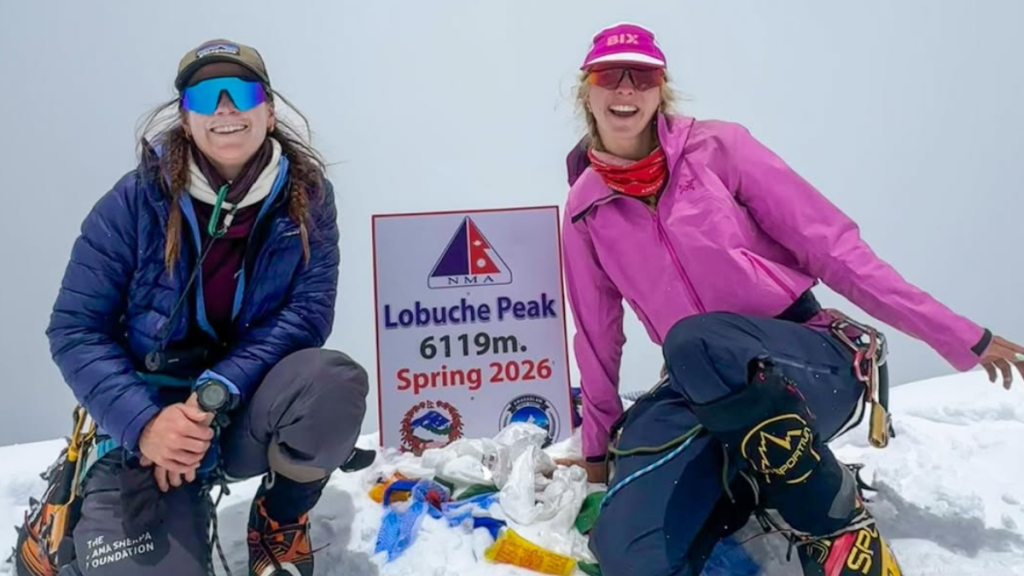
Before attempting any of the three peaks, Harila spent time acclimatizing in the region. Around early May, she climbed Lobuche East at 6,119 metres, spending two nights near the summit alongside climber Bianca Adler to prepare her body for the altitude that lay ahead.
May 17 Nuptse
On May 17, Harila and her longtime climbing partner Mingtemba Sherpa reached the top of Nuptse in a single push from Camp 3 a journey of 12 hours. They climbed without supplemental oxygen.
It was, by her own account, the hardest of the three. Near the top, she hit a difficult stretch. She was exhausted, moving slowly, barely making progress. Mingtemba Sherpa was ahead of her, fixing ropes while also carrying her emergency oxygen. The team from Asian Trekking, who were on the mountain at the same time, offered help and patiently waited while she struggled upward.
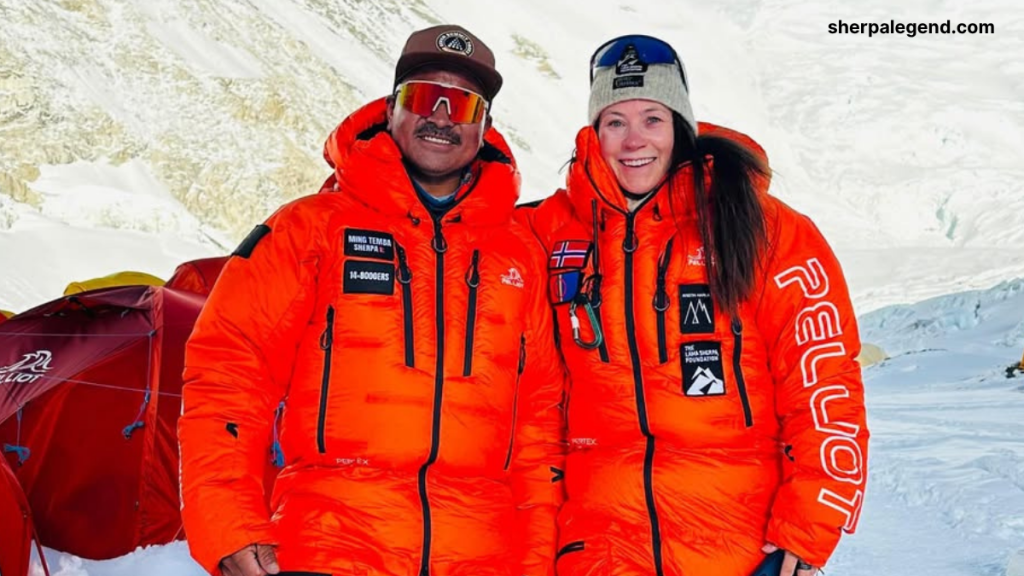
“I would never have made this without Mingtemba Sherpa and the support from the Asian Trekking team,” she wrote afterward. “I will always remember the kindness, support, and teamwork on this climb.”
There was no rivalry between expedition teams on the mountain that day, she noted. Seven Summit Treks, who managed her expedition, and Asian Trekking worked together to fix the route safely.
“A really beautiful mountain super steep, very difficult, and it was a demanding climb from start to finish,” she wrote. “We did not do it alone.”
May 21 Lhotse
Just four days after Nuptse, Harila was moving again. On May 21, she reached the summit of Lhotse at 8,516 metres the world’s fourth highest mountain alongside Mingtemba Sherpa and cameraman Pasang Rinzee.
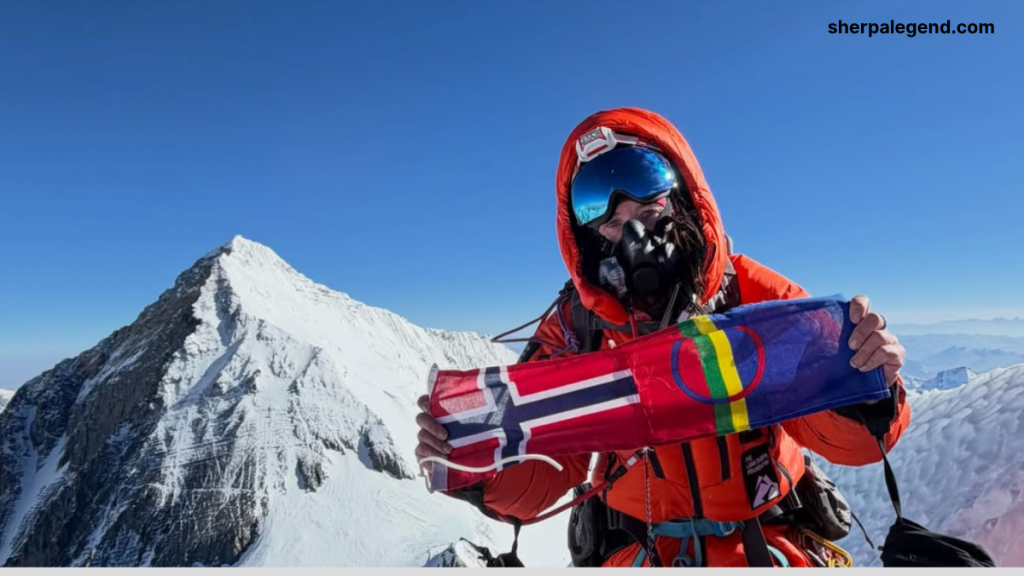
It was her fourth time on Lhotse. But the conditions on this day were harder than expected. Winds in the Lhotse Couloir were stronger than forecast, and at around 8,100 metres, she made a decision: she put on oxygen.
“For me, the mountains have never been about taking unnecessary risks or proving something at all costs,” she wrote. “Safety always comes first, and sometimes the strongest decision is adapting to the conditions and making good choices together with the team.”
The Lhotse summit was also her 30th time standing on top of an 8,000-metre peak.
From the summit, she could see Everest clearly. One more remained.
May 27 Everest
Six days after Lhotse, Harila, Mingtemba Sherpa, and Dukpa Sherpa pushed for the top of Everest. At around 8:45 to 8:50 in the morning on May 27, they reached the summit at 8,848 metres without supplemental oxygen.
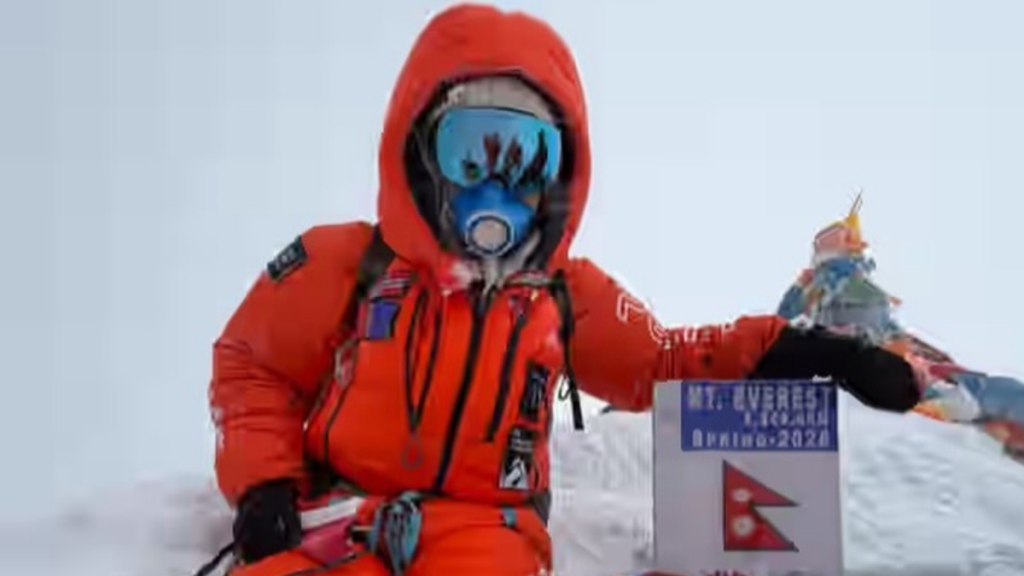
The Triple Crown was complete.
She later celebrated the achievement on May 30, calling it a dream come true. It was her 31st summit of an 8,000-metre peak.
A Goodbye
Harila had said before the expedition that she did not plan to return to Everest after 2026. The whole journey carried the weight of that intention a farewell shaped not by defeat but by fullness. She had climbed Everest multiple times. She had broken records on it. Now she had closed the chapter on her own terms, with Nuptse finally checked off a list she had carried for years.
The expedition also carried the memory of Tenjen Lama Sherpa, her partner during the 14-peak speed record, who died after that climb. This return to the Khumbu to Everest held meaning beyond just the summits.
What Made It Remarkable
The Triple Crown is considered exceptionally demanding not just because of the altitude involved, but because of the speed and sequence required. Nuptse, Lhotse, and Everest in a single season means repeated high-altitude pushes with very little recovery time between them. Nuptse alone is technically far more challenging than Everest or Lhotse and is attempted by far fewer climbers each year. Harila’s team completed Nuptse, Lhotse, and Everest in just ten days from May 17 to May 27.
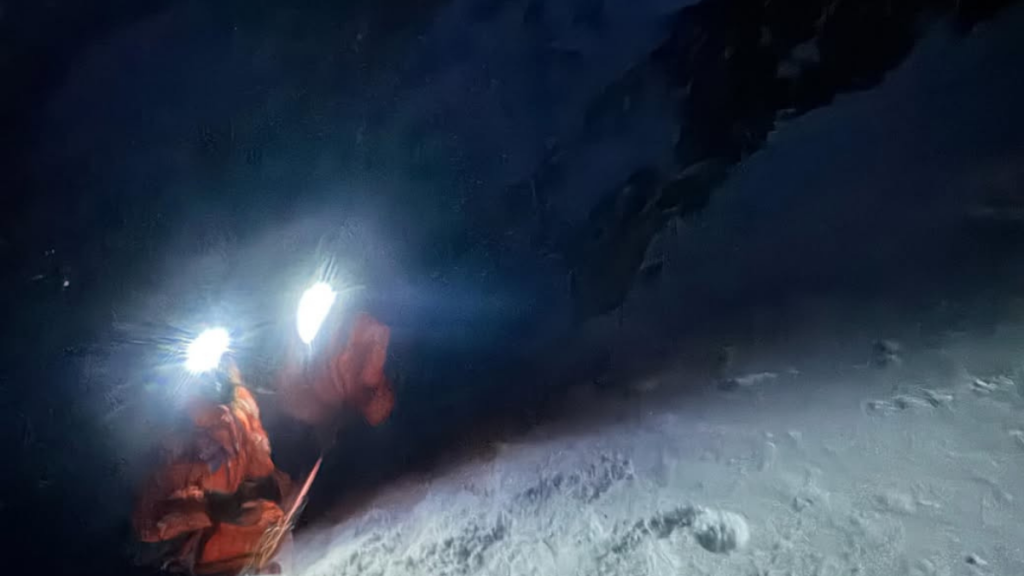
While Everest and Lhotse draw large numbers of climbers each spring, Nuptse is different. According to Nepal’s Department of Tourism, only dozens of climbers received permits for Nuptse during the 2026 season
She did not do any of it alone. Mingtemba Sherpa was with her on all three peaks, fixing ropes, carrying emergency oxygen, and keeping the team safe through some of the hardest moments. Seven Summit Treks managed the logistics throughout.
“None of this happens alone,” she wrote after Lhotse. It was a line that carried through the entire spring.
