
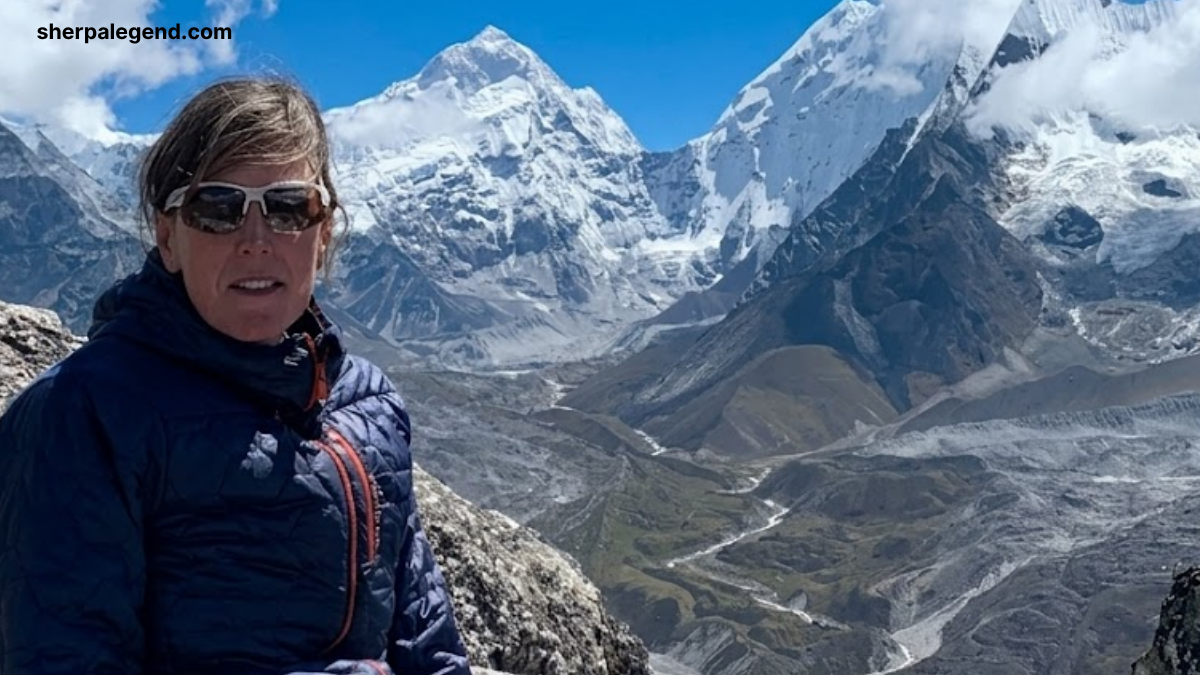

Dr. Shaunna Burke has spent her life studying how the body fights back. Then she was diagnosed with incurable cancer. This spring, she climbed Everest to prove the fight is never over.
In March 2024, Shaunna Burke found a lump in her left breast while in the shower. The timing was cruel. She was 48 years old, two months out from running the Everest Marathon, and at her fittest ever. She was also a professor at the University of Leeds whose entire career had been built around one subject how exercise helps people survive cancer.
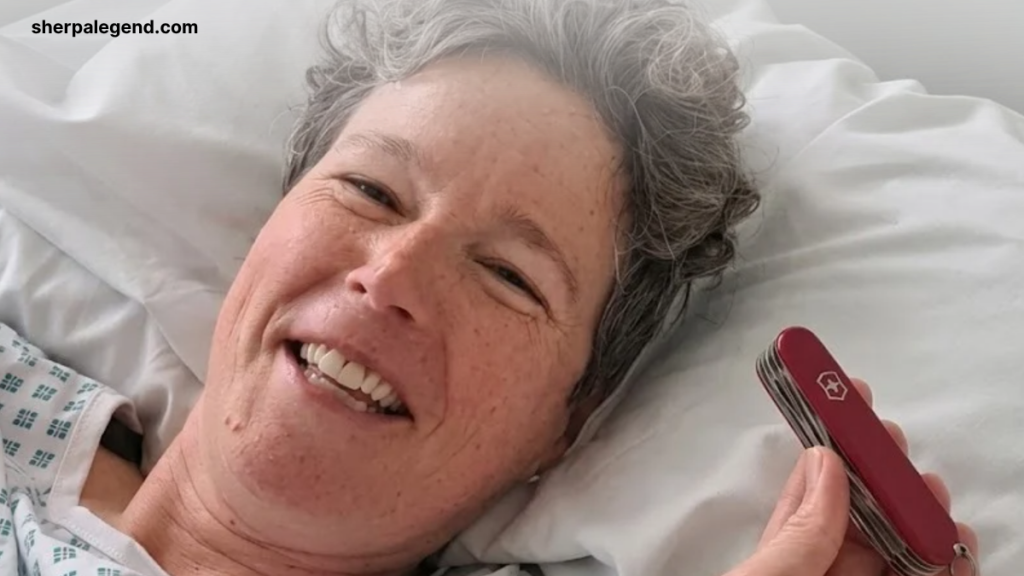
Doctors first told her it was stage II. That was hard, but it felt survivable. Then more scans came back. The cancer had spread to her liver. Stage IV. Incurable.
“I remember my doctor using the word palliative,” she recalled. “A patient receiving palliative care was someone who was frail, immobile, dependent on other people. I thought, ‘This is just not me.'”
“A lot of people get a terminal diagnosis and think ‘Game Over.’ The way I see it is the opposite. You keep going, you keep putting one foot in front of the other.” She told to Outside Magazine in an interview.
The woman who studied mountains and cancer until both found her
Burke grew up in Pointe-Claire, Quebec. She was a two-sport varsity athlete at McGill University, competing in alpine skiing and rugby. Her ski team won Quebec league championships; in her junior year she finished on the podium six times in ten races. She also skied for the Quebec provincial squad and competed for Canada at the 1999 FISU Winter Games in Slovakia.
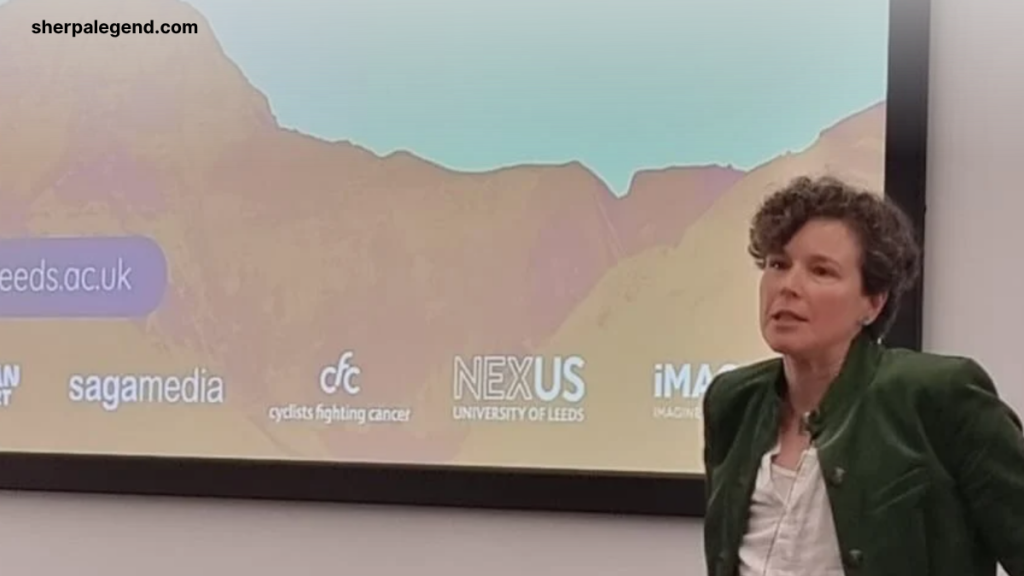
After graduating with a BA in 2001, she went on to earn a master’s degree and PhD in sports psychology at the University of Ottawa, then studied at Exeter University in the UK. She became a professor and researcher at the University of Leeds, where her work focuses on exercise, resilience, and quality of life for people living with stage 4 cancer.
She had never been a patient herself. “I’d never been on any serious medication, never had any surgeries or other medical issues, nothing,” she said. “Being on the other side took me a while to get used to.”
Everest, 2005 the second Canadian woman to reach the top
Burke first attempted Everest in 2003, reaching Camp 2. She went back in 2004 and made it to Camp 4 before strong winds forced her down. In 2005, at 29 years old, she summited. She became only the second Canadian woman ever to stand on top of the world, following Sharon Wood in 1986.
She was also filmed for Discovery Channel’s award-winning miniseries Ultimate Survival Everest in 2004. The summit in 2005 came after facing an accident involving a climbing partner in the Khumbu Icefall.
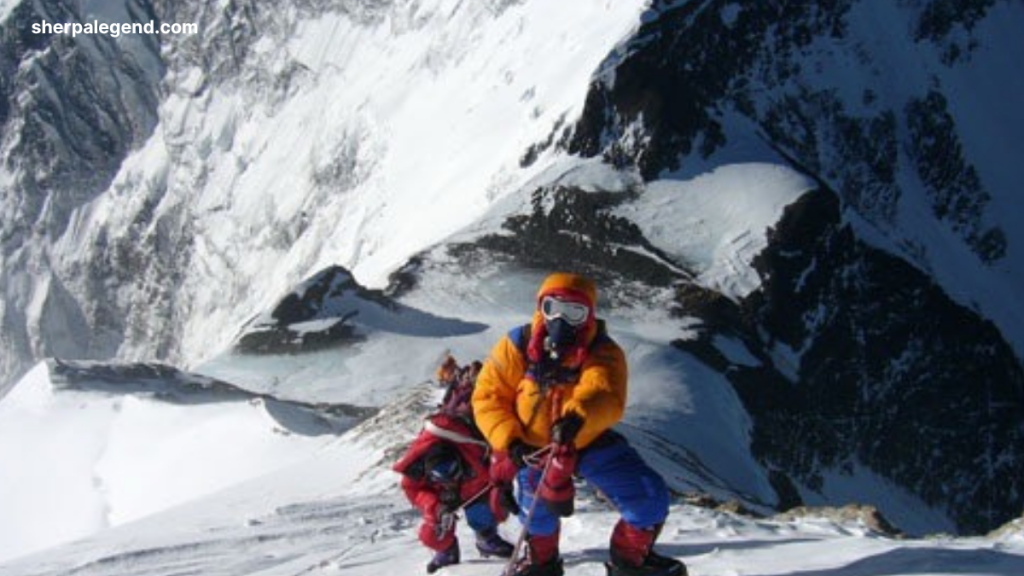
“It meant a lot to me to prove that I was capable of getting to the summit, both physically and mentally,” she said. “There also weren’t a lot of women on Everest then.”
The experience shaped the rest of her career. Her graduate thesis studied the mental strategies climbers used to succeed on Everest. Her PhD explored decision-making in high-altitude environments. She later led a study involving breast cancer survivors climbing Kilimanjaro and found that the mountain was helping them psychologically recover from treatment.
Chemo, surgery and running to every appointment
After her stage IV diagnosis in 2024, Burke began chemotherapy, followed by a double mastectomy, and then more surgeries removal of lymph nodes, her ovaries, and tumours from her liver. Through all of it, she kept moving. She designed her own exercise and treatment plan based on her own research, and ran three miles to each chemotherapy session, then walked home.
“If you’re exercising, getting your heart rate up, you’re helping pump that chemo through your body, getting it to the places it needs to go,” she explained. “It has to do with oxygenation and circulation.”
In 2025, still battling stage IV cancer but in remarkable physical shape, she returned to Nepal. She ran the Everest Marathon and climbed Lobuche East, a peak near Everest that tops out at 20,075 feet above sea level.
Back to Everest to prove the adventure isn’t over
This spring, Burke returned to Nepal for the climb itself. She arrived at Everest Base Camp after acclimatisation climbs on Mera Peak and the long trek in. She shared daily posts on Instagram under the account dyingtoclimb, taking followers through every camp, every storm, every step.
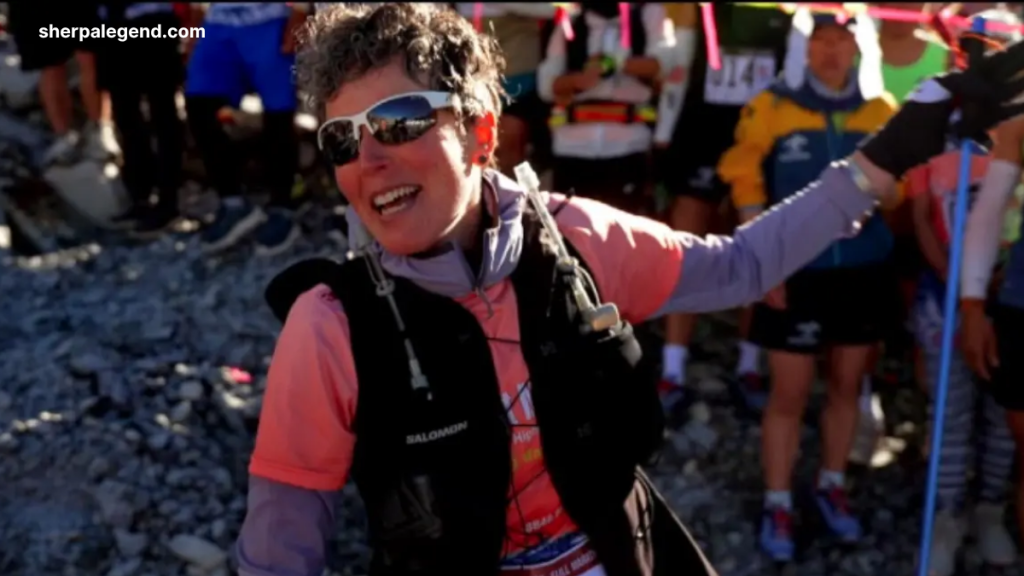
Conditions at Camp 1 were good. She pressed on to Camp 3. A storm forced her and her team back down. She went up again.
“Right now, I am officially on my way to the summit of Mount Everest,” she wrote from Camp 3 during her second push. “Pushing through the altitude and the elements while living with Stage IV cancer is the hardest thing I’ve ever done, but every single step is for a purpose.”
At 3 am on May 23, Nepal time, Burke, aged 50, stood on the summit of Mount Everest. She became the first woman in history to climb Everest while living with a stage IV cancer diagnosis. (Ian Toothill, a British mountaineer, climbed with stage IV cancer in 2017. He died the following year.)
“It’s surreal. You feel vulnerable. Your awareness of your mortality is heightened. But there’s beauty intertwined with that, because you prioritize life differently.”
Research, fundraising and something bigger
The climb was never just personal. Burke worked with a physiologist colleague to run comprehensive lab tests before the expedition. Those baseline results will be compared with data collected on the mountain to study how a stage IV cancer patient’s body responds to extreme altitude and physical exertion looking at physiological markers, immune system markers, and cancer biomarkers.
The expedition is also the subject of a documentary film called Dying to Climb, and has raised over £55,000 CDN toward her £90,000 target for Macmillan Cancer Support a charity that aided her during her own treatment. During her summit push alone, supporters helped push the fundraiser past the halfway mark.
“I want to use this climb as a platform to inspire other people,” she said. “I want to show people that even when living with something so difficult, like an incurable cancer diagnosis, you can still go out there, push yourself, and follow your dreams.”
“If you don’t stare death in the face, it’s going to paralyze you. That’s true whether you have cancer or not. Sometimes in life, we go through the motions, and it’s not until something shakes us to our core that we realize how temporary and fleeting this life is. For me, my diagnosis did that. It shook me to my core, but I’ve grown as a result.”
Based on reporting from Outside Magazine and public statements and Instagram Posts by Dr. Burke
