


Babu Chhiri Sherpa : How He Survived 21 Hours on the Everest Summit Where No Human Was Meant to Live
In the world of mountaineering, few names command as much respect as Babu Chhiri Sherpa. This remarkable sherpa from Solukhumbu became a legend not just for his incredible climbing achievements, but for his honesty, his dreams, and his tragic end while pursuing what he loved most.
Early Life in the Mountains
Babu Chhiri Sherpa was born on June 22, 1966, in Chhilemu, a remote village in Taksindu, Solukhumbu District in eastern Nepal. His parents, Lhakpa Sherpa and Pasi Sherpa, lived the traditional life of mountain people, moving with their cattle between higher elevations in summer and lower areas in winter.
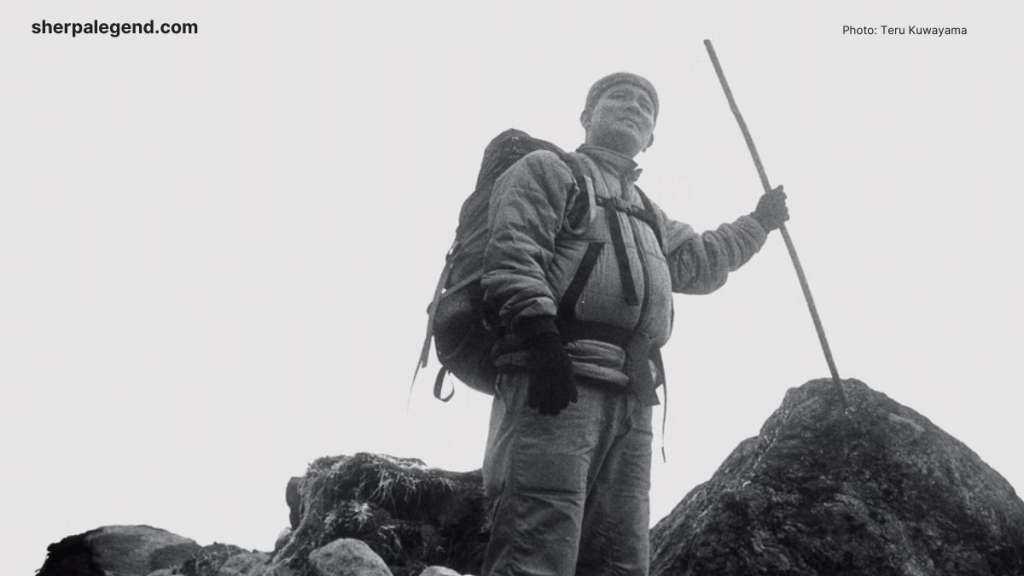
Life was hard in the mountains. There was no school in his village, so Babu never received formal education as a child.
This lack of schooling would trouble him throughout his life, but it also gave him the determination to ensure other children would have opportunities he never had. His childhood was spent helping his family tend yaks and grow small crops.
When Babu was 16, his parents arranged his marriage, a woman three years older from a nearby village. Already, young Babu was dreaming of escaping to Kathmandu to earn money, following the path of two of his brothers who had left for the capital in search of work.
The Journey to Mountaineering
Babu’s entry into mountaineering was not glamorous. At age 13, he began working as a porter in the Himalayas, carrying heavy loads for trekking groups. His first job was carrying a 66-pound load for about 17 cents a day. After spending all his meager earnings on food and bus tickets, he returned home broke and crying.
But Babu didn’t give up. Two years later, he went back to Kathmandu and found work as a trekking “cook boy.” This was only a small step up from being a porter, but it meant he no longer had to pay for his meals.
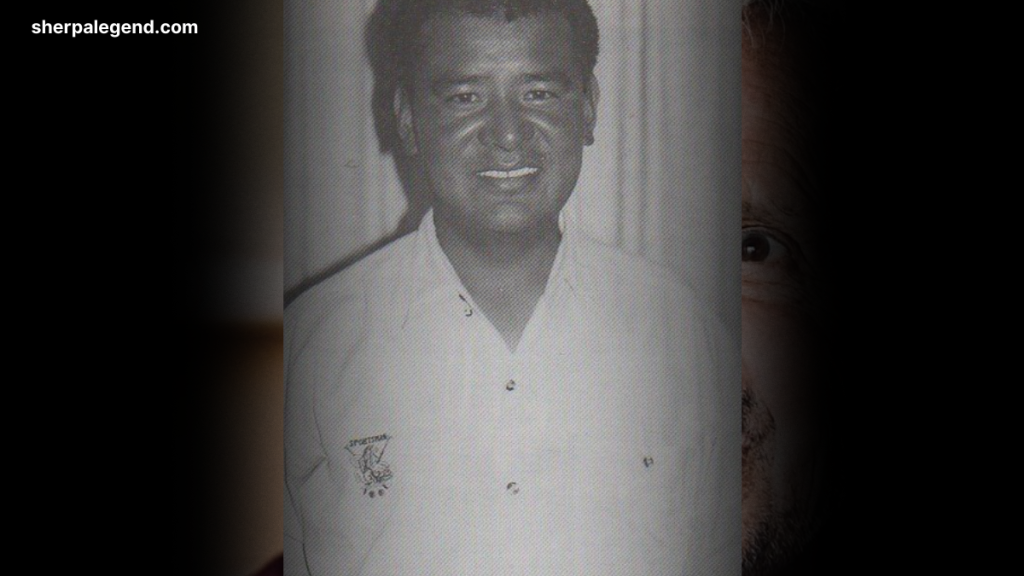
For the next seven years, Babu worked every spring and fall season, slowly learning English from foreign clients and sending money home to support his wife, who ran a small teahouse, and their growing family.
Like many Sherpas, Babu had a bigger goal to become a climbing Sherpa on expeditions to the world’s highest peaks. These jobs paid much better than regular trekking work and were highly sought after in the Solu-Khumbu Valley.
His big break came in 1989 when he joined a Soviet expedition to Kanchenjunga, the world’s third-highest mountain.
During this 100-day expedition, Babu discovered something remarkable about himself. While other Sherpas and climbers got sick at high altitude, he felt fine. “When we reach Camp IV, a lot of Sherpas get sick,” he recalled. “I don’t have any kind of problem at altitude. I give help to other Sherpas and climbers; when I get to camp, I prepare some tea and soup.”
Babu not only helped others but also reached Kanchenjunga’s summit without using oxygen, unlike the Soviet climbers who needed it. This achievement proved he had exceptional natural ability for high-altitude climbing.
First Steps on Everest
Babu’s first climb of Mount Everest came in 1990 with a French expedition led by Marc Batard. Batard had planned to stay 8 hours on Everest’s summit before climbing nearby Lhotse mountain.
After other Sherpas reached the summit and made arrangements, they descended as planned. But Babu Chhiri stayed at South Col, hoping for a chance to reach the top himself.
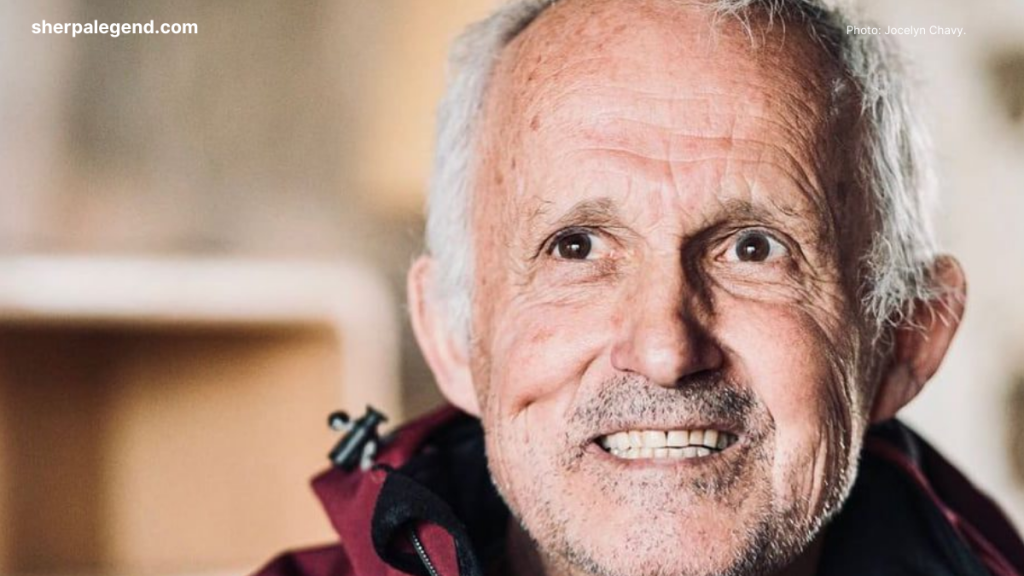
When Batard descended after less than an hour at the summit, Babu asked if he could climb up. Batard agreed, and Babu climbed alone to reach the summit of Everest for the first time. He was overjoyed.
Batard had left his equipment on the summit, including a walkie-talkie, which Babu carried down. This act of helpfulness made Batard grateful, and it planted a seed in Babu’s mind. Inspired by Batard’s original idea of staying 8 hours on the summit, Babu began dreaming of something much more ambitious.
Breaking Records
Over the next decade, Babu Chhiri climbed Everest ten times and became known as one of the world’s strongest Everest climbers. But it was his record-breaking achievements that made him truly famous.
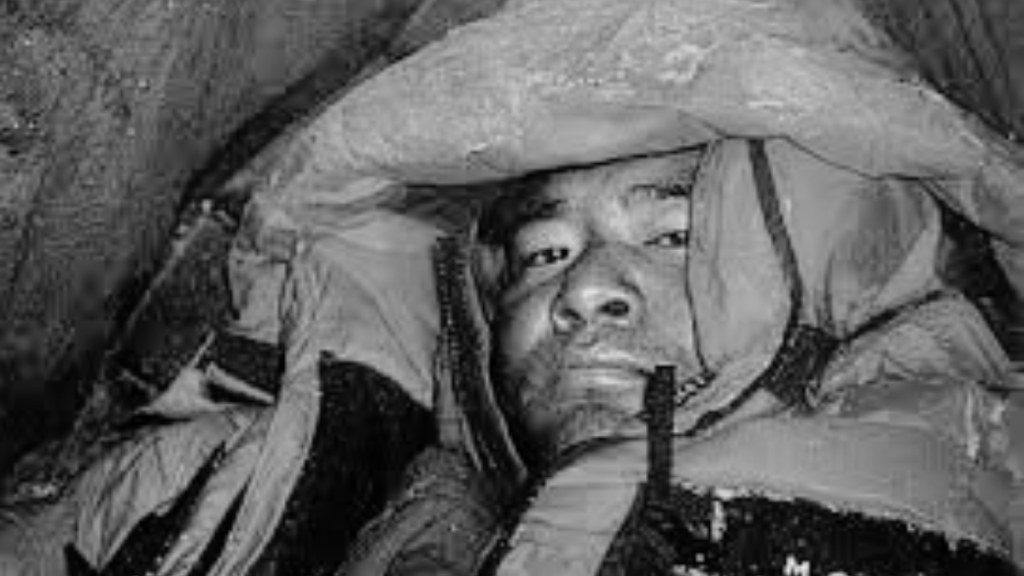
On May 6, 1999, Babu achieved something no one thought possible. He spent 21 hours on the summit of Mount Everest without oxygen. At a time when most climbers spent less than 30 minutes at the top, this was historic. Mountain Hardware, an American outdoor equipment company, specially designed a tent, sleeping bag, and mattress for him to survive the extreme conditions.
Battling fierce 60mph winds and snowfall, Babu reached the summit with help from two other Sherpas who assisted in setting up his tent before leaving. Alone on the world’s highest point, he stayed active throughout the frigid night, chatting on his walkie-talkie and singing songs to stay awake.
Doctors had warned him that falling asleep in the low-oxygen environment would be fatal. After 21 hours alone at the top of the world, he packed his gear and descended, setting an record that still stands today.
The following year, on May 21, 2000, Babu set another world record. After six weeks of acclimatization, he climbed from Base Camp to Everest’s summit in just 16 hours and 56 minutes, the fastest time ever recorded at that time and this achievement earned him a place in the Guinness Book of Records.
In 1995 and 1999, Babu also became the first person to reach Everest’s summit twice in the same climbing season, adding yet another record to his name.
By 2000, he had climbed Everest ten times, accomplishing most of these ascents without supplemental oxygen except for the final 1,100 feet of his speed climb.
A Man of Honesty
One of Babu Chhiri’s most admirable qualities was his complete honesty, even when it worked against his own interests. During his Mount Everest Speed Expedition 2000, the plan was to reach the summit in 16 hours. After he completed the climb, media reports incorrectly stated that he had finished 4 minutes early, in 15 hours and 56 minutes.
Later, after returning to Base Camp, Babu surprised everyone by correcting the record. He announced that he had actually taken 16 hours and 56 minutes, not the faster time the media had reported. This honesty could have cost him an even greater record, but Babu valued truth over glory.
His climbing partner Apa Sherpa, who would later break Babu’s record for most Everest summits, remembered this incident clearly
“If he had stayed silent, his record would have seemed even greater. That shows his honesty.”
Understanding of Mountaineering
Babu had a practical and fearless approach to mountaineering that set him apart from many other Sherpas. “A lot of Sherpas go to the mountain with fear, but that’s no way to climb,” he explained. “They have to go, because it’s a job and they’re being paid well for it. If they don’t have any education, they don’t have a choice.”
He understood that for many Sherpas, mountaineering was not a choice but a necessity driven by economic circumstances. However, Babu saw it differently. He wanted to change the perception of Sherpas from mere porters and guides to accomplished mountaineers in their own right.
Despite his incredible success, Babu remained humble about his achievements. “I had the courage to do something in mountaineering, but I never believed I would be this successful,” he said. “The weather, the circumstances, and everything else came together to help me succeed. It all feels like the blessing of God.”
About his profession, he was deeply satisfied “Since I have been doing this work in the Himalayas for a long time, I am satisfied with my profession. I am happy that I can also help foreigners.”
Philosophy and Vision
Babu Chhiri was more than just a record-breaking climber. He had a vision for changing how the world saw Sherpas and how Sherpas saw themselves. He believed that Sherpas should not be limited to being servants to foreign climbers but could become leaders and entrepreneurs in their own right.
“I want to change things,” Babu said. “I want Sherpa kids to have options. If we can be more famous or more rich and we get that opportunity, we’ll take it.”
He understood that education was the key to giving young Sherpas choices beyond the dangerous work of high-altitude climbing. This understanding drove his most important dream.
The School
Despite having no formal education himself, Babu Chhiri recognized that education was important for the future of his community. He was saddened that as a child, there was no school in his village, and he was determined that other children would not face the same limitation.
After establishing his world records and bringing pride to Nepal, Babu wanted to use his success to build a school in Taksindu. He planned to provide education for about 50 students in his remote mountain community.
His commitment to this dream was total “To set up a school for children in my village, I will put all the prize money and awards I have received into it. I will also talk to foreigners for help. I don’t want to spend the money from awards on house rent in Kathmandu or family expenses. I want to support my family and other expenses from my profession’s income.”
After announcing his two world records in 1999, Babu planned to inaugurate the school with prize money and donations after completing his 11th Everest climb. Tragically, that dream was never fulfilled due to his untimely death.
But later Shree Babu Chiri Primary School, Taksindu, Solukhumbu (estd. 2000) has crystallized his life’s dream.
Apa Sherpa’s Memories
Apa Sherpa, who would later become the most famous Sherpa climber, knew Babu well and spoke fondly of his character and achievements. The two first met in 1989 during an expedition to Dhaulagiri, and their paths crossed many times over the years.
“Babu Chhiri, though uneducated, was a smart person,” Apa remembered. “He could speak well, give answers, and was simple and friendly. He easily got along with everyone and was very honest.”
Apa particularly admired Babu’s approach to climbing and his lack of ego “I never had a feeling of rivalry with him. Records are meant to be broken, and mountaineering is our profession.” He noted that while some climbers would abandon their teams just to set records, Babu was not like that.
According to Apa, Babu’s achievements were particularly significant for Nepal “Babu Chhiri’s records were very important for our country. Spending 21 hours on the summit and climbing in 16 hours 56 minutes are achievements that foreigners will find very hard to match.”
A Brush with Death
In 1999, while descending Everest after his record-breaking 21-hour stay on the summit, Babu had a terrifying accident that he never forgot. In the dangerous Khumbu Icefall, he slipped and fell about 20 meters, hanging on his rope above a deadly crevasse.
At the time, he was carrying a heavy load including clothes, sleeping bag, walkie-talkie, and 15 empty oxygen bottles, weighing around 25-30 kilograms. The fall forced him to drop all these items to save his life. Hanging from the rope, terrified but determined, he climbed back up to safety using only his hands and the rope.
This incident could have ended his life, but Babu survived and continued climbing. The experience showed both his vulnerability and his incredible mental and physical strength under extreme pressure.
Sponsorship Struggles and Support
Despite his growing fame, Babu still faced the practical challenges of funding his expeditions. For his Mount Everest Speed Expedition 2000, he sought sponsorship from various sources but was largely ignored or dismissed. Many potential sponsors would say things like “take 25-30 thousand and manage with that.”
However, two organizations recognized his potential and provided crucial support Mountain Hardwear from the USA and Gorkha Airlines from Nepal. Their sponsorship made his record-breaking speed climb possible and showed that some organizations understood the value of supporting talented Sherpa climbers.
Recognition and Awards
Babu Chhiri’s achievements brought him numerous honors and awards. He was decorated with the Prabal Gorkha Dakshin Bahu, one of Nepal’s highest honors, along with the National Talent Award, Outstanding Youth Award, International Everest Award, Pasang Lhamu Youth Award, and NMA Award, among others.
These recognitions meant a great deal to Babu, not just personally but for what they represented for the Sherpa community. Like Edmund Hillary, he wanted to use his success for the development of his community rather than just personal gain.
Family and Personal Life
Babu had six daughters together. Despite his success, he remained committed to his family and community. He wanted to put all his daughters through elite private schools in Kathmandu, showing his dedication to education even though he had never received formal schooling himself.
His father Lhakpa had an interesting connection to Everest history that even Babu didn’t know about initially. Lhakpa had worked as a porter for the famous 1953 Hillary expedition, carrying 30 kilograms for five rupees a day from Traksindo to Tengboche. This family connection to Everest mountaineering history was discovered only much later, and neither father nor son had thought it was particularly important.
The Tragic End
On April 29, 2001, during the Everest Expedition 2001, Babu Chhiri’s remarkable life came to a sudden end. At around 4:00 p.m., while at Camp II at 6,400 meters, he ventured about 100 meters out onto the glacier to take photographs in clear conditions after fresh snowfall.
He never returned from that trip. A search party that night found footprints leading to a small hole where snow had concealed a hidden, narrow crevasse. Babu had fallen through and died instantly.
An Argentinian climber named Willie Benegas risked his life to descend into the dangerous crevasse in pitch darkness. “The crevasse was barely a meter wide, and in the darkness, it seemed to be filled with precarious chunks of ice,” Benegas recalled. “Suddenly, I came across a wall of ice blocks, and amidst them, I saw Babu’s leg. It was a terrifying moment. I immediately realized that he had passed away.”
The next morning, Benegas and another Sherpa worked for two hours in the narrow, unstable crevasse to recover Babu’s badly damaged body. Around sixty Sherpas then spent eight hours carrying their fallen hero down the mountain, through dangerous crevasses and the treacherous Khumbu Icefall to bring him back to Base Camp.
Babu Chhiri left behind his wife and six daughters. The Nepali royal family, recognizing his contributions to the nation, promised to provide his daughters with free education at one of Nepal’s most prestigious schools, where even royal children studied.
Though his dream of building a school in his village was never realized during his lifetime, his vision lived on. A school was eventually established in his hometown, fulfilling at least part of his educational mission for the community.
In Kathmandu, the government honored his memory by inaugurating the Babu Chiri Memorial Museum and erecting a statue in his honor, ensuring that future generations would remember this extraordinary mountaineer.
The Man Behind the Records
What made Babu Chhiri special was not just his climbing ability, but his character. Apa Sherpa described him as someone who “easily got along with everyone and was very honest.” Despite having no formal education, he was intelligent and articulate, able to speak well and connect with people from all backgrounds.
Babu understood that his success could help change perceptions about Sherpas. Instead of being seen only as helpful assistants to foreign climbers, he wanted to show that Sherpas could be world-class athletes and entrepreneurs in their own right. He was building a business with his partner Karma, creating Nomad Expeditions to offer trekking and climbing services.
His philosophy was simple but profound “Instead of taking, he gave—that was how he defined himself.” Even as he pursued personal records and fame, his ultimate goal was always to use his success to help others, particularly the children of his community.
A Dangerous Profession
Babu understood better than most the risks of his profession. Of the 167 climbers who had died on Everest by his time, 47 were Sherpas—double the number of any other ethnic group. But he believed that fear was not the way to approach the mountains.
His approach was practical and determined. He knew that for many Sherpas, mountaineering was not really a choice but an economic necessity. “Sherpas have to do it because it’s a job, and they’re well paid for it. When they lack education, they don’t have much of a choice,” he explained.
But Babu wanted to change this reality. He envisioned a future where Sherpa children would have education and therefore choices beyond the dangerous work of high-altitude climbing.
By the time of his death, Babu Chhiri had climbed Everest ten times and held three world records. He had also successfully climbed Cho Oyu, the sixth highest mountain in the world, twice, and had even climbed in the United States and Europe. His achievements made him not just Nepal’s mountaineering star, but a world-renowned climber.
What set him apart was not just his physical abilities, but his mental approach to climbing. During his 21-hour stay on Everest’s summit, he had to stay awake all night in life-threatening conditions. Most people would have been terrified, but Babu managed to stay positive, chatting on his radio and singing songs to keep himself alert.
Perhaps the most heartbreaking aspect of Babu Chhiri’s story is that his greatest dream—building a school for children in his village—remained unfulfilled at the time of his death. He had planned to complete his 11th Everest climb and then use all his prize money and awards to establish the school.
“I don’t want to spend the money from awards on house rent in Kathmandu or family expenses,” he had said. “I want to support my family and other expenses from my profession’s income.”
All the money from his mountaineering achievements was dedicated to education for his community’s children.
This selfless vision showed the depth of his character. Despite achieving world fame and having opportunities to live comfortably, his focus remained on giving back to the place where he was born and ensuring that future generations would have the educational opportunities he never had.
Babu Chhiri Sherpa’s life was a remarkable journey from a poor village boy who slept in cow houses to a world-record-holding mountaineer whose name is remembered globally. His story represents both the incredible achievements possible through determination and natural talent, and the continuing challenges faced by mountain communities in Nepal.
He spent only 35 years on earth, but in that time he changed how the world viewed Sherpa climbers and inspired a generation of young people from his community. His honesty, his records, and his unfulfilled dream of building a school make him a inspiring figure whose legacy extends far beyond his climbing achievements.
The man who could spend 21 hours alone on top of the world had the biggest heart for the children of his village.
