
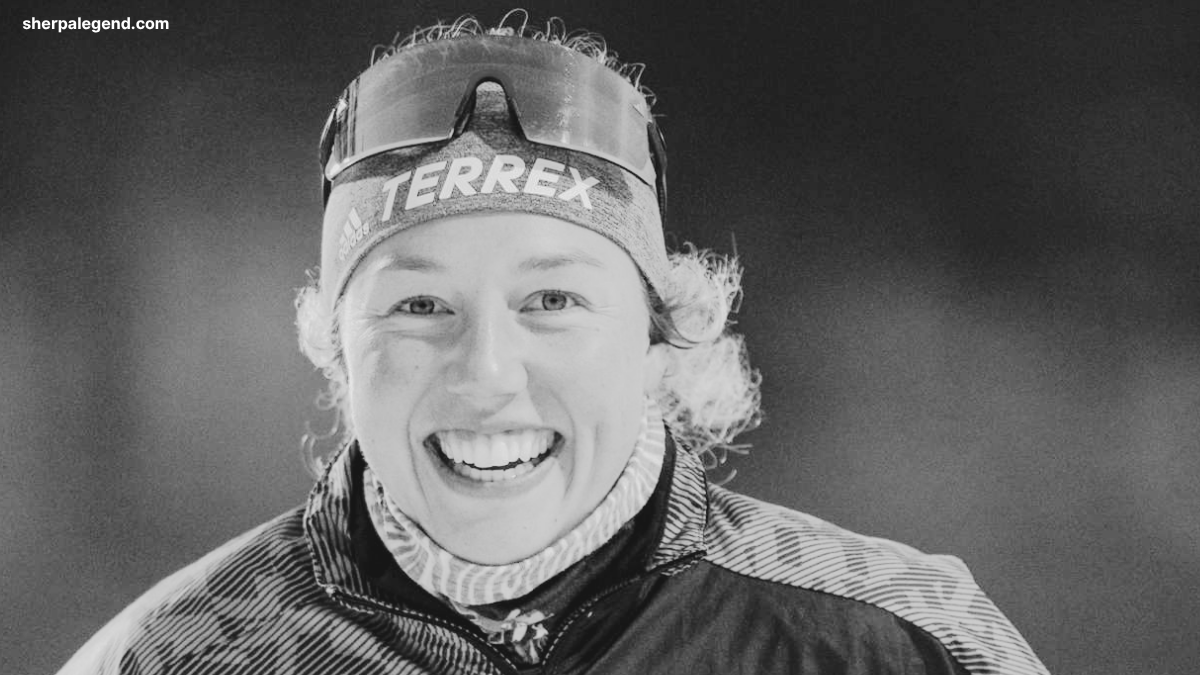

German Olympic Hero Laura Dahlmeier Dies on Pakistan’s Laila Peak
Laura Dahlmeier had it all figured out when she was seven years old. In a friend’s notebook, she wrote down her two career dreams “Olympic champion or mountain hut keeper.” Most kids change their minds a dozen times before high school. Laura did both.
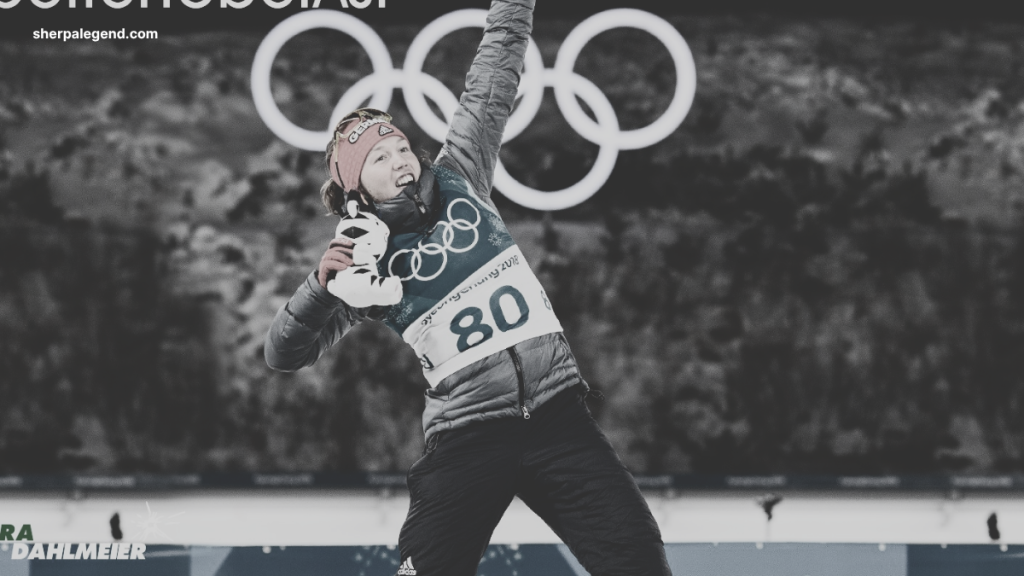
She won the Olympics first. At the 2018 Winter Games in PyeongChang, the German biathlete made history by becoming the first woman to win both sprint and pursuit gold at the same Olympics.
The freezing cold of South Korea watched as she added a bronze medal in the individual race, cementing her place as Germany’s next biathlon superstar after Magdalena Neuner.
Her career was a collection of extraordinary achievements. At the 2017 World Championships in Hochfilzen, she dominated like few athletes ever have, winning five golds and one silver in six races. That same season, she claimed the overall World Cup title. By the time she retired, Laura had collected 15 World Championship medals, including seven golds, and won 20 World Cup races.
But Laura was never one to sit still with her achievements. At just 25, when most athletes are hitting their prime, she shocked the sports world by retiring. She had won everything there was to win. The question everyone asked was simple Why walk away now?
The answer lay in those childhood dreams she’d scribbled in that notebook. The mountains were calling.
Freedom in the Heights
Growing up in Garmisch-Partenkirchen at the foot of Germany’s highest peak, the Zugspitze, Laura had the perfect playground.
Her father took her climbing from an early age, hiking, skiing, and cycling through the local mountains. The Alps weren’t just her backyard they were her source of strength, her retreat, her sanctuary.
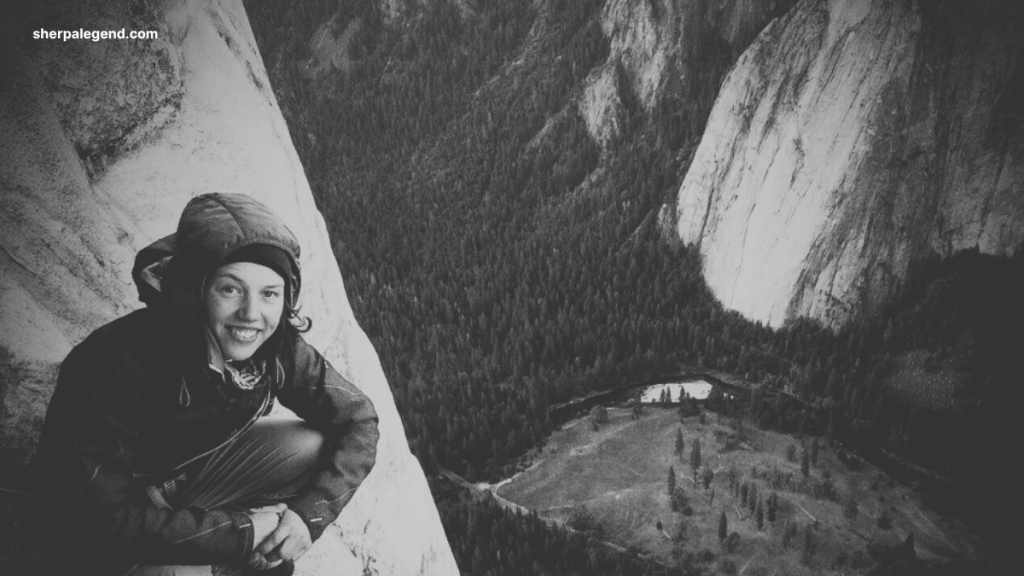
“If I had a 9-to-5 job and had to sit in the same office from Monday to Friday, that would be total anti-freedom for me,” she once said. “In the mountains, I simply feel at home.”
Even during her biathlon career, when the pressure of competition and expectations weighed heavy, Laura would escape to the mountains.
There, she could ground herself, find perspective, and gather energy for her next challenges. The mountains were where she felt most herself at peace and deeply content.
After retiring from biathlon, Laura threw herself into mountaineering with the same intensity and determination that had made her an Olympic champion.
She wasn’t content with weekend hikes or casual climbing. She wanted the world’s most challenging peaks, the most technical routes, the greatest adventures.
Her post-retirement life became a whirlwind of extreme pursuits. She earned a sports science degree from the Technical University of Munich.
She became a TV expert for ZDF, impressing viewers with her insight and natural communication skills. She wrote a book titled “If I Do Something, I Do It Right,” sharing her philosophy of total commitment.
But it was in the mountains where Laura truly came alive. She participated in demanding ski tours like the Patrouille des Glaciers in 2022.
She won the Zugspitz Ultra Trail in 2019, competed in Mountain Running World Championships, and tackled the challenging Alpfront Trails project. In 2023, she biked 500 kilometers solo and later ran 100 kilometers in one continuous effort.
Climbing the World’s Greatest Peaks
Laura’s mountaineering achievements came quickly and impressively. She wasn’t just climbing —she was setting records and conquering legendary routes that had challenged the world’s best climbers.
Her resume became extraordinary. She successfully climbed Mount Blanc via the demanding Brouillard Pillar with the famous Huber Buam climbing team in 2021.
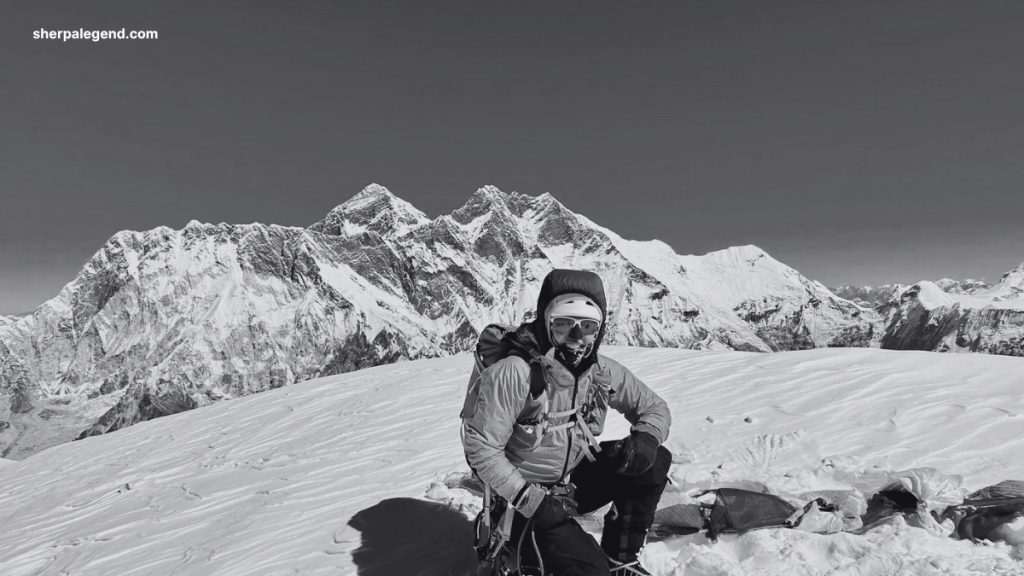
In 2023, she climbed Peak Korzhenevskaya in Tajikistan, standing at 7,105 meters. The following year, she set a women’s record for climbing Nepal’s 6,814-meter Ama Dablam, one of the world’s most beautiful and technically challenging peaks.
She also summited the legendary north face of the Eiger, a route that has claimed many lives and represents one of mountaineering’s greatest challenges. Her travels took her across the globe to the USA, Peru, Iran, and Nepal always seeking the next summit, the next challenge, the next opportunity to feel truly free.
In July 2025, just weeks before her tragic accident, Laura successfully summited Great Trango Tower in Pakistan, a 6,287-meter granite spire known for its technical difficulty and stunning beauty. It would be her last completed climb.
Laura had become a certified mountain and ski guide in 2023, and actively volunteered with the Garmisch-Partenkirchen Mountain Rescue Service. She was known as an experienced and highly safety-conscious mountaineer, someone who understood the risks but never let fear stop her from pursuing her dreams.
The Shadow of Danger
But Laura knew intimately that the mountains could be unforgiving. She had learned this lesson the hard way in August 2014, during her biathlon career, when she fell while climbing in the Zugspitze massif.
“I bounce a few times, fall headfirst… I’m completely powerless. A fear I had never felt before shoots through my body, and I scream,” she wrote in her book, describing the terrifying moment when a handhold broke off, then another. She was saved only by her safety rope, but the accident left her with a broken ankle, torn ligaments, and multiple bruises.
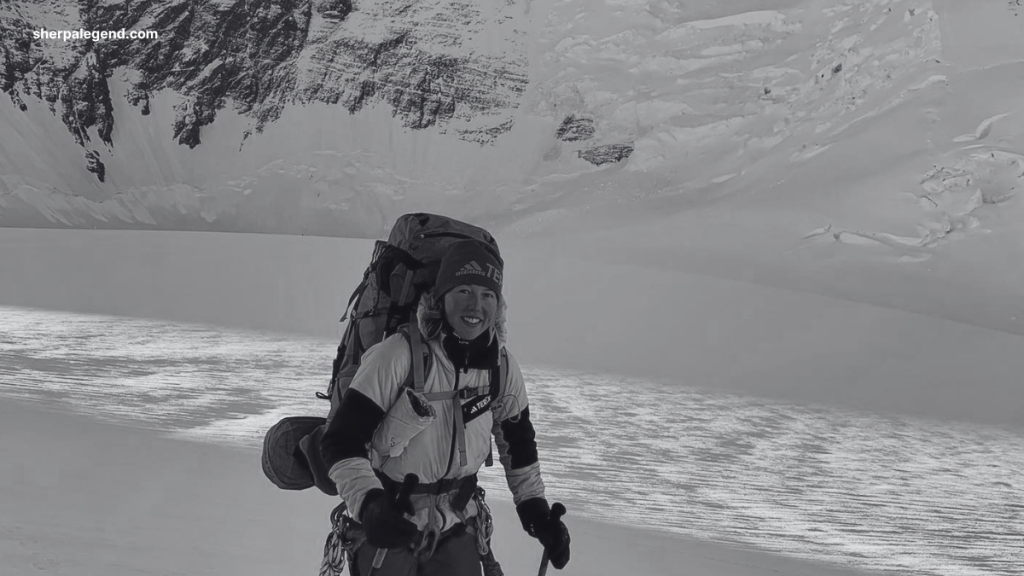
More importantly, it taught her a harsh truth that would stay with her forever: “If you make a mistake while climbing, it can cost you your life.”
The lesson became even more personal and devastating in January 2022 when her close friend died in an avalanche in Patagonia.
The tragedy shook her deeply. In a ZDF documentary called “Laura Dahlmeier and the High-Altitude Rush,” she reflected on the constant presence of danger in her chosen lifestyle.
“I think it’s really important to think seriously about these things too much has already happened. Of course, when another terrible accident happens, especially to someone close to you, you ask yourself again: How do you move forward now?”
Yet she kept climbing. Not recklessly those who knew her described her as safety-conscious and methodical. But she kept chasing that indescribable feeling of freedom that only the mountains could provide. The risk was part of the equation, something she had accepted and prepared for.
The Final Summit
On July 28, 2025, Laura was attempting to climb Laila Peak in Pakistan’s Karakoram range, often called “the wildest mountain range in the world.” She was climbing with her mountaineering partner, Marina Eva Krauss, in the Hushe Valley of the Gilgit-Baltistan region.
At around 5,700 meters altitude, disaster struck. A sudden rockfall hit Laura while she was on the mountain. Despite immediate efforts to mount a rescue, adverse weather conditions and ongoing rockfall danger made reaching her impossible. Expert climbers from Germany and the United States joined the rescue mission, but the mountain would not give up its victim.
True to her character, Laura had prepared for this possibility. Her family revealed she had written explicit instructions that in such a situation, no one should risk their lives trying to rescue her. Her wish was that her body should remain on the mountain. The rescue operation was called off on July 29, honoring her final request.
“It was Laura’s clear and written wishes that in an instance such as this, no one should risk their own lives in order to rescue her,” read a statement posted to her Instagram account. “Her wish was that in this case her body should be left behind on the mountain.”
A Champion’s Many Lives
Laura Dahlmeier packed more adventure, achievement, and authentic living into her 31 years than most people experience in a lifetime. She was Germany’s Sportswoman of the Year in 2017, a respected TV expert, an environmental advocate who criticized mass tourism on Mount Everest, and a passionate advocate for sustainability.
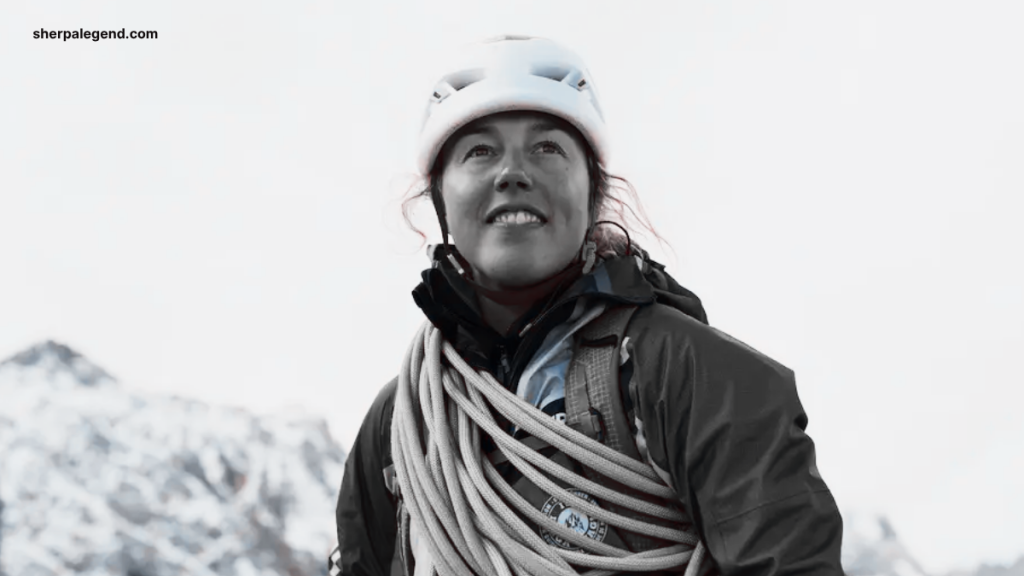
Despite all her extreme pursuits and public achievements, those who knew her best remember her as fundamentally grounded and family-oriented. She loved her hometown of Garmisch-Partenkirchen and felt secure surrounded by her loved ones. She remained authentic and warm, never letting fame or success change her core personality.
Just weeks before her death, she had led a group as a certified mountain guide for the first time, posting on Instagram: “Travel. Climb mountains. Discover the world. Be free… Feel the elements… Weigh risks… Reach summits. Be happy… Make dreams come true… LIVE.”
Tributes and Legacy
The tributes that poured in after her death revealed the impact Laura had made far beyond sports. The International Olympic Committee called her a trailblazer in women’s biathlon. Germany’s Olympic Sports Confederation said she was “more than an Olympic champion — she was someone with heart, attitude and vision.”
FC Bayern Munich, where she had recently spoken to the women’s team as part of their “EmpowerHer” mentoring program, remembered her as “a one-of-a-kind ambassador of the Free State of Bavaria down-to-earth, home-loving, authentic.”
German President Frank-Walter Steinmeier called her “an ambassador for our country around the world and a role model for peaceful, joyful and fair coexistence across borders.”
International Olympic Committee president Kirsty Coventry said her death was “deeply shocking for all of us in the Olympic movement,” adding: “She lost her life in her beloved mountains. She will be remembered forever.”
The Mountain Keeper
In the end, Laura Dahlmeier achieved both dreams she’d written in that childhood notebook. She became an Olympic champion, reaching the absolute pinnacle of athletic success and inspiring a generation of young athletes. And now, she rests as a mountain keeper, forever part of the peaks that gave her life its deepest meaning.
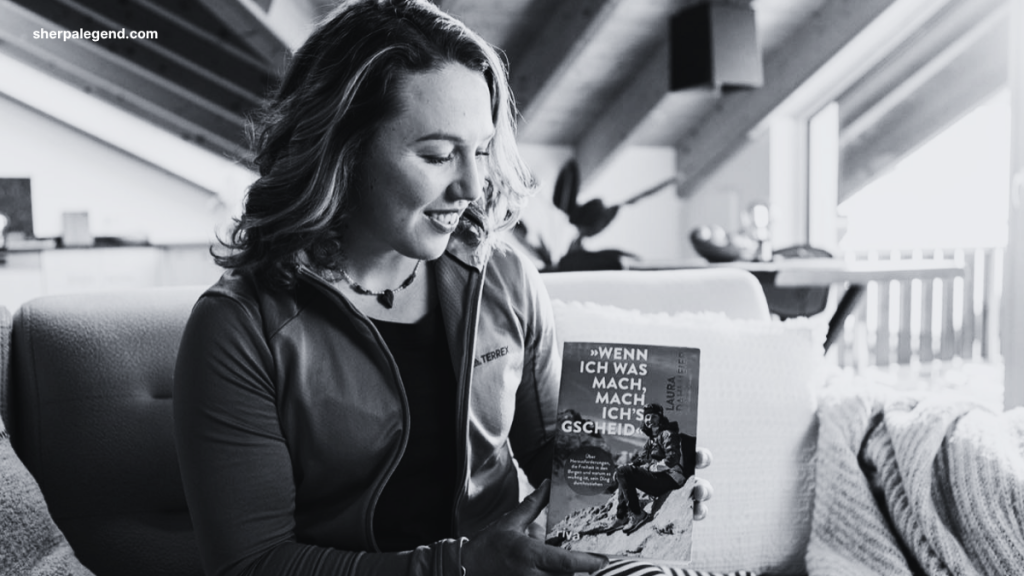
Her family’s final statement captured the essence of who she was “Laura enriched our lives and the lives of many others with her warm and honest nature. She showed us that it’s worth fighting for your dreams and staying true to yourself. Our shared memories give us strength and courage to keep going.”
Laura’s story reminds us that sometimes the biggest risk isn’t in chasing our dreams it’s in not chasing them at all.
She lived entirely on her own terms, found freedom in the heights, and inspired others to push their own boundaries. She chose a life of purpose over a life of safety, adventure over routine, authentic living over comfortable conformity.
She once said that boredom had no place in her life. Whether climbing mountains thousands of meters high, skydiving, or riding motorcycles, she loved life on the edge, nature, and pushing herself to the limit. Her thirst for freedom ultimately cost her everything, but it also gave her everything that mattered.
As she wrote in her final Instagram post, just weeks before her death: “Make dreams come true. LIVE.”
Laura Dahlmeier did exactly that, completely and without compromise.
