Anar Burasheva: How Anar Burasheva Became the First Kazakh Woman to Climb Everest
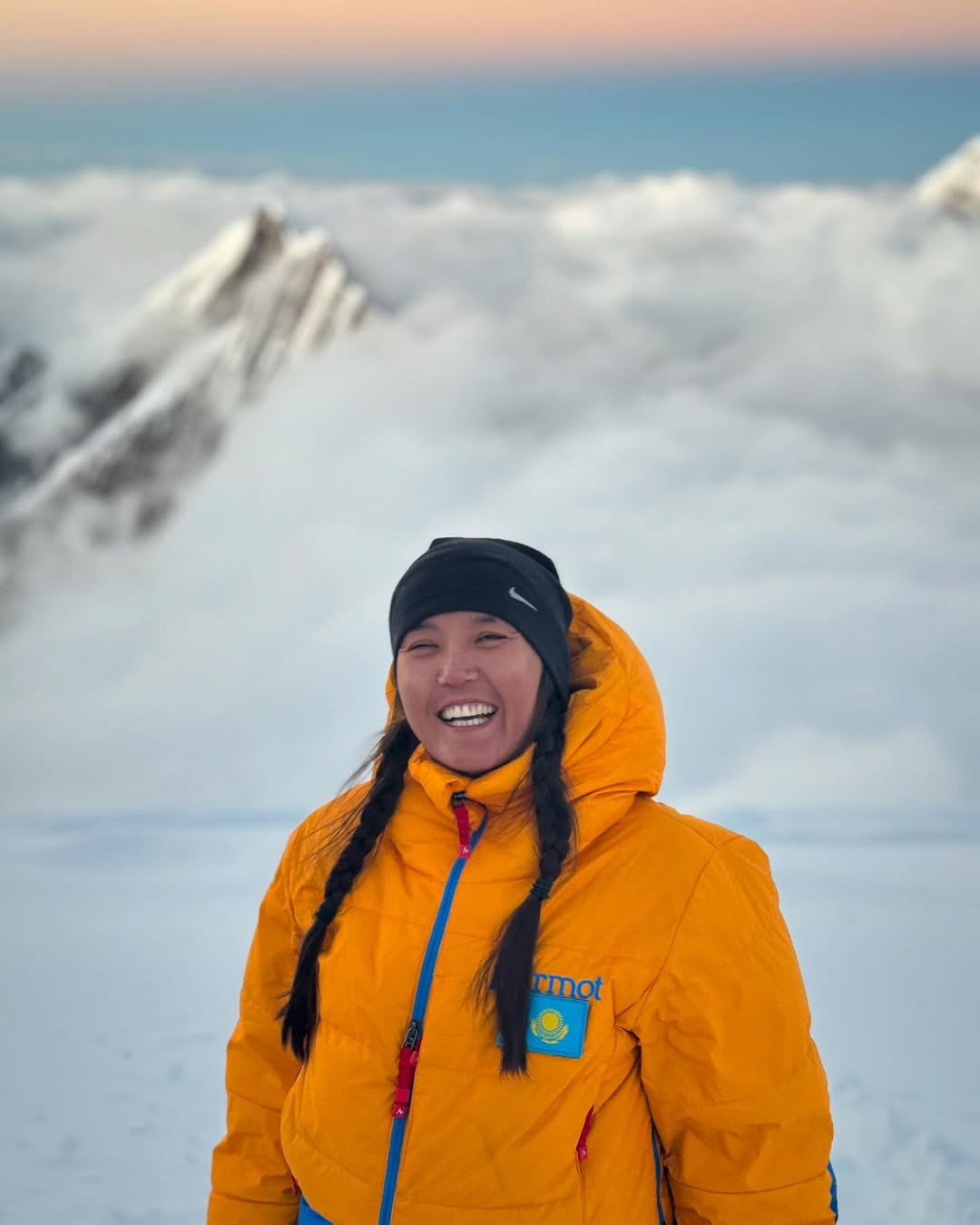
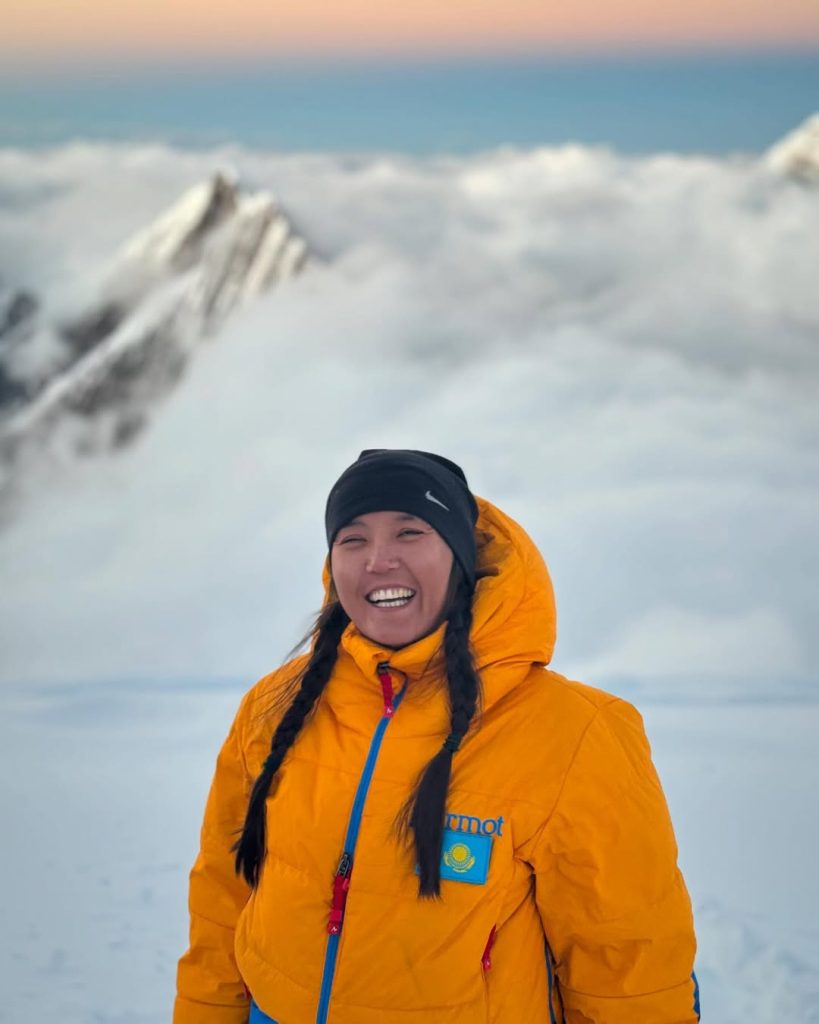
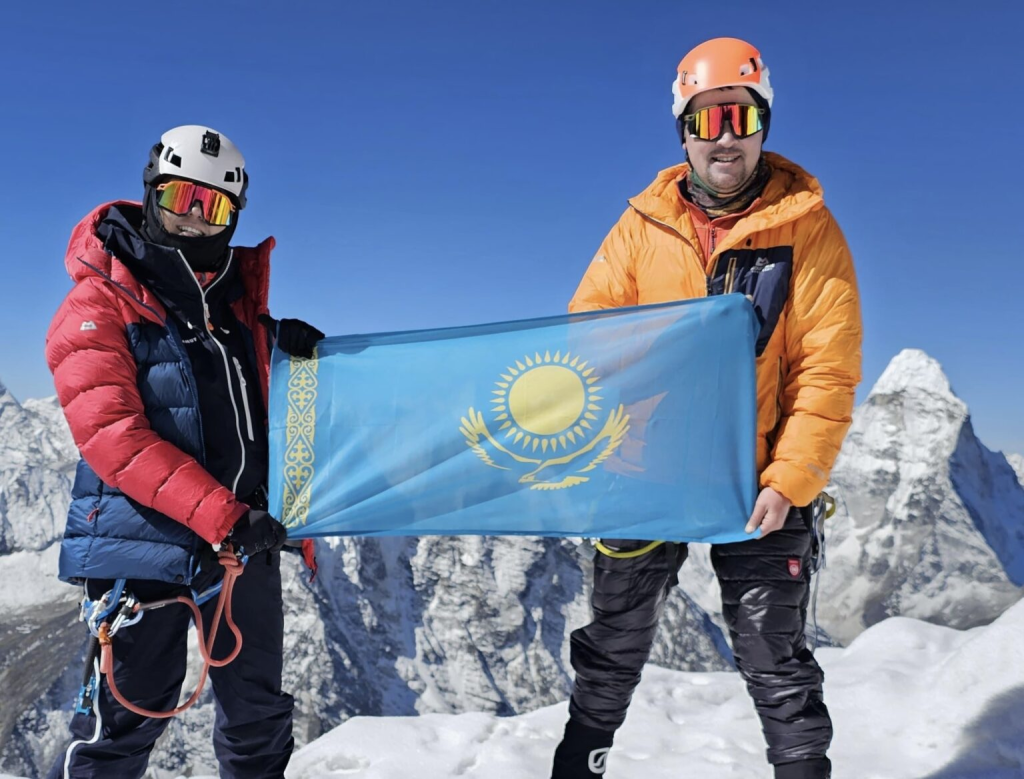
On May 12, standing at the highest point on Earth, Anar Burasheva unfurled the blue and gold flag of Kazakhstan atop Mount Everest.
In that moment, she made history as the first Kazakh woman to reach the summit of the world’s tallest mountain. But her journey to the rooftop of the world began long before she set foot on Everest’s slopes.
From Running to Mountain Climbing
Anar’s path to mountaineering started unexpectedly, with asphalt running about ten years ago. After completing her first marathon, she found herself wanting more of a challenge.
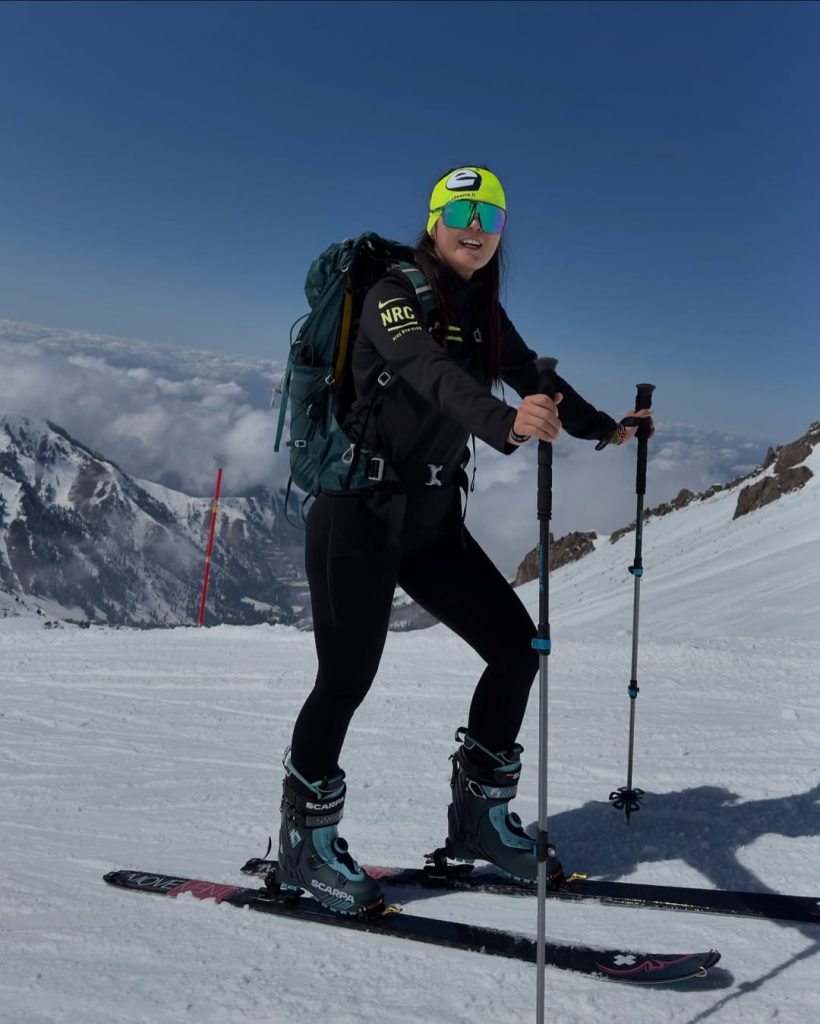
Living in Almaty, a city nestled at the foot of mountains, she naturally gravitated toward skyrunning – a sport that involves running up and down mountain trails at high elevations.
“I made an interesting journey from an asphalt runner to a mountain climber,” Anar explains. This transition proved crucial, helping her develop the stamina and mental fortitude needed for high-altitude climbing.
By day, Anar worked as a financial analyst at a company called Everest Development a coincidental name that would later seem prophetic.
Before that, she had spent ten years working in banking. Throughout her professional career, she never hid her mountaineering ambitions. In fact, she openly wrote about her dream of climbing Everest in her resume.
“The main quality that I have as an athlete and which is highly valued by employers is discipline,” Anar notes. “As an athlete, you are sensitive to time management, discipline. Without these qualities, it is impossible to do anything seriously.”
The Decision to Climb
The expedition to Everest began taking shape in October 2023, when Anar met with renowned Kazakhstani climber Maksut Zhumayev and a sponsor who believed in their project.
“We shook hands and from that moment this expedition began to emerge,” Anar recalls. Serious preparation started in November. Under Zhumayev’s guidance, Anar underwent rigorous training that focused on building endurance and mastering technical skills needed for high-altitude climbing. The training included learning to perform rope techniques automatically a important skill when facing hypoxia near the summit.
“One of the final stages of training was the ascent of Kilimanjaro, where we already tested ourselves at a relative altitude,” she says.
But in December, tragedy struck when Anar lost her father. This personal loss almost derailed her plans, filling her with doubt about continuing the expedition.
“Everything changed overnight when I lost my dad in December,” she shares. “But after some time of doubts, my faith in this project became even stronger.”
The loss transformed her motivation. What began as a desire to inspire young women evolved into something more personal.
“I initially wanted to show every girl that dreams are achievable, that everyone is capable of reaching their Everest in their favorite business. And then I had a desire for my dad to be heard too,” she explains, hinting at a spiritual connection that would later prove significant during her climb.
The Ascent Begins
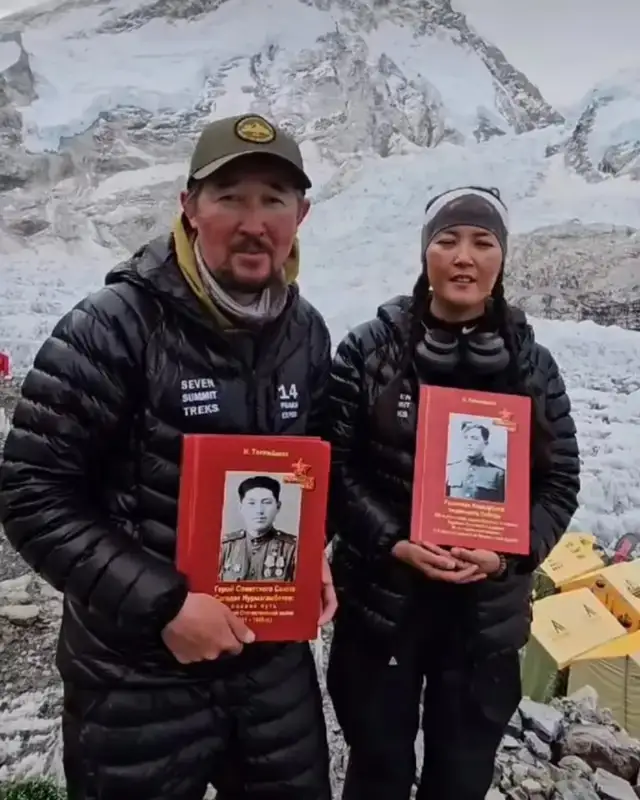
The expedition team included Anar, her mentor Maksut Zhumayev, and Sherpas who would guide them up the mountain. Zhumayev’s reputation in the mountaineering world was well-established, and his presence attracted other climbers who wanted to share the same camp.
“Maksut is one of the best people I have ever met in my life,” Anar says. “Throughout the expedition period, he treated me like his younger sister, with warmth and care. I was sure that if something happened on the mountain, Maksut would never abandon me.”
Maksut Zhumayev, Anar Burasheva. Photo credit: Video screenshot
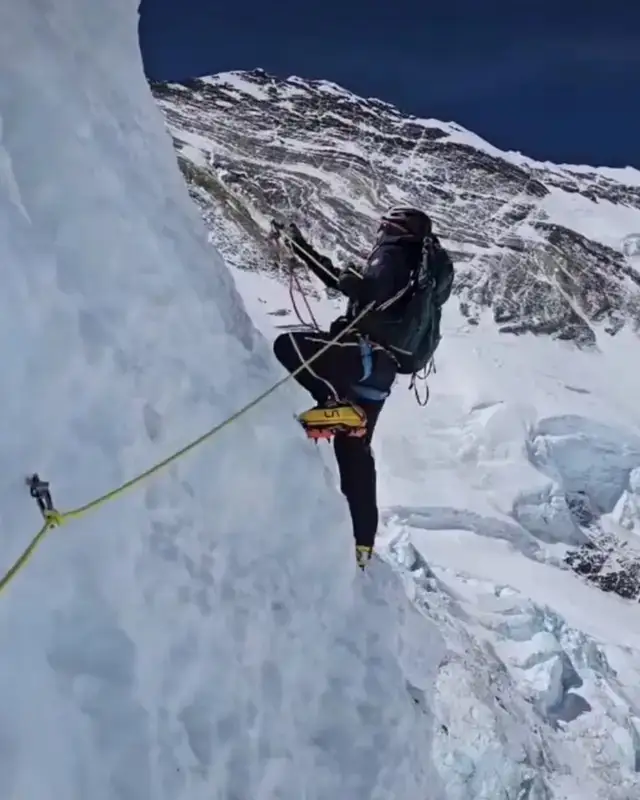
The conditions on Everest were brutal. “Our entire route was covered with blue ice and stones were flying,” Anar recalls. At one point, a flying stone struck her. While not seriously injured, the incident was demoralizing
The physical challenges were matched by psychological pressures. Halfway to the summit, Anar feared they might be forced to turn back when they encountered seven or eight people coming down.
She watched her Sherpa’s face carefully for signs of concern but they continued upward. At this critical moment, Anar found herself talking to her late father in her mind, asking him to influence the weather.
The team stopped to rest for half an hour, waiting for the third member of their group, and remarkably, the wind died down.
“I began to believe in the world of the Aruakhs [ancestral spirits] after climbing Everest,” she says. “In the mountains, and especially at the highest point, connecting with the sky, your thoughts and the purity of your intentions are of great importance.”
Life at High Altitude
The journey to Everest’s peak is not just a physical challenge but also a test of adapting to extreme living conditions. Anar spent three weeks without a shower at one point. “You get used to it,” she says matter-of-factly. “Everyone around you is in the same state.”
Despite the harsh conditions, she maintained a minimal beauty routine, using special wipes and SPF to protect her skin. “When you maintain your comfort, doing a minimal beauty routine, you simultaneously give yourself a feeling of safety,” she explains.
The expedition also revealed a different side of Anar’s personality. Normally an extrovert, she transformed into what she describes as “a typical introvert” on the mountain.
“I was focused on the goal, did not waste energy on any additional emotions, kept everything to myself,” she says. “I think that my unexpected introversion was connected with the fact that I needed to focus on the result.
Everyone was expecting it from us, and this is a huge responsibility.”
Being one of few women in the traditionally male-dominated field of high-altitude mountaineering never fazed Anar. “There is no gender division in mountaineering—at the top you are equal to everyone,”
she asserts. While she might have received special treatment at lower camps, such considerations disappeared at higher elevations where “everyone must be responsible for themselves.”
The Final Push
As Anar and her team approached the summit, they faced the most challenging part of the climb. At elevations above 8,000 meters the “death zone” oxygen levels are insufficient to sustain human life for extended periods. Every step becomes a struggle.
“You can be one hundred percent physically ready, but first of all, to conquer Everest you need to be ready mentally,” Anar emphasizes.
The threat of death is ever-present on Everest. “18 people died on Everest last year,” Anar notes. “Many climbers and tourists die there every year. One should take into account hundreds and thousands of details and nuances, to prevent a tragedy.”
When Anar finally reached the summit on May 12 and unfurled Kazakhstan’s flag, her first emotion wasn’t elation but relief “not so much physical as moral.”
“This was a great responsibility to all Kazakhstanis,” she explains. “Our expedition was covered in the press, it was necessary to justify the trust placed in me by the sponsors who invested their money and time in me.”
Still, there was no time for extended celebration. As experienced climbers know, reaching the summit is only half the journey.
“After the ascent, I thought about the descent, because when climbing up, you are driven by your goal, but when you descend, it is mentally and physically more difficult to concentrate on the process, as you are exhausted,” she says.
The descent carries its own dangers, with climbers fatigued and sometimes euphoric from their achievement, making mistakes more likely.
“Hanging between life and death, you try to keep bad thoughts away. Nevertheless, you can’t get rid of excitement and fear in your head,” Anar describes. “It is necessary not to lose control of your body and thoughts, which is quite important during the descent.”
Coming Home
Upon returning to Kazakhstan, Anar was welcomed as a national hero. She met with the President of Kazakhstan and gave numerous interviews.
Her achievement resonated particularly strongly with women across her country.
The physical toll of the expedition wasn’t as severe for Anar as it was for some of her teammates. While Maksut lost more than ten kilograms, Anar lost only four, which she attributes to her skyrunning background. Still, recovery takes time. “It usually takes two or three months to recover. For example, a dry cough ‘pleases’ me to this day,” she says.
Her first request upon returning home? “I dreamed about beshbarmak so much! When I came home, I asked all my friends and my mother to cook it,” she says, referring to Kazakhstan’s national dish of boiled meat and pasta.
For Anar, becoming the first Kazakh woman to summit Everest isn’t an endpoint but rather a milestone in her climbing career. She has set her sights on the Seven Summits project, which involves climbing the highest peaks on each continent.
“I do not want to rest on my oars. I want to join the Seven Summits project and climb the highest peaks in all the continents. I have already climbed Kilimanjaro and the highest mountain of Eurasia and entire planet Everest,” she says.
Despite the hardships and dangers, the allure of Everest remains strong for Anar. “I still want to return to this legendary and majestic peak of the world again,” she confesses.
Her historic achievement has brought recognition, but Anar remains grounded. “My life hasn’t changed at all,” she insists. “The only thing is that my new status—the first Kazakh woman to climb Everest—places a lot of responsibility on me.”
This responsibility is one she Fortitude wholeheartedly. “I hope that by my example I can help people,” she says, representing the spirit that carried her to the highest point on Earth a spirit of determination, discipline, and the belief that with proper preparation and mental fortitude, anyone can reach their own personal Everest.



Good https://is.gd/N1ikS2
Awesome https://is.gd/N1ikS2